




01. Edit your form online
Type text, add images, blackout confidential details, add comments, highlights and more.

Type text, add images, blackout confidential details, add comments, highlights and more.

Draw your signature, type it, upload its image, or use your mobile device as a signature pad.

Send it via email, link, or fax. You can also download it, export it or print it out.
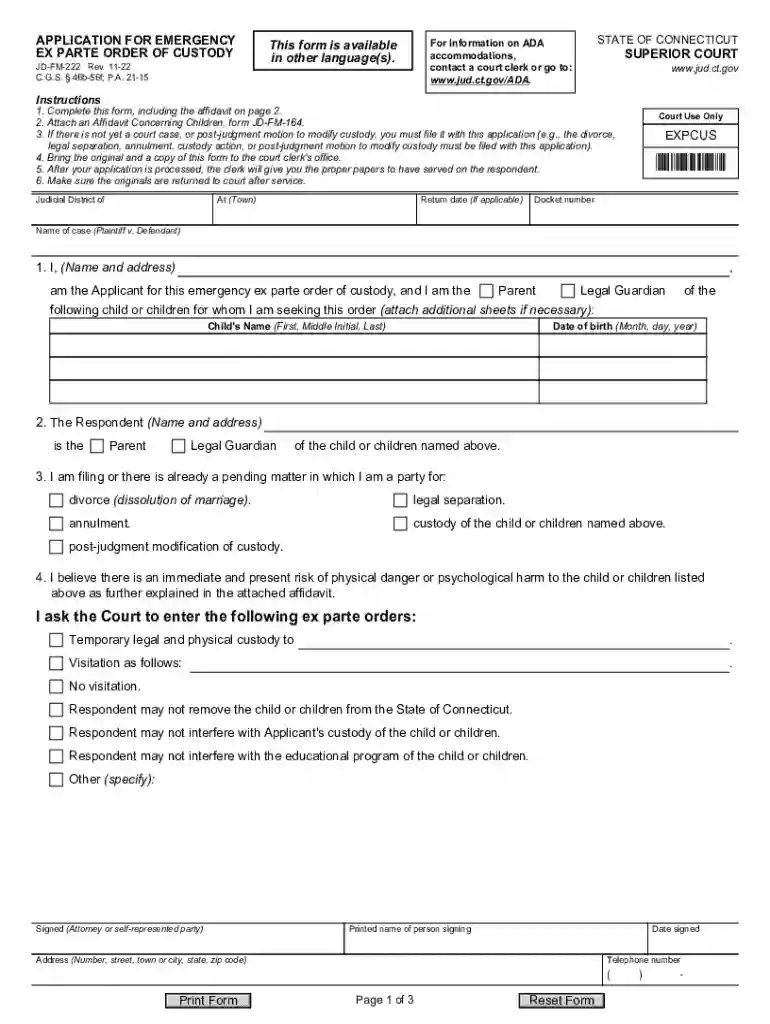
An application for an emergency ex parte order of custody is a legal document filed by a parent or legal guardian in situations where immediate custody of a child is sought due to an urgent risk of harm. This legal instrument allows the court to make a quick, temporary custody decision based on the applicant’s evidence and affidavits provided. This type of order is designed to protect a child from potential physical danger or psychological harm by granting temporary custody to the petitioner while awaiting a formal court hearing.
Obtain the Application: The first step involves securing the appropriate form, typically available through the court clerk’s office or the judicial website for the state of Connecticut.
Fill Out Personal Information: Enter the requisite personal details, including names, addresses, and contact information of both the applicant and the child.
Detail the Emergency Situation: Clearly articulate the reasons for seeking an emergency custody order. This should include specific instances of perceived danger or harm to the child.
Provide Supporting Evidence: Attach any necessary affidavits or documentation that support claims made in the application. This can include police reports, medical records, or witness testimonies.
Verification and Signature: The application must be signed and often notarized to verify the accuracy of the provided information.
Submit the Form: File the completed application with the court clerk. Be sure to retain a copy for personal records.
The application form for an emergency ex parte order of custody can be acquired directly from the local court or downloaded from the state judicial branch website. In Connecticut, these forms are typically available both in digital format for online filing and as hard copies for in-person submission. Prospective applicants can also consult family law attorneys for guidance in completing and submitting the form.
This application is specifically intended to address immediate and emergent custody concerns. Legal uses include cases where a child is at imminent risk of injury due to neglect, abuse, or a volatile home environment. The ex parte nature of the application allows courts to make a preliminary decision without the presence of the other parent based on the urgency of the situation presented.
The application is commonly used by parents, guardians, or other individuals with legal standing concerned about a child's well-being. Typically, these are individuals who can demonstrate a compelling, immediate need to protect a child from potential harm. Examples include parents involved in custody disputes or cases of domestic violence.


When submitting an application for an emergency ex parte order of custody, the following documents are often required:
In Connecticut, specific regulations govern the filing and adjudication of emergency ex parte custody orders. Applicants must adhere to local court procedures, which may vary by jurisdiction. Courts often require that a detailed justification for the immediate need be provided and that notice be given to the other parent unless such notification poses a risk to the child.
Domestic Abuse Cases: When a parent fears for a child's safety due to domestic violence, an emergency order may prevent the abusive parent from accessing the child until the situation is reviewed.
Substance Abuse Situations: If a child's current custodian is engaging in substance abuse, another guardian may seek an emergency order to transfer custody temporarily.
Neglect or Abandonment: Situations where a child is left unattended or without means of support can merit emergency intervention.
Each of these cases highlights the application’s role in safeguarding children's welfare in critical circumstances.
We've got more versions of the APPLICATION FOR EMERGENCY EX PARTE ORDER OF CUSTODY form. Select the right APPLICATION FOR EMERGENCY EX PARTE ORDER OF CUSTODY version from the list and start editing it straight away!
At DocHub, your data security is our priority. We follow HIPAA, SOC2, GDPR, and other standards, so you can work on your documents with confidence.





If you need an emergency order, you can ask a judge for one in your family law case. For example, in a divorce, domestic violence, or a parentage case. You willRead more
Further, the ex parte order must provide specific provisions for temporary visitation to the adverse party for not less than 48 hours during a 15-day periodRead more
Jul 2, 2026 File the petition with an affidavit. Set out the agreement, the dispute, the urgency, and the exact orders you want. Ask for an urgent or exRead more


