






Definition and Purpose of the Proposed Parental Responsibility Plan
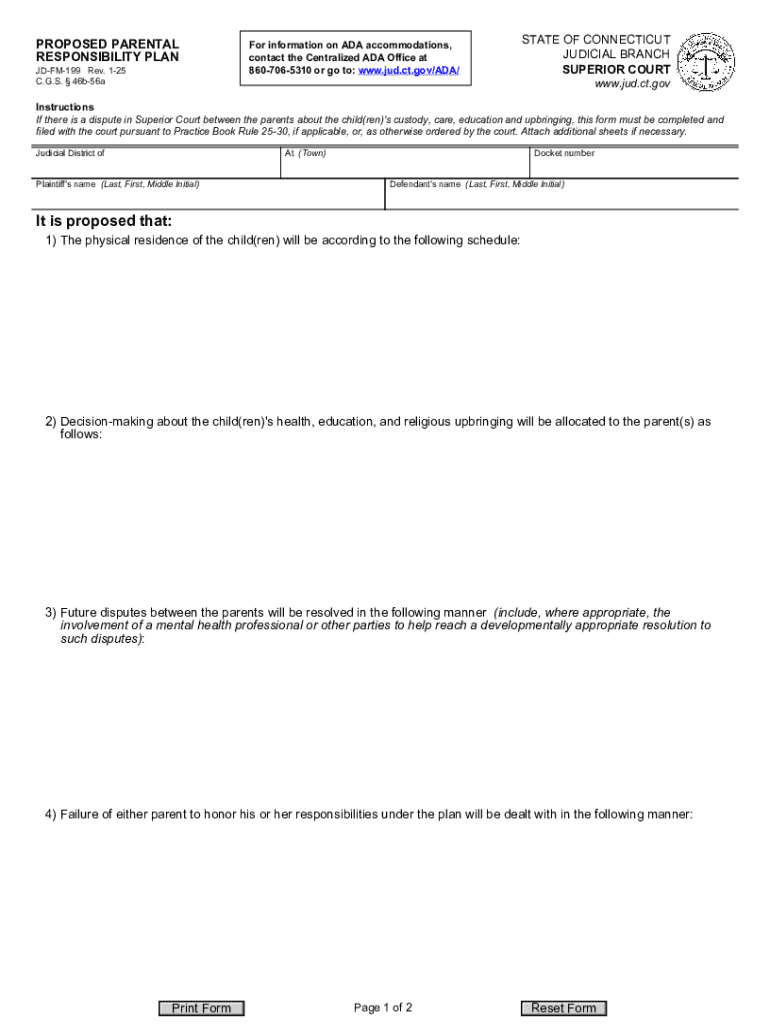
The Proposed Parental Responsibility Plan is a structured document typically utilized in custody cases within the Superior Court of Connecticut. It is designed to outline the roles and responsibilities of parents in managing the welfare and upbringing of their child(ren) post-divorce or separation. This plan serves to define the physical residence schedule, decision-making duties for health, education, and religious upbringing, and procedures for resolving any future disputes. The plan's primary aim is to foster a cooperative parenting environment that prioritizes the best interests of the child(ren), thereby minimizing potential conflicts between parents.
Key Elements of the Proposed Parental Responsibility Plan
Physical Residence Schedule
- Designated Living Arrangements: Details regarding where the child(ren) will reside on specific days, including provisions for weekends, holidays, and vacations.
- Flexibility and Adjustments: Sections that allow for alterations to accommodate changes in parents' schedules or child(ren)'s needs.
Decision-Making Responsibilities
- Health and Medical Decisions: Specifies which parent will make critical health-related decisions or if such responsibilities will be shared.
- Educational Choices: Outlines parental roles in selecting educational environments and participation in school-related activities.
- Religious Upbringing: Agreed upon arrangements regarding the child(ren)'s involvement in religious activities.
Steps to Complete the Proposed Parental Responsibility Plan
- Gather Necessary Information and Documents: Ensure all relevant personal information about the parents and child(ren) is available.
- Designate Residence Schedules: Agree on the primary residence and outline the specifics of the visitation schedule.
- Determine Decision-Making Roles: Decide if certain responsibilities will be shared or assigned to one parent.
- Address Conflict Resolution Methods: Specify how disputes between parents will be handled to prevent escalation.
- Finalize the Plan: Review the draft with legal guidance to ensure all areas are covered and comply with state regulations.
- Submit the Plan for Approval: Present the completed plan to the relevant court body for approval and integration into custody agreements.
Legal Use and Compliance of the Proposed Parental Responsibility Plan
State Regulations
- Connecticut Specifics: The plan must adhere to Connecticut’s family law requirements to be legally binding and effective.
- Legal Review and Endorsement: It should be carefully reviewed in consultation with legal professionals experienced in state custody laws.
Enforceability
- Court Approval: Only plans approved by the court hold legal standing and enforceability.
- Modification Provisions: Conditions under which the plan can be reviewed and modified, such as substantial changes in circumstances.
Why Use the Proposed Parental Responsibility Plan
Benefits for Parents
- Clear Framework: Establishes clear guidelines to manage parenting duties, reducing ambiguity and potential areas of conflict.
- Child-centric Focus: Ensures decisions are made with the child(ren)’s best interests as the priority.
Advantages for Child(ren)
- Stable Environment: Provides children with consistency and stability, crucial for their emotional and psychological well-being.
- Reduced Conflict Exposure: Minimizes the exposure to parental conflicts and discord.
State-Specific Rules and Variations
Connecticut Regulations
- Mandatory for Custody Cases: In Connecticut, submitting a parental responsibility plan is a crucial part of any custody dispute.
- Flexibilities and Restrictions: Understanding what the state allows in terms of flexibility, such as visitation rights and timetable adjustments, is essential.
Comparative Analysis
- Variations Across States: While similar plans might exist in other states, the specifics of Connecticut's legal context should be thoroughly understood.
Important Terms Related to the Proposed Parental Responsibility Plan
- Custodial Parent: The parent with whom the child(ren) resides primarily.
- Non-custodial Parent: The parent who does not have primary residence but may have visitation rights.
- Joint Custody: Both parents share decision-making responsibilities.
- Sole Custody: Only one parent has the decision-making authority over certain aspects of the child(ren)'s life.
Examples and Scenarios of Using the Proposed Parental Responsibility Plan
- Scenario Based Planning: Illustrating through practical examples how holidays might be divided between parents or how educational decisions might be shared.
- Real-World Application: Cases where successful parental responsibility plans led to stable and cooperative co-parenting situations.
By comprehensively understanding and effectively utilizing the Proposed Parental Responsibility Plan, parents involved in custody disputes can work towards an arrangement that supports a harmonious and supportive environment for their child(ren).