






Definition & Meaning
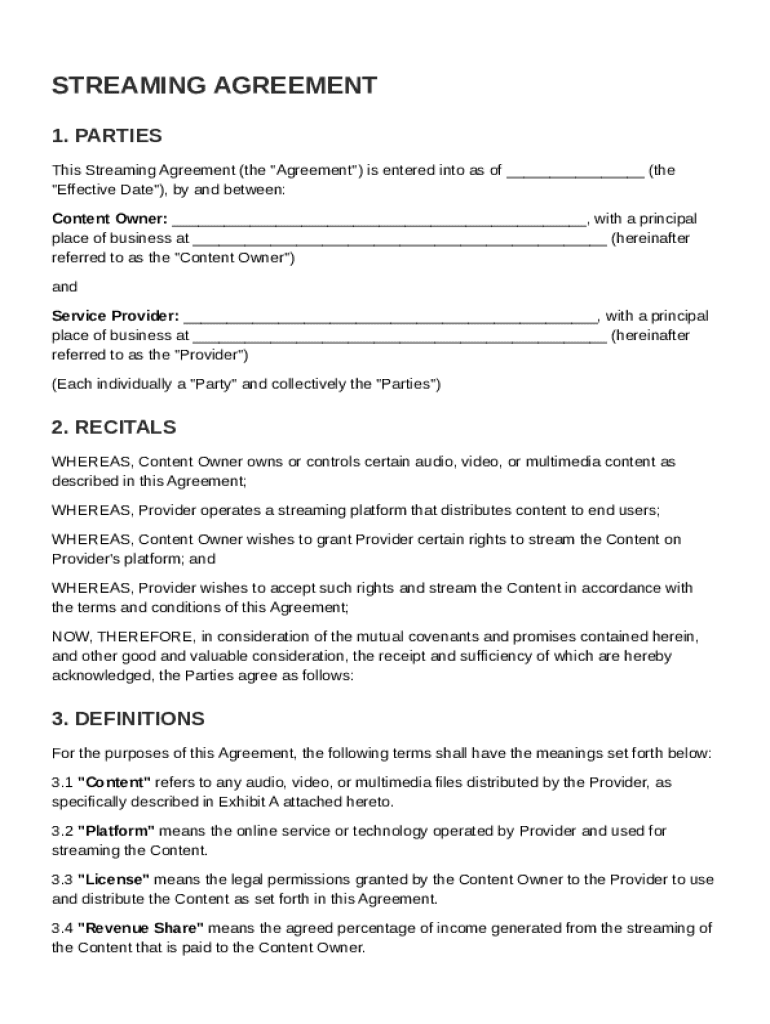
A Streaming Agreement Template is a legal document that outlines the contractual arrangement between a content owner and a service provider for the distribution of multimedia content via streaming platforms. This agreement details the specific rights and responsibilities of both parties involved, including licensing terms, revenue sharing structures, and conditions under which the contract may be terminated or renewed. The primary purpose of this template is to ensure the proper management and distribution of the content while safeguarding the intellectual property rights of the content owner.
Key Elements of the Streaming Agreement Template
A well-structured streaming agreement template typically includes several critical components:
-
Licensing Terms: Defines the rights granted to the service provider, such as the type of content, duration of usage, territorial rights, and platforms where streaming is allowed.
-
Revenue Sharing: Outlines how revenue generated from the streaming content will be divided between the content owner and the service provider. This may include fixed fees, percentages, or a combination of both.
-
Responsibilities: Specifies the obligations of each party, including content delivery schedules, technical specifications, and marketing efforts.
-
Termination Clauses: Details the conditions under which the agreement can be terminated, such as breach of contract or non-compliance with agreed-upon terms.
-
Confidentiality Provisions: Ensures that sensitive information related to the content or the agreement terms is not disclosed to unauthorized parties.
-
Indemnification: Protects both parties from legal claims arising from the content’s distribution, ensuring that each party is responsible for its actions.
Steps to Complete the Streaming Agreement Template
Completing a streaming agreement template involves several key steps to ensure all aspects are adequately addressed:
-
Fill in Party Details: Enter comprehensive information about the content owner and the service provider, including names, addresses, and contact details.
-
Define Content Scope: Clearly outline what content will be streamed under this agreement, specifying genres, titles, and formats.
-
Establish Licensing Terms: Detail the permissions granted to the service provider, including any limitations on the use and distribution of the content.
-
Negotiate Financial Terms: Agree on the revenue-sharing model and payment schedules, ensuring clarity on how earnings will be calculated and distributed.
-
Outline Compliance Requirements: Include legal and regulatory obligations related to content streaming that both parties must adhere to during the contract term.
-
Insert Signature Fields: Ensure that both parties review the agreement terms and sign the document to confirm their acceptance and understanding of the conditions.
Legal Use of the Streaming Agreement Template
The streaming agreement template serves an important legal function by providing a formalized structure for the distribution of multimedia content. It:
-
Establishes Legal Framework: Provides a legal framework that defines the rights, responsibilities, and expectations of both the content owner and service provider.
-
Protects Intellectual Property: Safeguards the content owner’s intellectual property rights by clearly stating usage permissions and prohibiting unauthorized exploitation.
-
Mitigates Disputes: Helps prevent legal disputes by setting forth clear terms and conditions that both parties have agreed to in advance.
-
Ensures Compliance: Assures that the content distribution process adheres to relevant laws and regulations, such as copyright laws and digital distribution standards.
Who Typically Uses the Streaming Agreement Template
This template is primarily used by:
-
Content Creators: Individuals or entities who produce digital content such as films, music, podcasts, or other multimedia products.
-
Streaming Platforms: Companies that distribute digital content over the internet, including major streaming services, niche platforms, and mobile apps.
-
Legal Professionals: Attorneys and contract managers who facilitate negotiations and ensure that all legal aspects of the content distribution are addressed.
-
Business Executives: Decision-makers who oversee strategic partnerships and wish to formalize agreements securely and efficiently.


Important Terms Related to Streaming Agreement Template
Understanding essential terms related to streaming agreements can help with clarity and prevent misunderstandings:
-
License Fee: A payment made by the service provider to the content owner for the right to stream their content.
-
Fair Use: Legal doctrine allowing limited use of copyrighted material without requiring permission from the rights holders.
-
Exclusivity Clause: An agreement term that may grant a service provider exclusive rights to stream specific content, prohibiting others from distributing it.
-
Royalties: Ongoing payments based on content usage or distribution, often calculated as a percentage of revenue.
Software Compatibility
For users engaged in drafting, editing, and managing streaming agreements, compatibility with various software platforms can streamline operations. DocHub, a versatile document management solution, facilitates seamless integration with popular software like Google Workspace, allowing users to modify and export documents efficiently. This ensures the streaming agreement template can be adapted, updated, and shared across multiple devices and platforms, increasing accessibility and ease of use for all parties involved.
State-Specific Rules for the Streaming Agreement Template
In the U.S., streaming agreements must comply with state-specific regulations concerning digital rights management and content licensing. Certain states may have unique laws impacting:
-
Digital Rights Management (DRM): Varied levels of stringency in protecting copyrighted material digitally.
-
Taxation Laws: Different approaches to taxing digital content sales and royalties.
-
Consumer Protection: Regulations safeguarding consumer rights related to digital service subscriptions and online transactions.
These factors necessitate consulting local laws or legal counsel to ensure the agreement conforms to applicable statutory requirements.