






Key Elements of the Business Proposal Contract Template
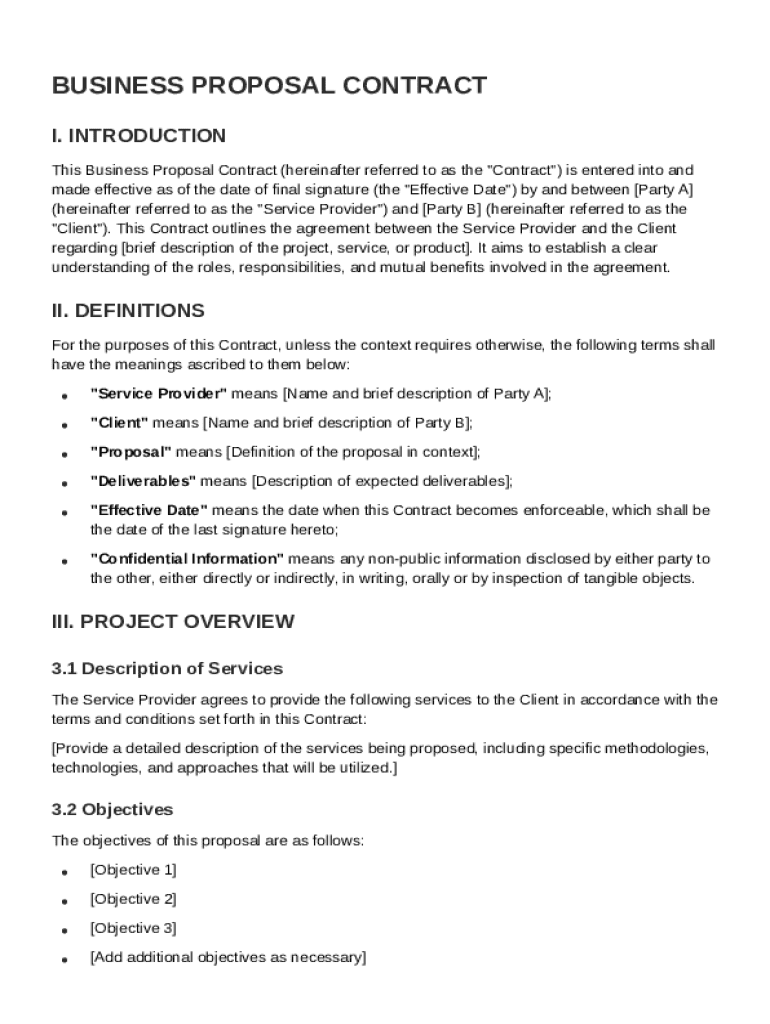
A Business Proposal Contract Template is an essential tool that streamlines the process of drafting agreements between a service provider and a client. This document clearly delineates various components that are fundamental to the agreement.
Basic Components
- Definitions: Precise term definitions clarify the language used throughout the contract, ensuring mutual understanding between parties.
- Project Overview: Outlines the overall objectives and scope of the project, setting the context for the services.
- Scope of Work: Details the specific tasks, deliverables, and responsibilities of each party involved in the project.
- Payment Terms: Specifies the payment structure, including timelines, conditions, and methods for fulfilling financial obligations.
Additional Considerations
- Timeline: Establishes project deadlines and schedules, which help manage expectations and align both parties' actions.
- Confidentiality: Protects sensitive information shared between parties, specifying conditions under which data may be disclosed.
- Termination Conditions: Provides clauses that define the conditions under which the contract can be terminated by either party.
How to Use the Business Proposal Contract Template
Effectively using a Business Proposal Contract Template involves several steps that ensure precision and clarity.
Step-by-Step Instructions
- Download the Template: Obtain the template from a reliable source by accessing online platforms like DocHub, which offer editable formats.
- Input Project Details: Insert specific details about the project in the provided sections, ensuring all information is accurate and current.
- Customize the Clauses: Modify standard clauses to better align with the specific needs and expectations of both parties involved in the agreement.
- Review with Legal Counsel: It is advisable to consult a legal advisor to ensure the contract meets all legal requirements and does not contain any conflicting terms.
Practical Tips
- Collaboration: Encourage input from all stakeholders involved in the agreement process to make informed decisions and avoid disputes.
- Consistency: Use consistent language and terminology throughout the document to avoid ambiguity.
- Final Review: Conduct a thorough review before finalizing to ensure all aspects have been covered comprehensively.
Legal Use of the Business Proposal Contract Template
The template should be used within legal frameworks to ensure the agreement's enforceability.
Compliance and Legality
- ESIGN Act: Electronic signatures on the document are legally binding in the U.S., provided they follow the ESIGN Act guidelines.
- Jurisdiction: Include a jurisdiction clause to specify the state laws governing the contract in case of disputes.
- Amendments: State how amendments can be made to the contract, including required approvals from both parties.
Security Measures
- Authentication: Use mechanisms such as OAuth 2.0 to secure access to the template when sharing electronically.
- Encryption: Follow protocols, such as implementing 256-bit SSL encryption, to protect data during transfers.
Important Terms Related to Business Proposal Contract Template
Understanding key terms within the contract template is crucial for all parties involved.
Commonly Used Terms
- Parties: Refers to the service provider and client who are entering the contractual agreement.
- Deliverables: Specific outputs expected as part of the project scope, which may include reports, products, or services rendered.
- Consideration: The compensation received by the service provider in exchange for performance under the contract.
Contextual Clarity
- Force Majeure: A clause that absolves parties from liability in cases of unforeseen events that make fulfilling contract terms impossible.
- Arbitration: An alternative dispute resolution process stipulated in the contract to resolve disagreements outside court.
Steps to Complete the Business Proposal Contract Template
Completing the template requires a methodical approach to ensure all sections are addressed adequately.
Detailed Procedures
- Initial Assessment: Understand the project requirements and objectives before populating the template.
- Information Gathering: Collect necessary information from both parties, such as project specifications and payment terms.
- Data Entry: Fill in each section of the template methodically, ensuring all details are complete and accurate.
- Validation: Cross-check the entered data with involved stakeholders to confirm completeness and correctness.
Common Challenges
- Incomplete Information: May lead to ambiguities and future disputes; always verify all fields are filled.
- Misaligned Expectations: Conduct thorough discussions with all involved parties to align views effectively.
Who Typically Uses the Business Proposal Contract Template
The template can be a valuable asset for a diverse range of professionals across various industries.


Common Users
- Freelancers: Independent contractors use the template to establish clear project terms with clients.
- Consultants: Professionals offering expert guidance utilize the document to formalize engagements with business partners.
- Small Businesses: Entrepreneurs leverage the template to negotiate and manage service agreements with vendors or clients.

Use Cases
- Project-Based Engagements: Where deliverables and timelines are of essence, such as digital marketing projects or construction work.
- Ongoing Service Agreements: Long-term collaborations, like maintenance services or consultancy retainers, benefit from a structured contract.
Examples of Using the Business Proposal Contract Template
The versatility of the Business Proposal Contract Template is demonstrated through various real-world scenarios.
Practical Applications
- Digital Marketing Services: A digital marketing agency formalizes its contract with a client detailing campaign objectives, deliverables, payment milestones, and confidentiality agreements.
- Software Development Projects: A software firm uses the template to delineate the development scope, timelines, intellectual property rights, and payment structure with a client.
Variations
- Non-Disclosure Agreement (NDA) Included: Modify the template to encompass confidentiality agreements for projects involving sensitive information.
- Multi-Phase Projects: Adjust terms to address each phase of a project, such as planning, execution, and delivery, for intricate assignments.
Business Types That Benefit Most from the Business Proposal Contract Template
Various business models can derive benefits from consistently applying a well-structured contract template.
Beneficiary Businesses
- Startups and Entrepreneurs: Early-stage companies leverage the template to standardize operational engagements and secure partnerships.
- Creative Agencies: Firms involved in design, advertising, or media often use contracts to outline individual project scopes with clients.
- Legal Firms: Law practitioners employ these agreements to formalize services provided to clients, clarifying billing practices and deliverables.
Additional Applications
- Supply Chain Management: Utilize the template to define terms with vendors and suppliers, including delivery schedules and quality assurance measures.
- Real Estate Transactions: Adaptable for setting terms in property management or sales agreements between agents and clients.