






Definition & Meaning of the Standard Consulting Agreement Template
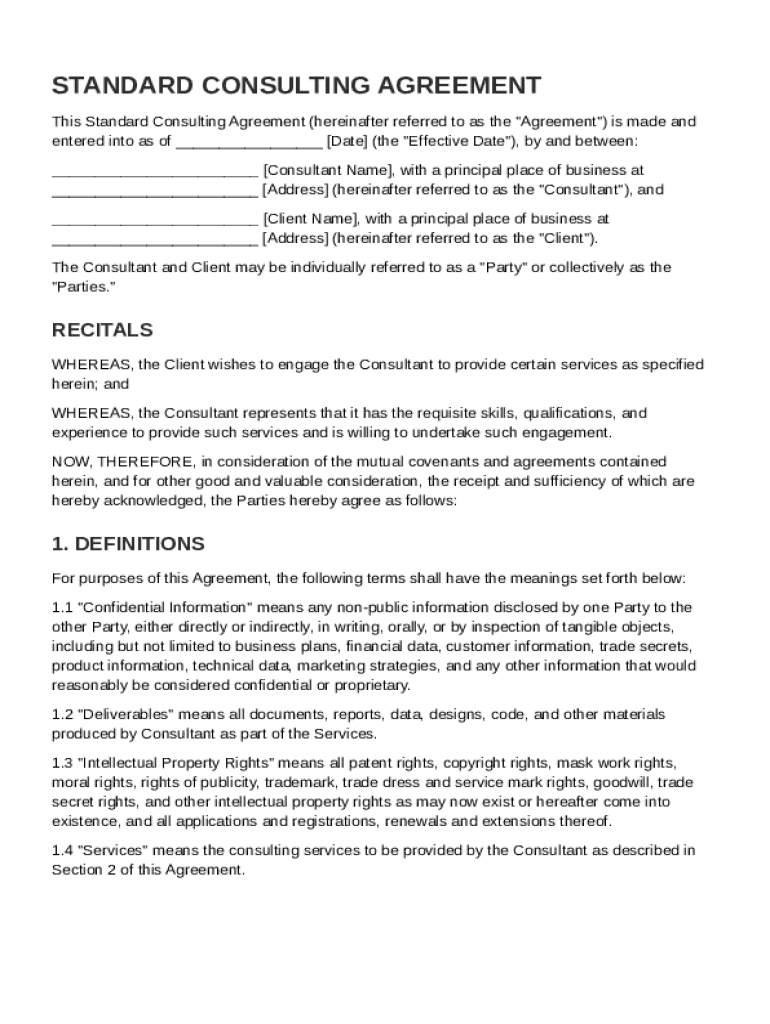
The Standard Consulting Agreement Template is a legal document that outlines the terms and conditions under which a consultant provides services to a client. It establishes a clear framework for the professional relationship, delineating responsibilities, compensation, and other critical aspects. By defining key terms, it ensures both parties have a mutual understanding, reducing the risk of misunderstandings or disputes.
Essential Components
- Services Description: Details about the nature of services provided.
- Compensation Structure: How and when the consultant will be paid.
- Confidentiality Clauses: Protection of sensitive information shared during the consultancy.
- Intellectual Property Rights: Ownership and usage rights regarding IP developed during the engagement.
- Termination Conditions: Terms under which the agreement can be dissolved.
Key Elements of the Standard Consulting Agreement Template
Understanding the structure of this agreement is crucial for drafting a contract that meets the needs of both parties.
Core Sections
- Scope of Services: Clearly defines what the consultant will do, ensuring alignment on deliverables.
- Payment Terms: Establishes the rate, payment schedule, and any conditions for payment adjustments.
- Confidentiality Agreement: Protects proprietary information shared by the client.
- Indemnification Clause: Outlines conditions under which the consultant may need to indemnify the client.
- Dispute Resolution: Processes for handling disagreements, potentially including arbitration or litigation.
Additional Considerations
- Non-compete Clauses: Restrictions preventing the consultant from engaging with competitors.
- Work for Hire Agreements: Specifies whether the work produced is owned by the client.
Important Terms Related to the Standard Consulting Agreement Template
Grasping the terminology used within a consulting agreement can help prevent confusion and ensure a smooth contractual relationship.
Commonly Used Terms
- Consultant: The individual or firm providing expert services.
- Client: The recipient of the consultant's services.
- Deliverables: Specific outcomes or outputs the consultant will provide.
- Effective Date: The date when the agreement comes into effect.
- Force Majeure: Circumstances that might impact the fulfillment of contractual obligations, outside the control of either party.
How to Use the Standard Consulting Agreement Template
This template serves as a practical tool to formalize consultancy arrangements. Here's how to implement it effectively.
Implementation Steps
- Download the Template: Obtain a standard template from a trusted legal resource online or through a document management platform like DocHub.
- Customization: Modify the template to reflect the specific details of the engagement, focusing on services, compensation, and obligations.
- Review Legal Terms: Ensure compliance with local laws and include all necessary clauses.
- Consult Legal Counsel: Seek guidance from a lawyer to validate and refine the agreement.
Practical Application
- Tailor terms to fit specific projects or consulting fields.
- Use examples from past agreements to fine-tune sections based on industry standards.
Legal Use of the Standard Consulting Agreement Template
The agreement must align with U.S. legal standards to ensure its enforceability and protection for both parties.
Compliance with Legal Standards
- ESIGN Act: Ensure electronic signatures are legally valid.
- State-specific Regulations: Be aware of varying state laws that might affect contract terms.
- Tax Regulations: Align compensation clauses with current tax reporting requirements.
Legal Protection Measures
- Authenticated Signatures: Use validated digital signature services to enhance the legal standing of the agreement.
- Regular Updates: Periodically revise clauses to remain compliant with evolving laws.
Steps to Complete the Standard Consulting Agreement Template
Filling out this template correctly ensures that all critical areas are covered and legally binding.
Detailed Completion Process
- Gather Information: Collect data on services, compensation, and parties involved.
- Fill in Basic Details: Include names, contact information, and effective dates.
- Specify Services: Clearly outline the scope and nature of the consulting services.
- Define Payment Structures: Input specific compensation details, including payment frequency and method.
- Incorporate Legal Clauses: Ensure sections such as confidentiality, IP rights, and indemnification are included.
- Finalize and Review: Double-check all entries for accuracy before seeking legal approval.
- Sign and Distribute: Obtain signatures from all parties to activate the agreement.
Tips for Accurate Completion
- Use clear and concise language.
- Regularly consult with a legal professional during the drafting process.
State-Specific Rules for the Standard Consulting Agreement Template
While many aspects of consulting agreements are universally applicable, some may vary by state.
Understanding State Variations
- Employment Laws: Different states have unique regulations governing the classification of workers and consulting arrangements.
- Non-compete Clauses: Legality and enforceability can vary significantly between states.
- E-signature Laws: Ensure compliance with state-specific electronic signature regulations.
Practical Examples
- Some states may prohibit certain non-compete agreements, impacting how these clauses should be drafted.
Who Typically Uses the Standard Consulting Agreement Template
This template is versatile and applicable across various industries and professional settings.


Common Users
- Freelance Consultants: Often employ the template to standardize client engagements.
- Businesses: Utilize consulting agreements when enlisting external expertise.
- Legal Practitioners: Develop customized versions of the template for diverse clients.
- Project Managers: Implement agreements as part of broader project management practices.

Industry Applications
- IT Services: For software or systems consulting engagements.
- Marketing Agencies: To outline terms for campaign or strategy consultations.
- Legal Services: When offering specialized legal consultancy.