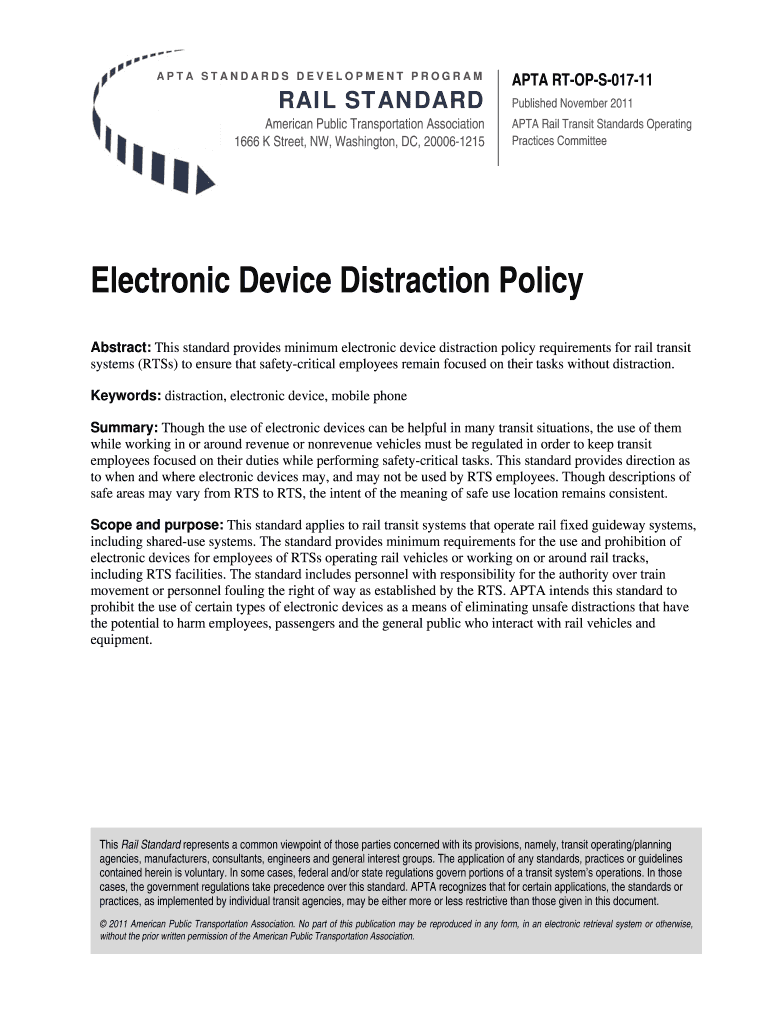







Definition and Purpose of the APTA Standards Development Program
The APTA Standards Development Program is a critical framework designed to establish industry-wide guidelines and best practices within the public transportation sector. Its primary objective is to ensure safety, reliability, efficiency, and sustainability across all forms of public transit, including bus, rail, and paratransit services. By setting uniform standards, the program helps maintain a consistent level of quality and service across different transit systems, fostering an environment where both operators and passengers benefit from improved transit operations.
Key Features
- Safety and Compliance: Ensures all public transportation entities adhere to safety protocols and federal regulations.
- Quality Control: Promotes consistent service quality by setting benchmarks for various transit operations.
- Innovation Facilitation: Encourages the adoption of new technologies and practices, ensuring the advancement of the public transit industry.
How to Use the APTA Standards Development Program
Implementing the APTA Standards Development Program involves several steps aimed at integrating these standards within a transit agency's operations. This process requires a thorough understanding of the standards and their application in real-world scenarios.
Implementation Steps
- Review Relevant Standards: Begin by identifying which APTA standards apply to your transit operations. This may include safety, operations, maintenance, or administrative standards.
- Training and Education: Conduct training sessions for staff to ensure they understand and can implement these standards effectively.
- Integration and Monitoring: Incorporate standards into daily operations and establish monitoring mechanisms to ensure ongoing compliance and performance evaluation.
Steps to Complete the APTA Standards Development Program
Completing the program involves a series of methodical steps that ensure a transit agency is fully aligned with the established standards.
Completion Process
- Preliminary Assessment: Evaluate existing operations against APTA standards to identify gaps and areas for improvement.
- Action Plan Development: Formulate a detailed action plan to address gaps and implement necessary changes.
- Implementation Phase: Execute the action plan, incorporating required changes into the transit system’s operations.
- Evaluation and Feedback: Conduct a follow-up assessment to gauge the effectiveness of implementation and gather feedback for continuous improvement.
Key Elements of the APTA Standards Development Program
Understanding the core components of the APTA Standards Development Program is essential for successful integration and operation within the public transit sector.
Core Components
- Guidelines and Protocols: Specific instructions on operational safety, passenger services, and vehicle maintenance.
- Criteria for Compliance: Standards that transit agencies must meet to ensure service quality and safety.
- Performance Metrics: Measures to evaluate the quality and efficiency of transit operations.
Who Typically Uses the APTA Standards Development Program
The program is utilized by a broad spectrum of stakeholders within the public transportation industry, including:


Primary Users
- Public Transit Agencies: From small local agencies to large metropolitan systems, all seek to enhance service delivery.
- Regulatory Bodies: Ensure compliance with national transportation safety and quality regulations.
- Transit Consultants: Provide expert advice and implementation support for agencies adopting these standards.
Legal Use of the APTA Standards Development Program
Legal considerations play a crucial role in the application of the APTA Standards Development Program, as they ensure compliance with relevant laws and regulations.
Compliance Requirements
- Federal and State Regulations: Ensure alignment with federal transportation laws, such as the Transportation Infrastructure Finance and Innovation Act.
- Liability and Risk Management: Implement standards to mitigate risks and reduce liability claims related to transit operations.
Important Terms Related to the APTA Standards Development Program
Familiarity with specific terminologies is essential when navigating the APTA Standards Development Program.
Key Terms
- Compliance Evaluation: Process of assessing adherence to the standards.
- Performance Benchmarking: Evaluation against established best practices to determine service performance.
- Risk Assessment: Identification and analysis of potential risks in transit operations.
Digital vs. Paper Version
In today’s digital age, understanding the distinction between digital and paper versions of the APTA Standards Development Program can significantly influence your implementation strategy.
Pros and Cons
-
Digital Version:
- Pros: Easy access and updating of standards; facilitates remote training and implementation.
- Cons: Requires technical infrastructure and may have cybersecurity considerations.
-
Paper Version:
- Pros: Tangible reference materials; easy distribution in areas with limited digital access.
- Cons: Prone to physical damage and can quickly become outdated.
Maximizing the benefits of the APTA Standards Development Program requires careful planning and strategic implementation across various organizational levels within the transit industry.