






Definition and Purpose of the Shared Parking Agreement
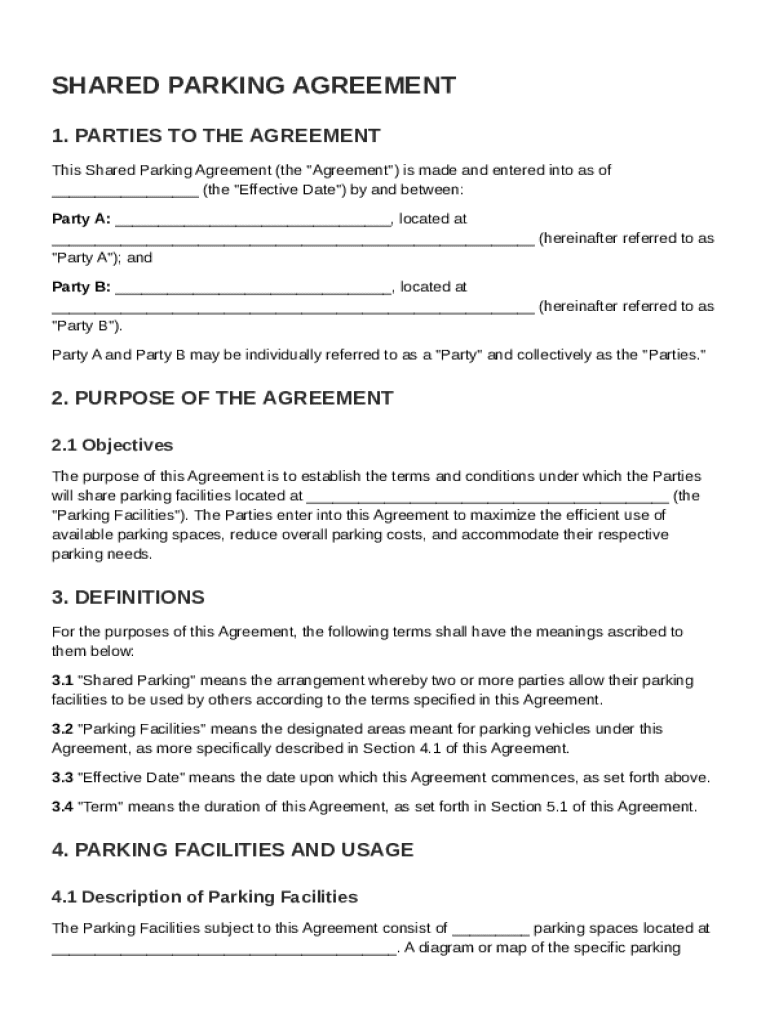
A Shared Parking Agreement is a legally binding document designed to facilitate the joint use of parking spaces between two or more parties. Such an agreement is crucial for optimizing the use of parking facilities, reducing costs, and addressing the specific needs of all involved parties. The document generally outlines various elements, including the allocation of parking spaces, usage guidelines, fee structures, and maintenance responsibilities. By establishing clear terms, this agreement helps prevent potential disputes and ensures both parties understand their obligations and rights.
Key Elements of the Shared Parking Agreement
Allocation of Spaces
The agreement specifies how parking spaces are divided among the parties. This division may be based on several factors, including the number of parking spots available and each party's requirements. The document might detail specific spaces assigned to each party, thereby preventing potential conflicts over usage.
Usage Guidelines
Defined usage guidelines ensure that all parties utilize the parking facilities appropriately. These guidelines may include operational hours, permitted vehicles, and any restrictions necessary for maintaining order and safety within the parking area.
Fee Structures
Financial aspects are a critical component of the agreement, detailing how costs are shared. This could include a flat fee, usage-based charges, or other agreed-upon financial arrangements. Specific instructions on payment deadlines and methods are also frequently included.
Steps to Complete the Shared Parking Agreement Template
- Identify the Parties Involved: Clearly specify each party entering into the agreement. This includes their legal names and contact information. Any subsidiary or affiliated groups involved should also be noted.
- Define the Terms: Clearly outline all terms and conditions, including space allocation, usage rules, fee structures, and maintenance responsibilities. Make sure both parties agree to these terms.
- Detail Maintenance Roles: Specify who is responsible for maintaining the parking area. This could involve daily cleaning, regular safety checks, and addressing repairs or improvements.
- Include Dispute Resolution Procedures: Outline methods for handling any potential disagreements. This can involve mediation, arbitration, or other negotiated solutions.
- Sign and Execute the Agreement: Both parties should thoroughly review the document, sign it, and obtain necessary witnesses or notaries if required by local regulations.
Who Typically Uses the Shared Parking Agreement Template
Shared Parking Agreements are commonly utilized by property owners, commercial real estate management companies, businesses within shared complexes, and residential buildings with limited parking access. These entities benefit from clearly established arrangements that define access and responsibilities related to shared parking facilities.

Why You Should Use the Shared Parking Agreement Template
Having a Shared Parking Agreement in place helps prevent misunderstandings about parking rights and obligations. It serves as an official record that can support enforcement of agreed terms, providing a basis for resolution in case of any disputes. It is an effective tool for maximizing the utilization of shared facilities, contributing to smoother operations and reduced conflict.
Legal Considerations for Shared Parking Agreements
Binding Nature and Compliance
Shared Parking Agreements are legally binding and must comply with local laws and regulations. Users are advised to consult legal counsel to ensure compliance with any state-specific statutes or requirements.
Renewals and Terminations
The agreement should specify terms related to its duration, renewal options, and termination conditions. This includes how and under what conditions the agreement can be renewed or terminated by either party.
Important Terms Related to the Shared Parking Agreement
- Licensing vs. Leasing: Understanding the difference between granting a license to use space (often temporary and revocable) and creating a lease (which provides more permanent rights) is crucial.
- Indemnification: This term involves one party agreeing to compensate for any losses or damages incurred due to their use of the parking spaces.
- Default Terms: Conditions specified for what constitutes a breach of the agreement and the repercussions thereof.
State-Specific Regulations and Differences
Parking agreements may be subject to variations based on state or local regulations. For example, some states might have specific requirements for signage or accessibility that must be reflected in the agreement. Parties are encouraged to research or seek legal guidance to ensure adherence to such regional mandates.