






Definition & Significance of Health Expenditures and the Personal Income Tax
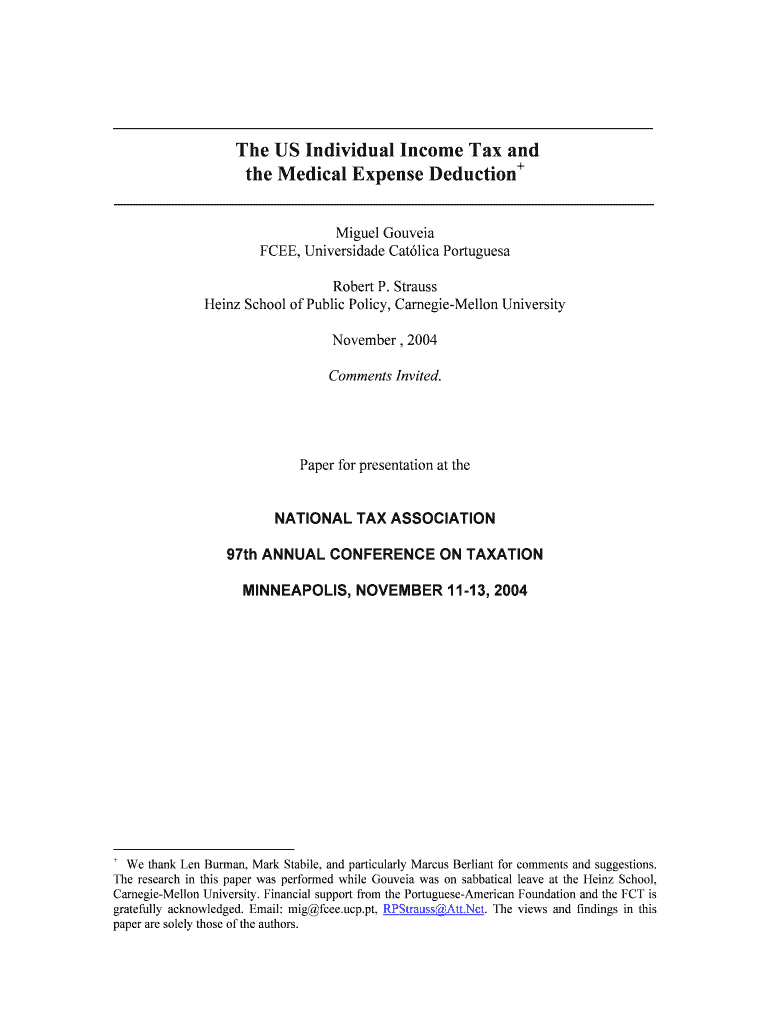
"Health Expenditures and the Personal Income Tax" examines the implications of the U.S. individual income tax system on medical expense deductions. The document particularly focuses on how tax policy parameters, such as Adjusted Gross Income (AGI) floors, impact taxpayers' decisions regarding their medical expenditures. This analysis draws on historical data, notably from the 1980s, to discuss elasticities for income and tax price, revealing the complex interaction between taxation and personal healthcare spending. By informing policymakers of these dynamics, the document highlights the tax system's role as a form of catastrophic health insurance and its broader implications for health policy.
How to Use the Health Expenditures and the Personal Income Tax
Understanding how to utilize the insights from the "Health Expenditures and the Personal Income Tax" document involves several steps:
- Identify Relevant Tax Parameters: Users should focus on specific tax parameters like AGI floors relevant to their individual or business circumstances.
- Analyze Historical Data: Assess how historical changes to tax parameters have influenced medical expense deductions.
- Apply Econometric Findings: Implement findings related to elasticities of income and tax price to refine personal or corporate tax strategies.
- Integrate into Planning: Leverage these insights to make informed decisions concerning health expense reporting and taxation strategy.
Steps to Complete the Health Expenditures and the Personal Income Tax Form
Completing forms related to "Health Expenditures and the Personal Income Tax" involves:
- Gathering Required Documentation: Prioritize collecting all necessary documents, including W-2 forms, medical expense receipts, and tax forms.
- Understanding Instructions: Thoroughly read the IRS guidelines associated with medical deductions.
- Filling Out Relevant Fields: Accurately enter all necessary data, ensuring compliance with AGI floor calculations.
- Review and Correct: Double-check all entries to avoid errors in calculations or entries.
- Submission: Submit forms according to IRS instructions, either via mail or electronically.
Who Typically Uses the Health Expenditures and the Personal Income Tax
The typical users of the "Health Expenditures and the Personal Income Tax" include:
- Individuals with Significant Medical Expenses: Those who anticipate exceeding the standard deduction can benefit from deducting medical expenses.
- Tax Professionals and Advisors: Individuals who provide advisory services on tax deductions related to personal health expenditures.
- Policy Analysts and Economists: Those who research or influence health policy using tax incentive data.


Key Elements of the Health Expenditures and the Personal Income Tax
Understanding the main components of the document involves recognizing its core elements:
- Adjustable Gross Income (AGI) Floors: Particular thresholds set within tax regulations that determine eligibility for medical deductions.
- Tax Policy Implications: Examination of how tax laws affect personal health expenditure behaviors.
- Elasticity Estimates: The document provides econometric calculations demonstrating the responsiveness of medical deductions to changes in tax parameters.
Important Terms Related to Health Expenditures and the Personal Income Tax
Several key terms are essential for contextualizing the document:
- AGI Floor: A specified amount of AGI that must be exceeded before a taxpayer can deduct medical expenses.
- Tax Price Elasticity: The responsiveness of medical deductions relative to changes in taxation rates or rules.
- Catastrophic Health Insurance: The tax system's role in mitigating massive out-of-pocket health expenditures through deductions.
IRS Guidelines on Health Expenditures
The IRS provides specific guidelines relevant to the document and medical expense deductions:
- Eligibility Criteria: Taxpayers must understand AGI thresholds and qualifying medical expenses to claim deductions.
- Required Documentation: Accurate records of health-related expenses must be kept to substantiate claims.
- Filing Process: Ensure that all deductions claimed follow the IRS's submission requirements for medical expenses in the applicable tax year.
Penalties for Non-Compliance
Failing to adhere to guidelines may result in penalties:
- Tax Adjustments: Incorrect submissions might lead to tax adjustments or additional filings.
- Interest and Fines: Misreported information can incur fines or interest on unpaid taxes due to incorrect deductions.
- Audit Risk: Non-compliance increases the likelihood of IRS audits, which can be both time-consuming and financially detrimental.
Eligibility Criteria for Health Expenditures and the Personal Income Tax Deductions
Understanding who is eligible to benefit from these deductions involves recognizing certain criteria:
- Income Thresholds: Only taxpayers who exceed the necessary AGI floor can leverage medical expense deductions.
- Qualifying Expenses: Expenses must be primarily health-related and unreimbursed by insurance.
- Filing Status: Different thresholds or criteria might apply depending on one’s filing status, such as single, married filing jointly, or head of household.

Examples of Using the Health Expenditures and the Personal Income Tax
Practical usage scenarios can help illustrate the document's application:
- Case Study of a Retired Individual: An individual on a fixed income with large out-of-pocket medical expenses may significantly benefit from deductions exceeding the AGI floor, thus reducing taxable income.
- Scenario for Self-Employed Individuals: A self-employed person might leverage both personal and business health expenditures to optimize tax deductions.
State-Specific Rules for Health Expenditures and the Personal Income Tax
Some states have specific rules that affect how these expenditures are treated for state tax purposes, distinct from federal guidelines. Understanding this is vital:
- State vs. Federal Deductions: State-level variations can impact eligibility, amounts, and the method of calculating medical expense deductions.
- State Tax Credits: Some states offer credits or additional deductions beyond federal allowances for medical expenditures.
Versions or Alternatives to the Health Expenditures and the Personal Income Tax
Understanding various versions or related documents may deepen comprehension:
- Historical Analyses: Past editions may provide context on evolving tax policies relating to health expenditures.
- Alternative Documents: Similar documents from different tax years can reveal shifts in tax policy or deduction limits over time.