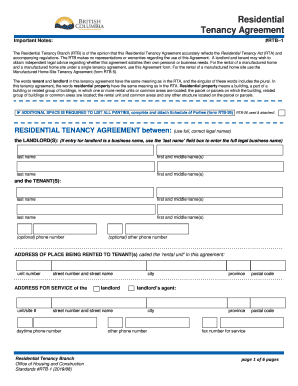
01. Edit your form online
Type text, add images, blackout confidential details, add comments, highlights and more.

Type text, add images, blackout confidential details, add comments, highlights and more.

Draw your signature, type it, upload its image, or use your mobile device as a signature pad.

Send it via email, link, or fax. You can also download it, export it or print it out.
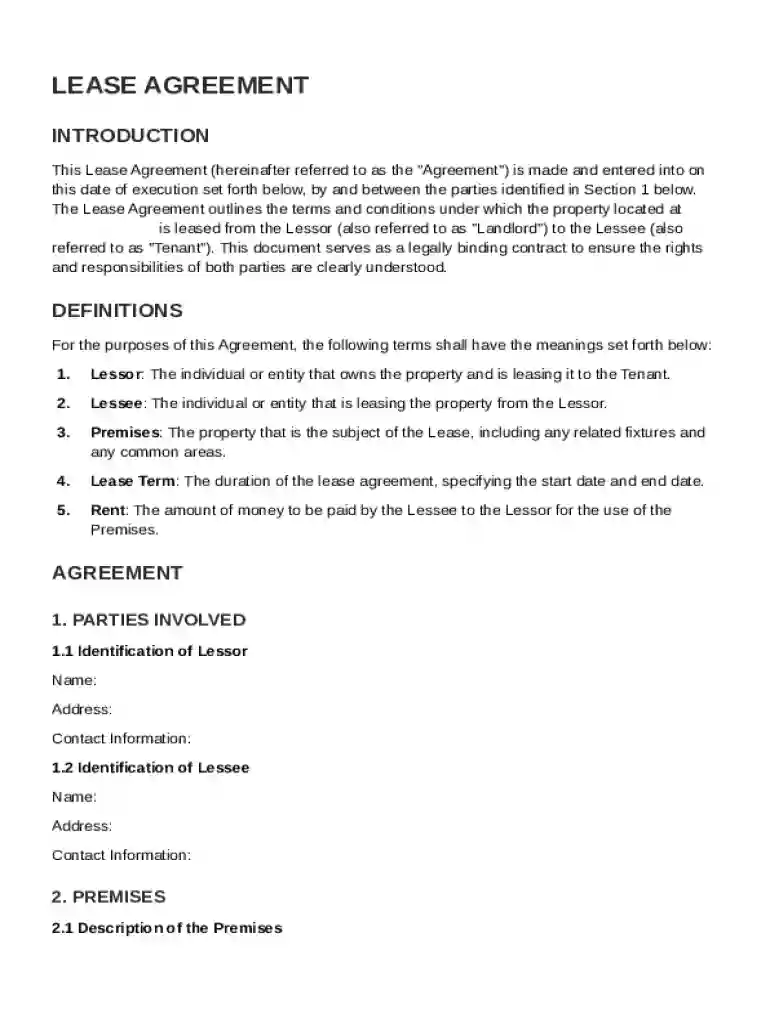
A "Lease Document Agreement Template" is a pre-structured document designed to standardize the process of creating lease agreements between a landlord (lessor) and a tenant (lessee). This template contains typical terms and conditions required for leasing a property, ensuring all necessary information is included for legal validity. It provides a framework by which both parties can specify rights, responsibilities, and policies regarding the leased property. Essentially, it serves as a legally binding contract to clarify obligations and prevent potential disputes.
The Lease Document Agreement Template allows landlords and tenants to outline their agreement terms efficiently. To use this template, start by filling out the basic details such as names, contact information, and property address. Continue by inputting specifics regarding the lease term, rent amounts, and due dates. For comprehensive coverage, ensure sections on maintenance responsibilities, allowed uses of property, and conditions for renewing or terminating the lease are filled out. Users should customize it according to specific agreements made between them, ensuring clarity and legal compliance for both parties.
Lease agreements can vary considerably depending on state-specific laws in the United States. It is crucial to ensure the template aligns with local leasing regulations. For example:
The Lease Document Agreement Template is primarily used by landlords and property managers leasing residential or commercial properties. It is also useful for real estate professionals who facilitate rental transactions. Tenants may also use the template to understand standard lease terms or to propose specific conditions during lease negotiations. Additionally, legal professionals may utilize these templates to draft personalized agreements quickly while ensuring compliance with standard industry practices.


Using the Lease Document Agreement Template helps ensure that lease agreements are legally recognized and enforceable. By adhering to the template’s structured format, all necessary information is included to comply with jurisdictional regulations. Key legal provisions such as tenant rights, property safety standards, and landlord responsibilities are outlined to mitigate risks of non-compliance. Users should be aware that while the template provides a comprehensive framework, legal counsel might still be necessary for complex leasing situations or where state-specific laws heavily impact lease agreements.
While traditional lease agreements may be completed on paper, utilizing the digital version of the Lease Document Agreement Template offers significant advantages. Platforms like DocHub provide tools for editing, sharing, and signing documents in a digital form, improving accessibility and efficiency. Digital lease agreements allow for easier updates, electronic signatures, and storage, reducing the need for physical handling and archiving. Furthermore, digital versions often integrate security measures, such as encryption, to protect sensitive property and personal information throughout the leasing process.
At DocHub, your data security is our priority. We follow HIPAA, SOC2, GDPR, and other standards, so you can work on your documents with confidence.