






Definition & Meaning
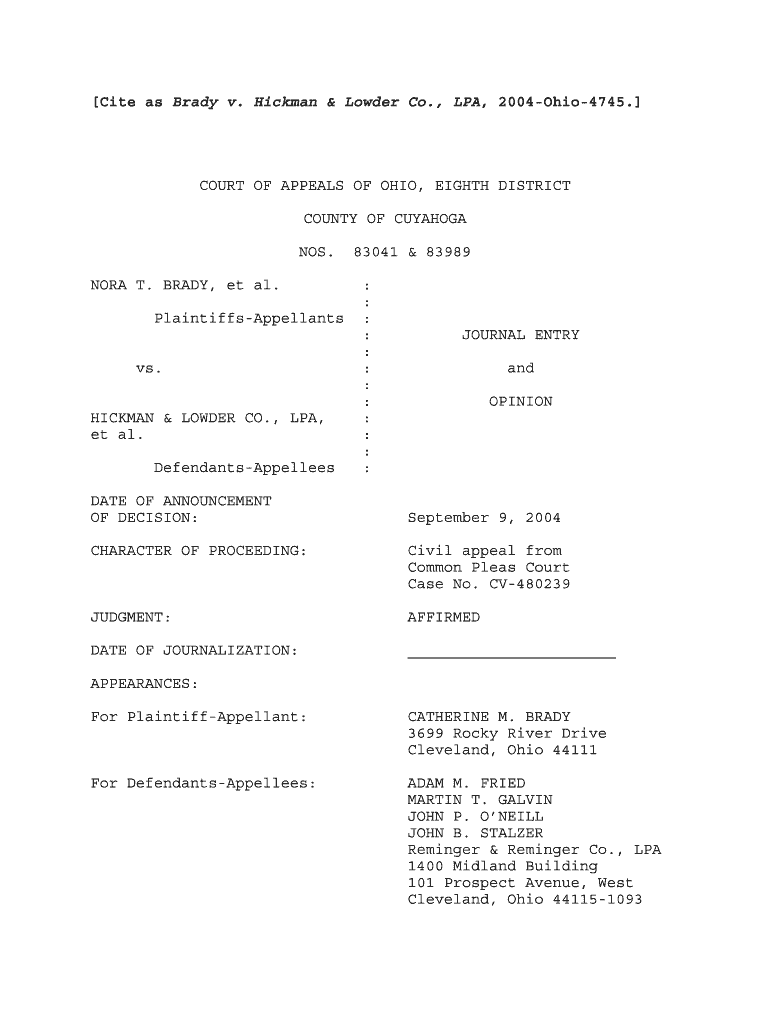
The term "Brady v Hickman and Lowder Co, LPA - Supreme Court - State of Ohio" refers to a legal case reviewed by the Supreme Court of the State of Ohio. This case centers around an appeal concerning allegations of legal malpractice, negligent representation, and intentional interference with inheritance claims. These claims, brought forth by the plaintiff-appellant, were leveled against the defendant-appellee, Hickman & Lowder Co., LPA. The Supreme Court's review plays a critical role in assessing legal merits and potential precedents in Ohio's judicial system.
Key Elements of the Case
Several components are crucial to understanding the depth of the Brady v Hickman case:
-
Legal Malpractice: This element involves accusations related to the failure of legal counsel to provide competent and adequate representation, which allegedly led to damages for the client.
-
Negligent Representation: This claim emphasizes inadequacies in the legal representation, where the negligence of the attorney in adhering to professional standards caused harm to their client.
-
Intentional Interference with Inheritance: This involves allegations that actions were taken to disrupt or alter the rightful inheritance, an important consideration in estate and family law.
-
Standing and Claims: The court found that the plaintiff-appellant lacked the standing to bring the suit, which hinges on legal authority or interest to engage in litigation.
Legal Use and Implications
In legal contexts, the implication of rulings like "Brady v Hickman and Lowder Co, LPA" often extends beyond the immediate parties involved, especially in setting precedents for similar cases. Legal practitioners in Ohio may reference this case when examining:
- Restrictions concerning legal malpractice and client representation.
- The nuances of inheritance laws and the rights of potential claimants.
- Ohio's legal standards regarding who can initiate such legal proceedings.
Important Terms Related to the Case
To comprehensively understand "Brady v Hickman and Lowder Co, LPA," recognizing the terminology used within the legal proceedings is essential:
-
Plaintiff-Appellant: The party who initiates the appeal process in a higher court after losing in a lower court.
-
Defendant-Appellee: The party responding to the appeal, often seeking the affirmation of the lower court's decision.
-
Standing: A legal principle determining whether a party has the right to bring a lawsuit based on their vested interest in the outcome.
Why Review This Case?
Studying "Brady v Hickman and Lowder Co, LPA" is critical for legal professionals and students to understand Ohio's precedence in matters of legal malpractice and inheritance law. Such cases offer insights into:
- The evidentiary burdens required to sustain claims of malpractice.
- The procedural aspects of appeals in the state Supreme Court.
- The impact of legal standing in determining a party's right to sue.
Who Typically Uses This Case?
This case is primarily referenced by:
-
Lawyers and Legal Scholars: Those specializing in inheritance law, malpractice, and appellate court processes leverage such cases to guide legal arguments and strategy.
-
Judges and Clerks: It serves as a premiere reference when similar issues arise in future court decisions.
-
Law Students: As an educational example of Ohio's legal judgments and procedural aspects regarding appellate review.
Examples of Using This Case
Legal practitioners may use Brady v Hickman in briefings and oral arguments to:
-
Illustrate comparable circumstances involving an attorney's duty of care and possible breaches.
-
Articulate the limits of standing requirements in Ohio cases involving family estates and standing.
-
Highlight procedural errors in lower court rulings during appeals.
State-Specific Rules for Ohio
Ohio has unique state rules that impact legal proceedings like Brady v Hickman:
-
State-Specific Ethical Standards: Ohio imposes distinct professional conduct guidelines for attorneys, which are pivotal in assessing malpractice claims.
-
Inheritance Laws: Ohio's statutes concerning inheritance and notes on intentional interference provide a robust framework for dispute resolution.
-
Judicial Precedents: Decisions by the Ohio Supreme Court are binding and shape ongoing interpretations of the state laws revolving around legal and familial obligations.
By examining these specific elements and standards, individuals involved with or studying the "Brady v Hickman and Lowder Co, LPA" case can better understand its significance and implications in Ohio's legal landscape.