






Definition & Meaning
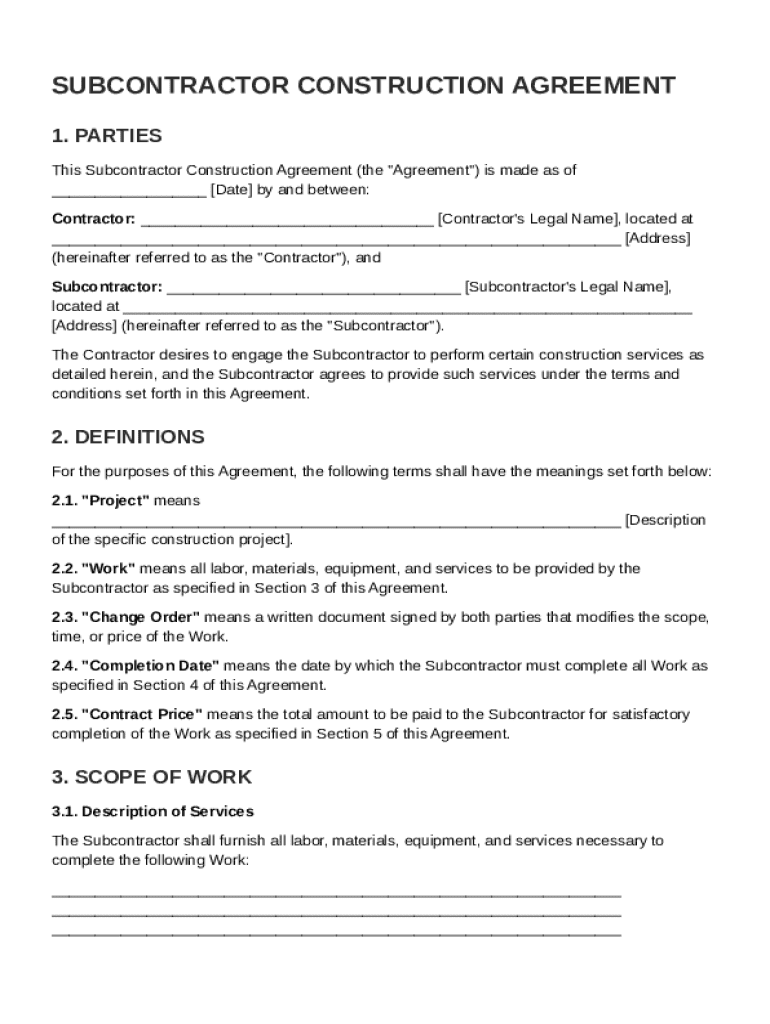
A Subcontractor Construction Agreement Template is a standardized document used to define the terms between a contractor and a subcontractor for specific construction services. This template helps ensure clarity and mutual understanding about the scope of work, compensation, and responsibilities. It outlines key elements such as project duration, change orders, and dispute resolution methods, providing a structured framework that minimizes misunderstandings and legal disputes in construction projects.
Key Components
- Scope of Work: Clearly defines the tasks and responsibilities assigned to the subcontractor. This section specifies project details and timelines to ensure both parties have aligned expectations.
- Terms of Payment: Details the payment structure, including the amount, schedule, and method of payments. It also covers potential penalties or bonuses based on project performance.
How to Use the Subcontractor Construction Agreement Template
To effectively use the Subcontractor Construction Agreement Template, follow these steps to ensure all necessary information is captured and properly documented:
-
Customize the Template: Begin by filling in the basic details, such as the names and contact information of both parties. Tailor the document to reflect the specific nature of the project and any unique requirements.
-
Specify Project Details: Include detailed descriptions of the work to be performed, required materials, and any project-specific expectations. This helps prevent disputes over scope and quality of work.
-
Outline Payment Terms: Define how and when payments will be made. Include any conditions, such as milestones or project completion, that must be met before payments are issued.
-
Review & Sign: Once all sections are completed, both parties should review the document carefully to ensure all terms are understood and agree to. Each party should sign and date the agreement to make it legally binding.
Practical Tips
- Consult Legal Counsel: It's wise to have the agreement reviewed by a legal professional to ensure compliance with local laws and construction regulations.
- Keep Copies: Both parties should keep a signed copy of the agreement for their records to refer back to in case of any disputes or clarifications needed in the future.
Key Elements of the Subcontractor Construction Agreement Template
The following are essential components typically included in a Subcontractor Construction Agreement Template:
- Parties Involved: Clearly state the names and roles of each party, including contractor and subcontractor.
- Duration and Timeline: Outline the start date, end date, and any critical deadlines within the project timeline.
- Insurance Requirements: Detail the necessary insurance coverage the subcontractor must maintain throughout the project duration, such as liability and workers’ compensation.
- Compliance & Regulations: Ensure adherence to all relevant local, state, and federal laws, including obtaining necessary permits and licenses.
Additional Considerations
- Change Order Procedures: Specify how changes to the project scope will be handled, including the process for approving changes and any adjustments to timeframes and costs.
- Early Termination Clauses: Detail the conditions under which the agreement can be terminated by either party before project completion, including any penalties associated with early termination.
Legal Use of the Subcontractor Construction Agreement Template
Legal compliance is a crucial aspect of the Subcontractor Construction Agreement Template. This ensures the agreement upholds contractual standards and minimizes legal risks.
- Binding Agreement: Once signed, this template serves as a legally binding contract between the contractor and subcontractor, enforceable by law.
- Risk Management: Outlines processes for handling disputes, which may include mediation or arbitration, to provide a structured legal resolution path.
Ensuring Compliance
- Local Laws Adherence: The agreement should comply with state-specific construction law requirements, including obligations under labor law for the treatment and payment of workers.
- Documentation: Ensure all relevant supporting documents, such as licenses and insurance certificates, are attached and verified for authenticity.
State-by-State Differences
Understanding the regional legal landscape is crucial for ensuring that the Subcontractor Construction Agreement Template is adequately tailored to comply with varying state laws.
Regional Variations
- Licensing Requirements: Some states mandate specific licensing for subcontractors. Verify that the subcontractor holds appropriate credentials.
- Contracts and Liens: States may have different rules regarding contract enforceability and the handling of mechanics' liens, which protect payments to subcontractors.
Who Typically Uses the Subcontractor Construction Agreement Template
This template is primarily used by construction industry professionals who have a contractual relationship that involves subcontracting arrangements.
- General Contractors: Use this template to formalize agreements with subcontractors to delegate specific parts of a larger construction project.
- Subcontractors: Utilize the template to understand their rights and responsibilities as parties hired to complete designated tasks within the scope of a larger project.


Business Entities and Professions
- Construction Firms: Both large and small construction companies seeking to manage subcontractor relationships efficiently and legally.
- Legal Advisors: Attorneys specializing in construction law may advise clients on customizing and executing these agreements effectively.
Examples of Using the Subcontractor Construction Agreement Template
Real-world usage scenarios exemplify the utility of the Subcontractor Construction Agreement Template in effectively managing construction projects.
Case Studies
- Residential Construction: A general contractor uses the template to hire a plumbing subcontractor for a housing development project, outlining all necessary terms and ensuring the timely completion of plumbing installations.
- Commercial Projects: A commercial property developer employs multiple subcontractors using separate agreements to ensure that each specialized trade, from electrical work to drywall installation, is handled according to specific requirements and timelines.
Steps to Complete the Subcontractor Construction Agreement Template
The process of completing the Subcontractor Construction Agreement Template ensures that all relevant fields are populated, and both parties are aligned in their understanding of the agreement.
- Gather Information: Collect all necessary details about both parties and the specific project requirements.
- Draft Initial Agreement: Populate the template with the collected information, emphasizing the scope of work and compensation details.
- Review Drafts: Conduct thorough revisions to check for accuracy, completeness, and clarity of all contractual terms.
- Negotiate Terms: If needed, adjust clauses to reflect mutual agreement on responsibilities, deadlines, and legal protections.
- Finalize Agreement: Make any final edits based on negotiations and revisions before signing and dating the document.
Final Considerations
- Ensure Mutual Understanding: Before signing, confirm that both parties fully comprehend and agree to all terms, reflecting any negotiated changes in the final version.
- Storage and Documentation: Properly store signed agreements in a secure location accessible for reference throughout the project's duration.