






Definition and Meaning
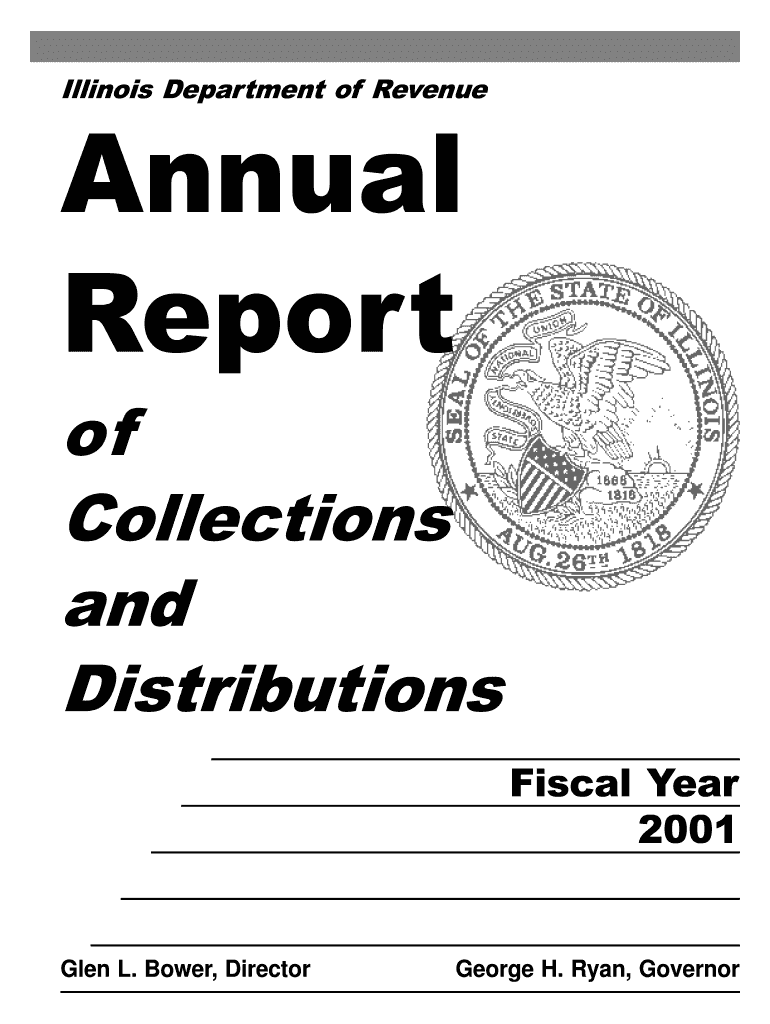
"Of Collections and Distributions - Illinois Department of Revenue - revenue state il" refers to the documentation and processes involved in collecting and distributing taxes within the state of Illinois. This form is essential for ensuring the correct allocation of funds collected from various taxes such as individual income tax, corporate income tax, and sales tax. It outlines the protocol for distributing the collected revenues to appropriate state funds, agencies, and programs, aligning with state legislative requirements.
- The process involves both centralized and decentralized methods of revenue collection, depending on the type of tax and payer category.
- The documentation includes comprehensive details about taxpayer obligations and the state's fiscal policies.
- Revenue collected is crucial for funding statewide public services and infrastructure projects.
Key Elements of the Illinois Revenue Form
The form encompasses core components critical to the collection and distribution process:
- Taxpayer Information: Includes personal or corporate details such as name, tax identification number, and filing status.
- Tax Categories: Lists applicable taxes for the given period, including income, sales, and property taxes.
- Collection Details: Breaks down amounts collected for each tax type, emphasizing sources and collection methods.
- Distribution Protocols: Defines the manner and proportions in which revenue will be allocated among various state funds.
Understanding these elements is pivotal for accurate tax compliance and fiscal planning.
How to Obtain the Form
The form can be accessed through several channels:
- Online Portal: The Illinois Department of Revenue's official website provides downloadable versions of the form.
- In-Person: Visit designated state revenue offices for hard copies.
- By Mail: Request copies via postal mail if digital access is not feasible.
These accessibility options ensure that taxpayers can choose the most convenient method for their circumstances.
Steps to Complete the Form
Completing the form requires careful attention to detail:
- Gather Necessary Documentation: Collect supporting documents such as previous tax returns, W-2 forms, and income statements.
- Fill Out Taxpayer Information: Enter personal or business details accurately.
- Report Revenue Collections: Detail all sources of income and taxable activities.
- Calculate Tax Owed: Use provided guidelines to compute total tax liability.
- Specify Distributions: Indicate how collected revenues will be allocated per state requirements.
- Review and Submit: Double-check all entries for accuracy before submission.
Adhering to these steps ensures compliance and reduces the risk of errors.
Important Terms Explained
Familiarity with key terms is fundamental:
- Revenue Collection: The process of gathering taxes from individuals and businesses.
- Fiscal Year: The 12-month period used for budgeting and financial reporting, differing from the calendar year.
- Allocation: The distribution of collected funds to designated state agencies or projects.
- Compliance: Adherence to state laws and regulations regarding tax collection and payment.
These terms often recur in discussions related to revenue management and legal compliance.
Legal Use and Compliance
Legal adherence is crucial for the use of this form:
- Ensure all reported information aligns with state law to avoid penalties.
- Maintain records for auditing purposes, especially during disputes.
- Consult legal or tax professionals for guidance on complex scenarios.
Non-compliance can lead to fines and further legal repercussions.
State-Specific Rules for Illinois
Some rules are unique to Illinois:
- Electronic Filing: Encouraged for efficiency, with many resources to facilitate online submission.
- Support Programs: Special provisions for seniors and disabled citizens.
- Updated Tax Laws: Recent amendments may impact filing requirements. Stay informed through state communications.
Recognizing these rules aids in effective tax filing and revenue management.
Examples of Using the Form
Real-world application scenarios:
- Small Business Owners: Utilize the form to report business income and calculate tax obligations.
- Retirees: Determine benefits applicable under senior-specific schemes.
- Corporations: Allocate funds accurately as per distribution lists for regulatory adherence.
These examples highlight the versatility and necessity of the form across various taxpayer categories.