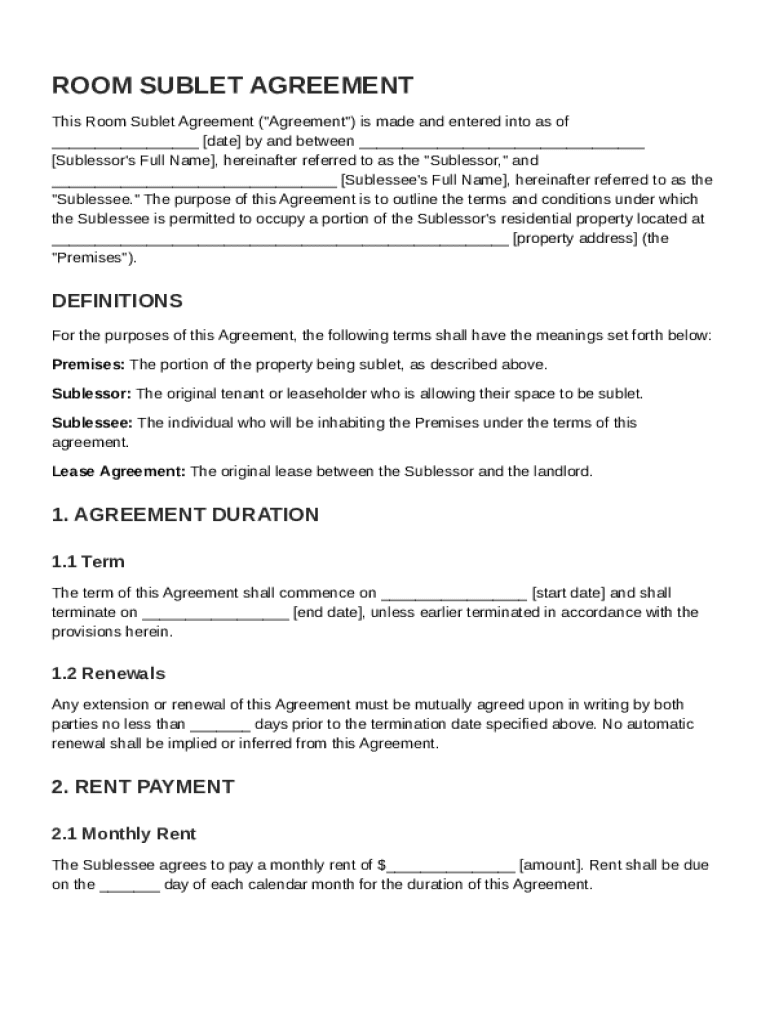







Definition and Purpose of a Room Sublet Agreement
A Room Sublet Agreement is a legally binding document that allows a tenant, known as the sublessor, to rent out a portion of their leased residential property to another individual, known as the sublessee. This agreement serves to outline the terms and conditions of the subletting arrangement, ensuring that all parties understand their rights and responsibilities. Key components typically include rent payment details, duration of the sublease, and the sublessee's obligations concerning property maintenance.
Importance of Understanding the Document
Understanding the Room Sublet Agreement is crucial for both sublessors and sublessees. It ensures compliance with the original lease agreement between the landlord and the tenant, preventing potential legal disputes. The agreement also protects the sublessor from financial liability should any property damages occur during the sublease period. Thus, reading and comprehensively understanding each clause is imperative for a successful subletting experience.
Key Elements of the Room Sublet Agreement
A structured Room Sublet Agreement includes several critical components that define its function and scope. These elements ensure clarity and legal protection for both the sublessor and sublessee:
- Duration: Clearly specifies the start and end dates of the sublease period.
- Rent Payment Details: Outlines the agreed rent amount, payment method, and due dates.
- Security Deposit: States the amount required, conditions for its return, and uses.
- Utilities and Maintenance: Clarifies who is responsible for utility payments and property upkeep.
- Termination Clauses: Provides terms under which the agreement can be prematurely terminated.
- Legal Considerations: Includes compliance with local rental laws and original lease provisions.
- Dispute Resolution Procedures: Describes the process for resolving potential disagreements.
By delineating these elements, the agreement offers a comprehensive framework for the sublease arrangement.
Steps to Complete the Room Sublet Agreement Template
Completing the Room Sublet Agreement involves several steps, each critical to finalizing the document accurately:
- Gather Necessary Information: Collect details about the property, sublessor, and sublessee, including names, contact information, and specific lease terms.
- Define Terms and Conditions: Review and fill in sections related to rent, security deposit, and lease duration.
- Incorporate Additional Clauses: Add any specific provisions pertinent to your situation, such as sublessee’s access to amenities or shared spaces.
- Review for Compliance: Ensure that all terms comply with the original lease and local housing laws.
- Obtain Signatures: Both parties must sign the document, acknowledging their agreement to the terms.
- Distribute Copies: Provide signed copies to all parties involved, including the landlord when required.
Carefully following these steps can prevent misunderstandings and ensure the legality of the sublease.
Legal Use and Compliance with Room Sublet Agreement
The Room Sublet Agreement must comply with local and state laws in the U.S. Understanding relevant legal frameworks is essential for effective subletting:
- Compliance with Original Lease: The sublease should not contradict any existing terms in the primary lease between the tenant and landlord.
- Local Laws: Some states have specific regulations for residential subleases, which may include limits on rent or requirements for landlord consent.
- Legal Binding Signatures: Digital signatures can be used but should comply with local electronic signature laws (like the ESIGN Act in the U.S.).
Failure to comply with legal guidelines can invalidate the agreement and expose parties to litigation or penalties.
State-Specific Rules for the Room Sublet Agreement
Subletting laws can vary significantly across different states in the U.S. Understanding these variations ensures compliance and avoids legal issues:
- Landlord Consent: Some states, like New York, require landlord consent before any sublease agreement can be enacted.
- Rent Control Areas: In states with rent-controlled properties, subletting may be subject to specific rules regarding rent increases.
- Tenant Rights: States differ on tenant rights concerning eviction and dispute resolution, impacting the contents of a sublease.
Consider consulting legal resources or professionals familiar with state-specific rental laws to tailor the agreement appropriately.
Examples of Using the Room Sublet Agreement
Real-world applications of the Room Sublet Agreement provide practical insights into its utility:
- Case Study: College Students: A student leases a room near campus but opts for a sublet while studying abroad, ensuring rent responsibility is maintained and housing is available upon return.
- Working Professionals: Job relocations often require temporary housing solutions, where subletting a room allows individuals to retain their primary residence without financial burden.
- Shared Living Situations: Residents in shared apartments may sublet their space to cover their share of rent during extended travel.
These examples highlight the agreement's versatility in various living situations.
Versions or Alternatives to the Room Sublet Agreement Template
While the Room Sublet Agreement is widely used, knowing its alternatives can be beneficial in certain circumstances:
- Partial Sublease: Focuses on subletting a section of the property, useful in shared living arrangements.
- Commercial Sublease Agreement: Used specifically for business or office space subletting.
- Informal Agreements: While less formal, these verbal or brief written agreements may suffice for short-term arrangements, though they carry more risk without legal backing.
Each version caters to specific needs, underscoring the importance of selecting the right type of agreement for your unique scenario.
Important Terms Related to Room Sublet Agreement Template
Understanding terminology within the Room Sublet Agreement is essential for clarity and compliance:
- Sublessor: The original tenant who arranges for another to occupy part of the leased property.
- Sublessee: The new tenant who occupies the property under the sublet.
- Premises: The specific part of the property that is being sublet.
- Consent to Sublease: A formal approval by the landlord that permits subletting, sometimes required.
Familiarity with these terms ensures all parties are aligned in their understanding and expectations.