






Definition and Purpose of the Stormwater Discharge Outfall Qualitative Monitoring Report
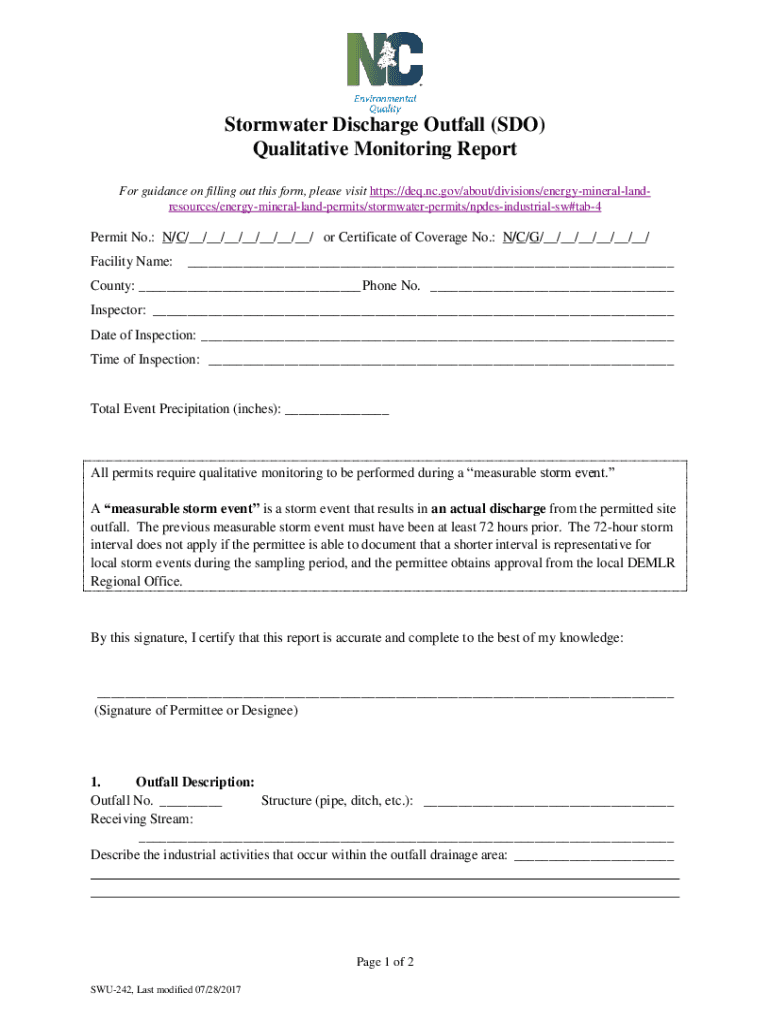
The Stormwater Discharge Outfall (SDO) Qualitative Monitoring Report is a critical document used to record and evaluate the characteristics of stormwater discharges during measurable storm events. It aims to provide comprehensive data about various attributes of stormwater discharge, including color, odor, clarity, and potential pollutants. This report is essential for identifying pollution indicators that may necessitate further investigation. By accurately documenting these details, facilities can ensure compliance with environmental regulations and help preserve water quality.
Key Features of the Monitoring Report
- Facility Information: Capture details about the location and nature of the facility where stormwater is being monitored.
- Inspection Details: Document the specifics of the inspection process, including date, time, and conditions during the evaluation.
- Observation Records: Record observations regarding the physical characteristics of the discharge, providing essential insights into potential environmental impacts.
Steps to Complete the Stormwater Discharge Outfall Qualitative Monitoring Report
Completing the SDO Qualitative Monitoring Report requires a methodical approach to ensure all necessary data is accurately captured. Here is a step-by-step guide:
- Collect Initial Data: Begin by gathering essential information about the facility and the purpose of the monitoring.
- Conduct Field Inspections: Perform on-site inspections during or immediately after measurable storm events.
- Document Observations: Observe and record aspects such as the color, clarity, and odor of the discharge.
- Identify Pollutants: Look for any signs of potential pollutants, noting unusual textures or particulates.
- Compile and Review Data: Ensure all data is combined into a coherent report, checking for completeness and accuracy.
- Submit Report: Deliver the final report to the relevant regulatory authorities or internal departments as required.
Important Terms Related to the Monitoring Report
Understanding certain key terms is crucial for the effective use of the SDO Qualitative Monitoring Report:
- Measurable Storm Event: A weather event that results in a significant amount of precipitation, requiring monitoring to assess stormwater discharge implications.
- Pollutants: Substances that may be present in stormwater, potentially posing a risk to environmental health.
- Qualitative Observations: Non-numeric, descriptive data regarding the characteristics of the stormwater discharge.
Who Typically Uses the SDO Qualitative Monitoring Report?
This report is commonly used by environmental scientists, facility managers, and regulatory compliance officers. These professionals rely on the document to ensure that stormwater discharge complies with local and national environmental regulations. It is also used by engineers and consultants working in environmental and infrastructural assessments, contributing to decision-making processes related to water management and pollution control.


Legal Use and Compliance
Ensuring proper legal use of the SDO Qualitative Monitoring Report involves adherence to several standards and guidelines. These regulations are in place to safeguard environmental health and prevent water pollution. Non-compliance can result in significant legal consequences, including fines or operational restrictions for the facility in question. Therefore, maintaining accurate and thorough documentation is critical for legal protection and operational compliance.
Key Elements of the Stormwater Discharge Outfall Monitoring Report
The SDO Qualitative Monitoring Report contains several core elements that are indispensable for comprehensive monitoring:
- Facility Description: Detailed narratives about the nature of the facility and its operational scope.
- Inspection Criteria: Specific parameters under which the inspection occurs, including equipment used and methodologies employed.
- Discharge Characteristics: In-depth descriptions of the physical and chemical attributes of the stormwater discharge.
State-Specific Rules and Variations
Variations in regulatory requirements may exist across different states, affecting how the SDO Qualitative Monitoring Report should be prepared and submitted. Some states might have stricter guidelines or additional requirements regarding pollutant levels and reporting formats. Understanding the specifics of state regulations is essential for ensuring compliance and avoiding potential legal issues.
Software and Digital Compatibility
While the document can traditionally be completed in paper format, there are advantages to using digital platforms compatible with the SDO Qualitative Monitoring Report. Systems like DocHub enable efficient data entry, sharing, and storage of the report online. This compatibility ensures that documentation processes are streamlined, reducing human error, enhancing accessibility, and facilitating instantaneous data sharing among teams and regulatory bodies.