






Definition & Meaning
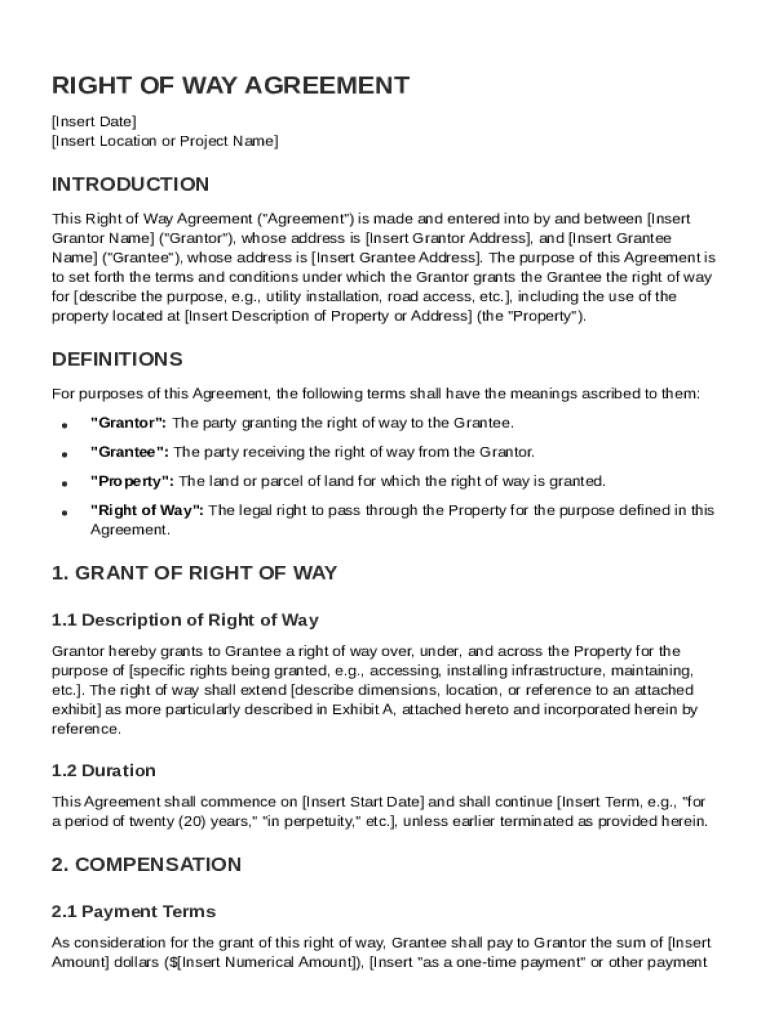
A Right of Way Agreement is a legal contract that allows the Grantor to provide the Grantee with the right to use a specific portion of the Grantor's property for a particular purpose, such as installing utilities, roads, or pathways. This agreement details various facets of the usage, including the nature of the right of way, its duration, and associated conditions and obligations. Generally used in real estate and infrastructure projects, this document aims to prevent future disputes by clearly stating the rights and responsibilities of each party involved.
Key Elements of the Right of Way Agreement Template
The Right of Way Agreement Template includes several crucial components that ensure comprehensive legal coverage:
- Identification of Parties: Clearly defines the Grantor and Grantee involved in the agreement.
- Description of Property: Specifies the exact location and boundaries of the right of way on the Grantor's land.
- Purpose and Scope: Outlines the permitted uses for the right of way and any restrictions.
- Duration: Establishes the time frame during which the right of way is valid.
- Compensation: Details any financial or other compensation required from the Grantee to the Grantor.
- Responsibilities: Lists obligations such as maintenance and repair that each party must undertake.
- Insurance and Indemnification: Specifies insurance requirements and indemnification clauses protecting both parties.
- Legal Governance: Includes jurisdiction and dispute resolution procedures.
How to Use the Right of Way Agreement Template
To effectively utilize the Right of Way Agreement Template, follow these steps:
- Download the Template: Obtain the template from a trusted source like DocHub to ensure accuracy and completeness.
- Fill Out Necessary Details: Enter specific information, including the names of the parties, property description, and purpose of use.
- Review Legal Provisions: Carefully examine all legal clauses, focusing on liabilities, insurance, and indemnification.
- Customize as Needed: Add or modify sections to suit specific state laws or additional terms agreed upon by both parties.
- Consult with Legal Counsel: Obtain a legal expert's review to verify compliance with applicable laws and standards.
- Execute the Agreement: Once all parties are satisfied, finalize the document with signatures and dates.
Legal Use of the Right of Way Agreement Template
The Right of Way Agreement carries legal binding status governed under specific state laws. Here are essential aspects to consider:
- Compliance with Local Laws: The document must adhere to jurisdictional and municipal regulations, which may vary significantly across states.
- Validity: A properly executed Right of Way Agreement is legally enforceable, granting the Grantee access as specified within.
- Dispute Resolution: Incorporates mechanisms like mediation or arbitration to handle conflicts, addressing potential legal disputes without litigation.
State-Specific Rules for the Right of Way Agreement Template
Legal requirements for Right of Way Agreements can differ by state, impacting the agreement's formation:
- Documentation Requirements: Some states may require additional affidavits or certifications.
- Tax Implications: Varying tax obligations might exist based on compensation or property categorizations.
- Recording: Certain states mandate that the agreement be publicly recorded with county officials to ensure transparency and enforceability.
Important Terms Related to Right of Way Agreement Template
Understanding specific terminology in a Right of Way Agreement is vital for clarity:
- Easement: Legal right to use land for a specific, limited purpose.
- Grantee: The party receiving the right of way.
- Grantor: The owner permitting the right of way on their property.
- Servient Estate: The property that is subject to the easement or right of way.
- Dominant Estate: The land benefiting from the right of way.
Examples of Using the Right of Way Agreement Template
Practical scenarios where a Right of Way Agreement might be required include:
- Utility Companies: Establishing pathways for electricity, water, or gas lines.
- Municipal Projects: Developing public road access across private properties.
- Telecommunications: Routing cables or infrastructure for internet services.
- Agricultural Operations: Allowing restricted access for water channel maintenance across farms.
Steps to Complete the Right of Way Agreement Template
Completing a Right of Way Agreement involves structured procedures to ensure legality and mutual understanding:
- Property Assessment: Conduct a detailed analysis to identify the portion of land applicable for the agreement.
- Negotiations: Both parties should discuss and outline agreed terms before drafting the document.
- Drafting: Use the template to initiate the drafting process, incorporating all agreed details.
- Revisions: Review and revise the document to correct any errors or omissions.
- Execution: Once final revisions are made, ensure all parties sign, and if necessary, notarize the document.
These essential elements and structured steps contribute to the effective use and implementation of a Right of Way Agreement, securing the interests of all involved parties.