






Definition & Meaning
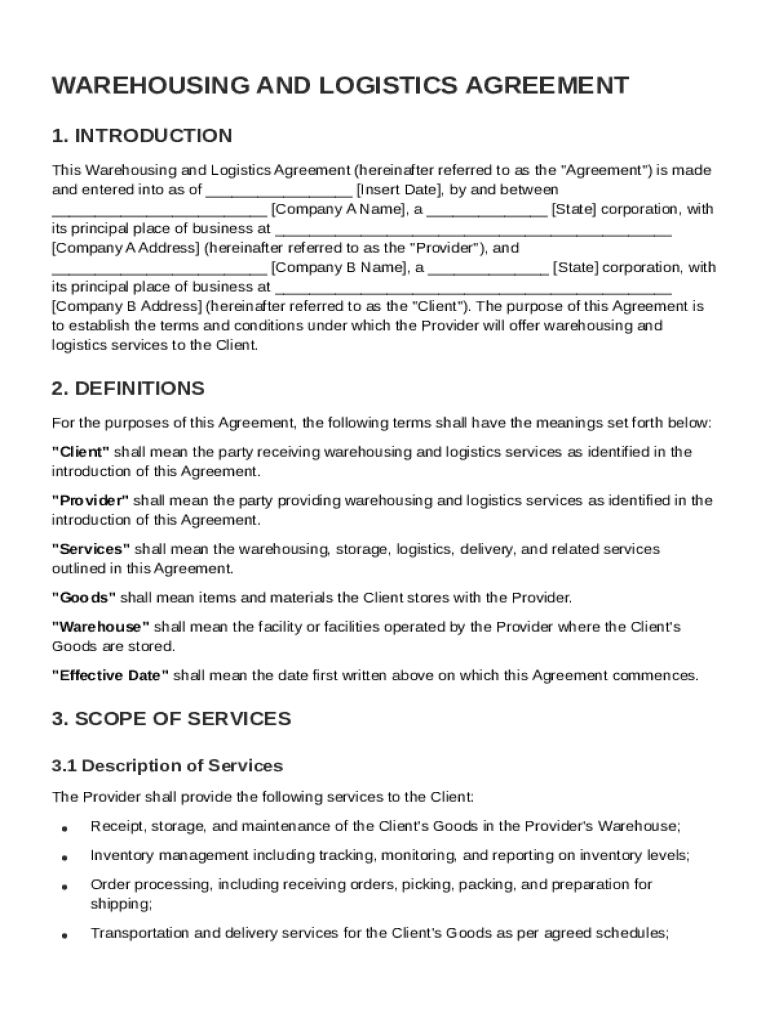
A Warehousing and Logistics Agreement Template serves as a foundational document that clearly defines the terms under which warehousing and logistics services are provided. It is a formal contract between a service provider and a client, detailing the rights and responsibilities of each party. This document outlines the scope of services, responsibilities, and expectations, providing clarity and preventing misunderstandings. Key components include storage solutions, inventory management, and transportation services, ensuring that all aspects of logistics are comprehensively covered.
Key Elements of the Warehousing and Logistics Agreement Template
The template is structured to cover all critical elements necessary for a comprehensive agreement. It typically includes:
- Scope of Services: Clearly defines the range of services offered, such as storage, inventory management, or transportation.
- Pricing and Payment Terms: Outlines the cost structure and payment schedule, including any potential penalties for late payments.
- Confidentiality Clauses: Ensures the protection of proprietary and sensitive information shared between the parties.
- Indemnification and Liability: Specifies the legal safeguards in place to protect both parties from potential liabilities.
- Termination Clauses: Describes the conditions under which the agreement can be terminated by either party.
Steps to Complete the Warehousing and Logistics Agreement Template
Completing this template involves several structured steps to ensure it aligns with the specific needs of both parties involved:
- Review the Template: Examine the document to understand its structure and the information needed.
- Modify Relevant Sections: Tailor the sections related to services, payment terms, and responsibilities to reflect the specific agreement.
- Legal Review: Have the completed template reviewed by a legal advisor to ensure compliance with applicable laws.
- Signatures: Both parties should provide their signatures to acknowledge acceptance of the terms.
- Distribution: Ensure both parties retain a copy for their records.
Important Terms Related to Warehousing and Logistics Agreement Template
Understanding crucial terminology can help clarify the agreement and its implementation:
- Inventory Management: The process of overseeing and controlling the storage and use of products.
- Value-Added Services: Additional services offered by the provider that may include packaging, labeling, or product returns.
- Force Majeure: A clause that relieves a party from liability or obligation when an extraordinary event occurs.
Legal Use of the Warehousing and Logistics Agreement Template
This template is designed to offer a legal framework between a provider and a client, ensuring that all operations are within the purview of the law. It must adhere to:
- State and Federal Laws: Align the agreement with relevant legal requirements specific to the industry and geographic region.
- Contract Enforcement: Ensure that the terms are enforceable in a court of law in the event of any disputes.
Who Typically Uses the Warehousing and Logistics Agreement Template
This template is utilized by various business entities and individuals involved in logistics and supply chain management:
- Third-Party Logistics (3PL) Providers: Companies that provide outsourced logistics services.
- Manufacturers and Retailers: Businesses that require efficient storing and shipping of products.
- E-commerce Retailers: Online businesses that manage large inventories and require reliable logistics partners.


State-Specific Rules for the Warehousing and Logistics Agreement Template
While this template offers a general framework, certain states may have specific regulations or requirements that need consideration. This includes:
- State Licensing Requirements: Some states require specific licenses or registrations for operating warehousing services.
- Insurance Obligations: Different states may have varying requirements for insurance coverage in logistics.
Examples of Using the Warehousing and Logistics Agreement Template
Real-world scenarios illustrate some common applications of this template:
- Retail Distribution: A large retailer may contract a logistics provider to handle their supply chain from manufacturing to stores.
- E-commerce Fulfillment: An online retailer uses a third-party provider to manage warehouse storage and shipment of orders.
- Cold Storage Solutions: A food manufacturer requires specialized warehousing facilities for perishable goods, which are arranged through a well-drafted agreement.