






Definition & Meaning
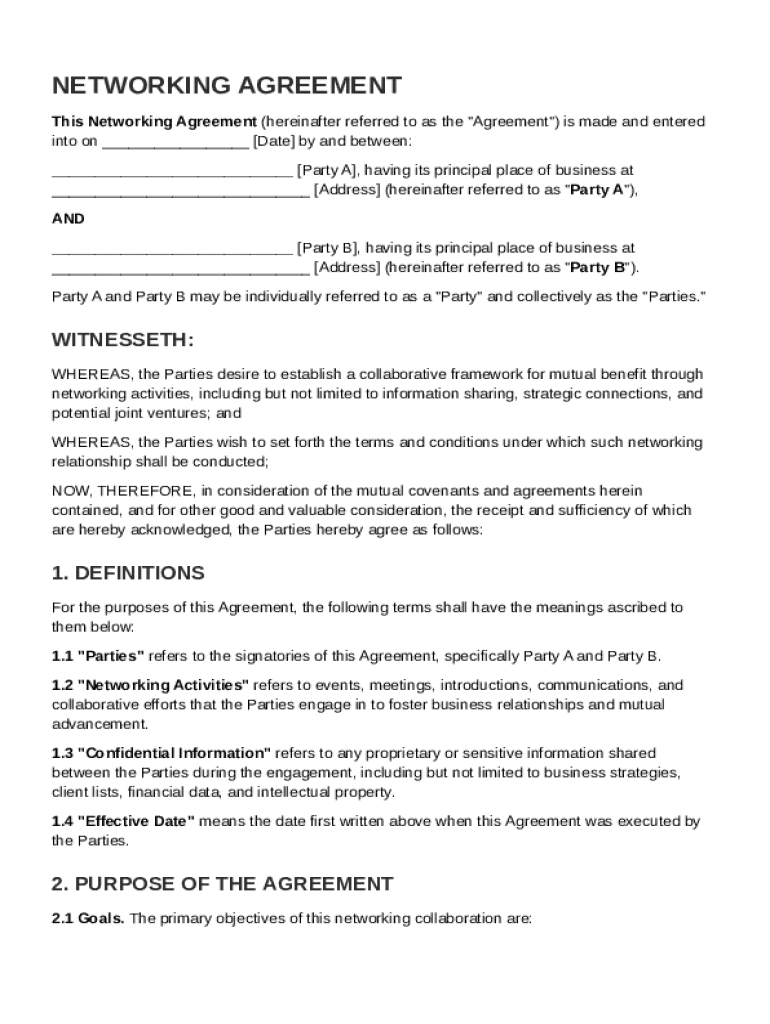
A Networking Agreement Template is a structured document designed to formalize the terms and conditions under which two or more parties collaborate for networking purposes. This template serves as a foundational framework to outline responsibilities, expectations, and the collaborative goals of involved entities. Typically, it includes clauses related to confidentiality, obligations of each party, duration, and terms for termination. By capturing these elements, the template encourages mutual understanding and facilitates structured interactions aimed at professional growth and business development.
Networking agreements are instrumental in various industries where collaboration and information exchange are pivotal. They can be used in sectors such as technology, healthcare, manufacturing, and more. Through this agreement, parties can outline specific networking activities, define what constitutes success, and delineate the scope of shared resources. Ultimately, these documents help foster trust and maintain clarity throughout the relationship.
Key Elements of the Networking Agreement Template
A robust Networking Agreement Template comprises several critical sections tailored to ensure clarity and comprehensive coverage of the networking relationship. Key elements typically include:
- Purpose and Scope: Clearly outlines the objectives of the networking agreement, detailing what each party aims to achieve through the collaboration.
- Responsibilities and Obligations: Specifies the roles and duties of each party, ensuring a well-defined understanding of individual contributions and expectations.
- Confidentiality and Non-Disclosure: Includes clauses to protect sensitive information shared during the collaboration. It is crucial for maintaining trust and preventing unauthorized disclosures.
- Duration and Termination Conditions: Defines the timeline for the agreement and the conditions under which it can be terminated, ensuring both parties have a clear understanding of the commitment length and the exit strategy.
- Indemnification: Clarifies liability arrangements, protecting parties from potential legal actions that may arise due to the networking collaboration.
- Governing Law: States which jurisdiction’s laws will apply to the agreement, providing a legal framework for resolving any disputes.
These elements form the backbone of a Networking Agreement Template and are essential for establishing a productive and legally sound collaboration.
How to Use the Networking Agreement Template
Implementing a Networking Agreement Template involves a systematic approach to ensure all components are correctly tailored to the parties' specific needs. Here’s how to effectively use the template:
-
Review and Customize: Begin by reviewing the template to familiarize yourself with its structure and components. Modify the document to include all relevant business details and customise any clauses to reflect the nuances of your specific networking initiative.
-
Define Objectives and Scope: Clearly define the goals of your networking partnership, outlining what each party aims to achieve and the measures of success.
-
Assign Responsibilities: Specify the roles and responsibilities of each party. Clearly delineate tasks and obligations to maintain accountability and streamline processes.
-
Address Legal Provisions: Ensure that all legal clauses, particularly those related to confidentiality and liability, align with the expectations and legal requirements of both parties.
-
Review and Finalize: Once customisations have been made, review the document to ensure accuracy and comprehensiveness. Have legal counsel review the agreement if necessary.
-
Execution: After finalizing, both parties should sign the document. Use a digital platform with legally binding e-signature capabilities, like DocHub, to facilitate a seamless process.
By meticulously following these steps, organizations can effectively implement the Networking Agreement Template to support a productive partnership.
Steps to Complete the Networking Agreement Template
Completing a Networking Agreement Template involves a few crucial steps to ensure that the document is comprehensive and legally binding. Following this step-by-step guide will help users navigate the process with precision:
-
Prepare Preliminary Information: Gather all necessary information regarding both participating entities, including names, contact details, and roles within the partnership.
-
Fill in Template Sections: Begin with filling out the predefined sections of the template. These include business details, objectives, and specific terms relevant to the networking activities.
-
Customize Legal Clauses: Adjust legal provisions such as confidentiality, indemnification, and governing law to reflect mutual agreements and jurisdictional preferences.
-
Insert Specific Obligations: Clearly define the obligations and expectations of each party. This ensures accountability and provides a clear roadmap for collaboration.
-
Review for Accuracy: Thoroughly review the completed document to ensure all information is accurate. Verify the alignment of terms with the intended scope and objectives of the networking agreement.
-
Sign and Execute: Use a compliant electronic signature tool to sign the document digitally. Collect signatures from all parties to formalize the agreement.
Each step ensures the agreement is legally sound and reflective of the parties’ mutual intentions.
Legal Use of the Networking Agreement Template
The legal validity of a Networking Agreement Template lies in its capacity to clearly define and document the collaboration terms between parties. Proper usage ensures the agreement can withstand legal scrutiny. Here are some considerations to ensure its legal use:
-
Compliance with Regulations: Ensure the template complies with relevant local, state, and federal laws. This includes adherence to industry-specific regulations that may impact networking terms.
-
Legally Binding Signatures: Employ legally recognized electronic signatures through platforms such as DocHub to ensure the document is binding.
-
Dispute Resolution: Include clear provisions for dispute resolution, such as mediation or arbitration, providing a structured approach to address any conflicts that may arise.
-
Confidentiality Agreements: Establish comprehensive confidentiality clauses to protect proprietary information shared during the collaboration.
By respecting these provisions, the Networking Agreement Template will provide legal safety and ensure orderly conduct of the networking relationship.
Examples of Using the Networking Agreement Template
Networking Agreement Templates find application in a variety of contexts, each tailored to the specific networking goals and industries involved. Here are a few examples:
-
Technology Sector Alliances: Companies in the tech industry often collaborate on joint ventures, research, or product development. A networking agreement solidifies the terms of cooperation, protecting intellectual property and outlining developmental duties.
-
Healthcare Collaborations: Medical institutions might use a networking agreement to collaborate on research projects or sharing medical insights, ensuring compliance with healthcare regulations and confidentiality.
-
Business Development Initiatives: Firms may engage in networking agreements to foster business expansion opportunities, sharing marketing strategies or customer access protocols.
These scenarios illustrate the versatile utility of Networking Agreement Templates across various sectors.
Versions or Alternatives to the Networking Agreement Template
There are several versions and alternatives to the traditional Networking Agreement Template, each tailored to specific types of collaboration. Some common alternatives include:
-
Memorandum of Understanding (MOU): A less formal document than a contract, used when parties agree on an understanding but do not yet wish to be legally bound.
-
Partnership Agreement: More detailed than a networking agreement, this is used when forming a legally binding business entity with shared profits and losses.
-
Confidentiality Agreements (NDAs): Specifically focuses on the protection of confidential information, supplementing a broader networking agreement.
-
Joint Venture Agreements: Used when forming a temporary, project-specific collaboration between businesses, with a focus on project execution and revenue sharing.
These variations provide flexibility for parties to choose the document that best suits their specific networking and collaboration needs.
Business Types That Benefit Most from Networking Agreement Templates
Various business types stand to gain significantly from utilizing a Networking Agreement Template. Key beneficiaries include:
-
Startups and SMBs: Smaller businesses and startups often engage in networking to access broader markets and resources, making these agreements essential for structured collaboration.
-
Consultancies and Agencies: Networking agreements facilitate partnerships for projects that require diverse expertise, ensuring roles and expectations are clearly defined.
-
Manufacturing Firms: These entities often engage in collaborative research or supply chain partnerships, for which a networking agreement provides a formal framework.
-
Non-Profits and Educational Institutions: Non-profits may collaborate for outreach programs, while educational institutions may partner for academic research or exchange programs.
By formalizing networking activities, these businesses can ensure clear and accountable partnerships that drive collaborative success.