
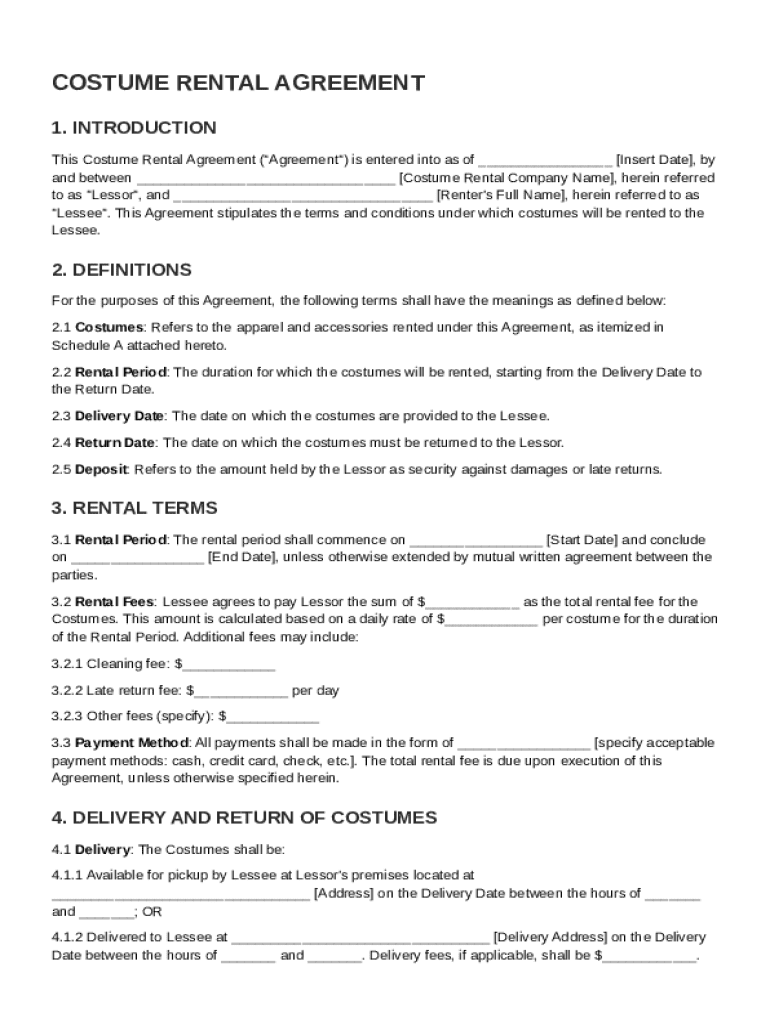







Key Elements of the Costume Rental Agreement Template
The Costume Rental Agreement Template is a crucial document that outlines the terms and conditions under which a costume rental transpires between the lessor (rental company) and the lessee (individual renter). This section details the essential components that make up this agreement, ensuring both parties understand their obligations and rights.
-
Rental Fees and Payment Terms: The agreement specifies the cost of renting the costume, payment deadlines, and any associated fees like late return charges. This clarity ensures the lessee is aware of all financial commitments at the outset.
-
Security Deposit Requirements: Typically, a refundable security deposit is mandated to cover potential damages. This section will detail the deposit amount and conditions for its return, safeguarding the rental company’s assets.
-
Responsibilities of the Lessee: Clear guidelines regarding care and usage of costumes are outlined. The lessee is usually required to maintain the costume in good condition and avoid any modifications or alterations that could affect its quality.
How to Use the Costume Rental Agreement Template
Applying the Costume Rental Agreement Template efficiently involves several key steps to ensure it meets the transaction needs. This section walks through using the template to create a formal agreement.
-
Customizing the Template: Adapt the template to reflect specific transaction details, such as the lessee's name, rental period, and specific costumes rented. This personalization ensures all agreements are relevant and binding.
-
Reviewing Terms and Conditions: Both parties should thoroughly review the terms outlined in the agreement to prevent misunderstandings. This review process is vital for ensuring both lessor and lessee agree to the conditions prior to signing.
-
Adding Supplementary Clauses: Depending on the transaction, additional clauses may be added for specific needs. These could include clauses for liability, termination conditions, or special care instructions for certain costumes.
Legal Use of the Costume Rental Agreement Template
The legal framework for using the Costume Rental Agreement Template is essential for both protection and compliance. This section explores the legal nuances and conditions under which the agreement is valid.
-
Governing Law: Typically, the agreement specifies the jurisdiction that will govern the terms, often the state where the rental company is located. It is important for both parties to understand which legal guidelines apply.
-
Liability Clauses: Liability terms protect both parties from unforeseen circumstances. This can include conditions for costume damage, loss, or third-party injury and ensures both parties have a clear understanding of their liabilities.
-
Termination and Amendment Conditions: Details on how either party can terminate the agreement before the completion of the rental period are outlined. This includes potential penalties and processes for modifying agreement terms.
Steps to Complete the Costume Rental Agreement Template
Completing the Costume Rental Agreement Template requires attention to detail and accuracy. Here, a step-by-step guide helps in filling out the form efficiently.
-
Inputting Basic Information: Begin by entering essential details such as names, addresses of the lessor and lessee, and identification of the costume(s) rented.
-
Detailing Terms of Rental: Include specific rental information including the start and end dates, total fees, payment schedule, and security deposit amount.
-
Finalizing the Document: Review the entire document for accuracy, ensuring all blanks are filled correctly and all relevant terms are included. Both parties should sign and date the agreement for it to be valid.
Important Terms Related to Costume Rental Agreement Template
Understanding the terminology associated with the Costume Rental Agreement Template is crucial for clarity and effectiveness. This section defines key terms that appear frequently within the agreement.
-
Lessor and Lessee: The lessor is the party renting out the costume, typically the rental company, while the lessee is the individual renting the item.
-
Rental Fee: The cost paid by the lessee to the lessor for the use of the costume, usually broken down into components such as base cost, any additional charges, and duration fees.
-
Security Deposit: A refundable amount collected by the lessor to cover potential damages to the costume or late returns. It acts as a financial guarantee.
Examples of Using the Costume Rental Agreement Template
Numerous scenarios showcase the effective application of the Costume Rental Agreement Template, illustrating its versatility for different user needs.
-
Theatrical Productions: A theater company rents multiple costumes for a stage production. The agreement outlines clear terms for usage and return conditions avoiding financial disputes and ensuring smooth logistics.
-
Event Services: Event planners borrow costumes for themed parties. The template helps in detailing the duration and specific costume condition requirements, ensuring expectations are well-managed.
-
Individual Rentals: A consumer uses the agreement to rent a costume for a personal event. The document assists in clarifying payment terms and liability, providing peace of mind for both parties.
Versions or Alternatives to the Costume Rental Agreement Template
While the Costume Rental Agreement Template serves a wide range of needs, variations or alternatives may be more suitable in certain contexts. This section explores these options.
-
Short-Term Rental Agreements: For rentals lasting less than a week, simplified agreements might reduce detailed clauses irrelevant to brief transactions, expediting preparation and comprehension.
-
Digital Rental Agreements: Virtual transaction trends enrich this template, incorporating online signatures and digital documentation has become often convenient for remote transactions.
State-Specific Rules for the Costume Rental Agreement Template
Since legal stipulations can vary by state, understanding these variations is essential for maintaining compliance and validity. This section highlights key differences.
-
Return and Warranty Provisions: States may have differing requirements for returning rented goods and applicable warranties, which should be factored into the agreement.
-
Consumer Protection Laws: Local laws may influence elements of the agreement, such as maximum allowable fees or deposits, shaping the template to fit state-specific regulations.




