






Overview of the Office of Administrative Hearings (OAH) - Alaska Department
The Office of Administrative Hearings (OAH) within the Alaska Department is a key entity that manages formal dispute resolution between state agencies and regulated parties. It serves as a neutral body to ensure fair hearings, usually relevant in cases where decisions by state agencies are disputed. This institution offers a structured and impartial platform for reviewing administrative decisions, providing individuals and entities a channel for redress and examination of agency actions.
How to Use the Office of Administrative Hearings in Alaska
Utilizing the services of the OAH typically starts with recognizing when a hearing is appropriate. When a state agency decision negatively impacts you, the OAH may be the right channel to address the issue. Initial steps include filing a request for a hearing with the specific agency involved, specifying the point of contention, and providing any required supporting documentation. The OAH then schedules a hearing where both parties can present their cases, following which an administrative law judge renders a decision.
Steps to Complete a Hearing Request
-
Identify Adverse Agency Decision: Clearly determine the decision made by the agency that is in dispute.
-
Prepare Documentation: Collect all relevant documents that support your position or refute the agency's decision.
-
File a Request: Submit a written request for a hearing to the agency, including all necessary details and documentation.
-
Attend the Hearing: Be prepared to present your case before an administrative law judge, including evidence and witness testimony if applicable.
-
Receive Decision: After the hearing, you will receive a written decision from the administrative law judge, which can be accepted or appealed further.
Eligibility Criteria
While the OAH is accessible to a variety of individuals and businesses, eligibility often depends on the specific regulations of the agency involved. Generally, any party that has been adversely affected by an agency’s decision is eligible to file for a hearing. This includes residents, businesses, or other entities operating within Alaska. Always check specific agency guidelines to ensure eligibility.


Key Elements of the OAH
- Impartiality: Acts as an unbiased arbiter between disputing parties.
- Accessibility: Provides a formal process that is open to all affected parties.
- Detailed Process: Hearings follow a structured procedure to ensure fairness.
- Resolution: Offers a binding decision subject to appeal.
Examples of Cases Heard by the OAH
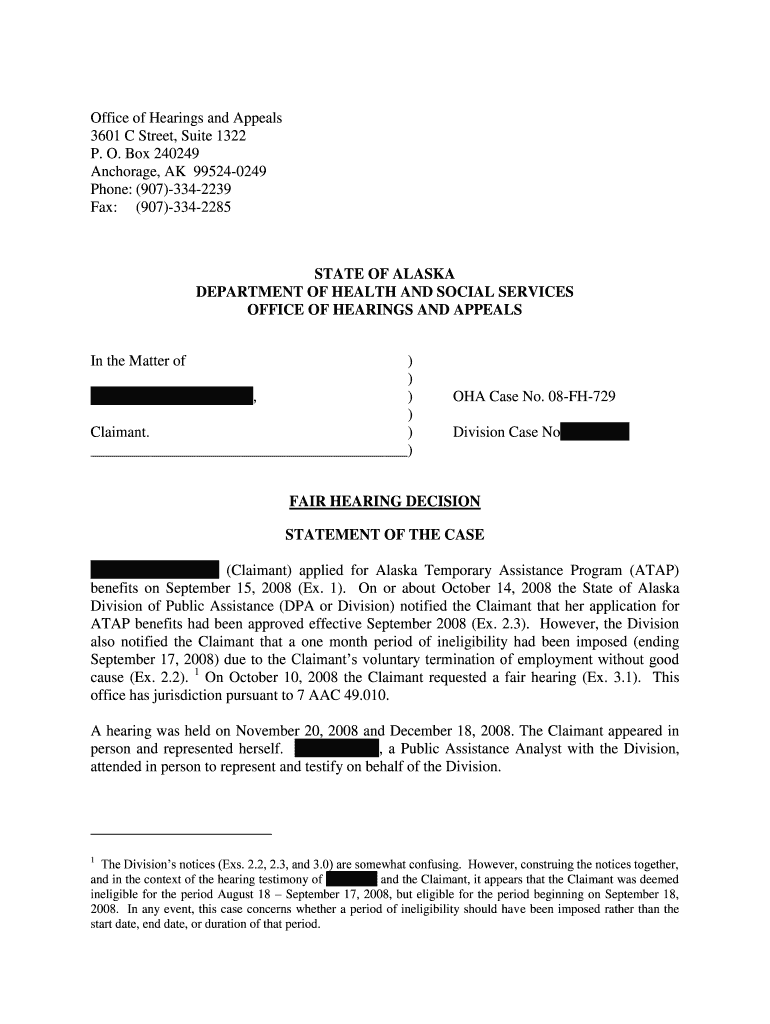
A typical case could involve unemployment benefits where a claimant was denied benefits by the Division of Public Assistance, yet disputes the validity of the denial. Another example is a professional licensing dispute where a professional contests disciplinary action by their licensing board. Through OAH, these disputes are adjudicated in a formal setting where evidence is presented and a fair resolution is sought.
Required Documents for Filing
When filing a hearing request, applicants need to include pertinent documents such as:
- Official Notices: Any official communication from the agency that indicates the decision.
- Evidence: Documents or records that support your case, such as employment contracts or medical documentation in healthcare-related disputes.
- Identification: Proof of identity and relation to the disputed decision.
Legal Use and Implications
Engaging with the OAH involves understanding the legal ramifications of its processes and decisions. The decisions made by the administrative judge have legal standing and can impact entitlements, licenses, or compliance with state regulations. Participants should consider legal counsel to navigate the hearings process effectively.
State-Specific Regulations
Alaska's regulations guide the operations and procedures of the OAH. While these regulations ensure consistency in hearings, they may differ in certain respects from similar bodies in other states. Understanding these local regulations is critical to effectively engaging with the OAH process and ensuring all procedural steps are properly adhered to.
Application Variants and Alternatives
In certain situations, alternative dispute resolution mechanisms might be more suitable or even required. Mediation or arbitration may be viable alternatives depending on the nature of the dispute and the agencies involved. Alaska’s regulatory environment may suggest or require these alternatives in specific instances before escalating to a formal OAH hearing.
These detailed understanding and procedural insights into the Office of Administrative Hearings in the Alaska Department create a foundation for effectively engaging with and navigating the administrative appeals process.