






Definition and Meaning
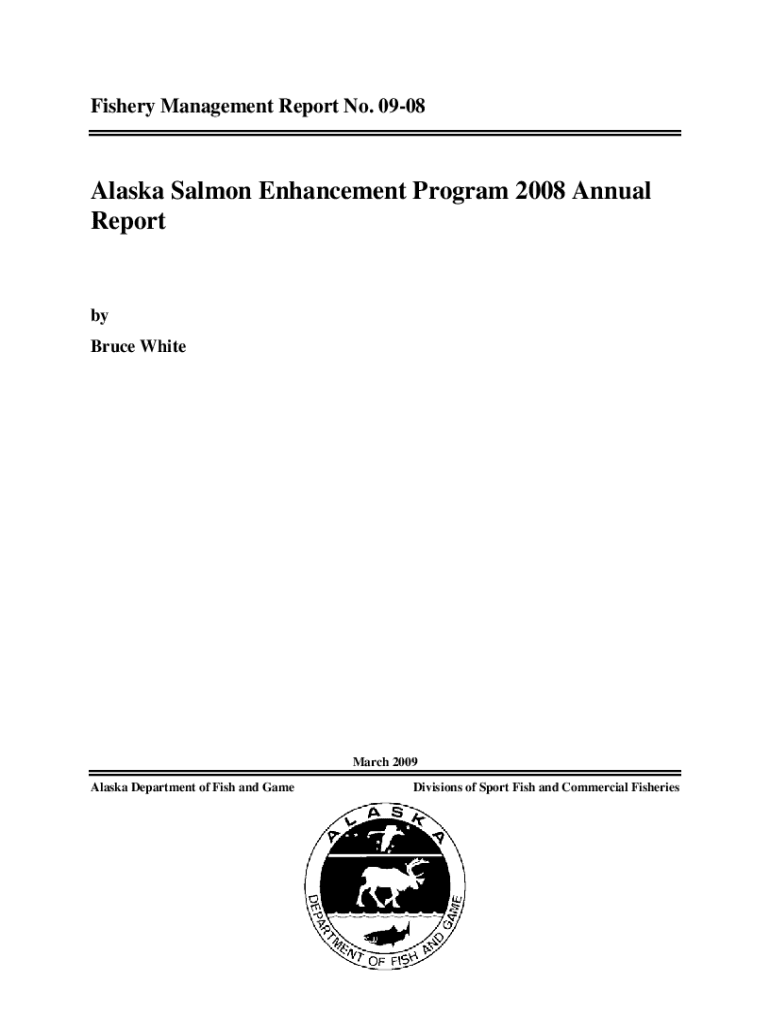
The Alaska Salmon Enhancement Program 2008 Annual Report, overseen by the Alaska Department of Fish and Game, is a vital document providing detailed insights into the state's salmon enhancement activities for that year. It includes comprehensive data on the collection of salmon eggs, the release of juvenile fish, and the return rate of adult salmon. This report serves as a resource for understanding the economic, ecological, and regulatory aspects of salmon enhancement initiatives. It emphasizes the significance of these activities for Alaska's economy, highlighting their contributions to commercial fisheries and analyzing the impact on natural salmon stocks.
Key Elements of the Report
This annual report includes several essential components:
-
Egg Collection and Fish Release: Over 1.6 billion salmon eggs were collected in 2008, with more than 1.4 billion juvenile fish ultimately released. It provides an analysis of these numbers and their implications for returns and sustainability.
-
Economic Contributions: The report covers the significant economic impact, with enhanced salmon contributing approximately $110 million to Alaska's commercial fisheries, thus underlining the importance of these programs.
-
Regulatory Frameworks: It outlines the permitting processes designed to protect natural salmon populations, ensuring compliance with environmental standards and sustainable resource management.
Steps to Access and Use the Report
Obtaining and effectively using the report involves several stages:
-
Visit Official Sources: You can access the report from the Alaska Department of Fish and Game's official website or related archives for public documents.
-
Review Content Thoroughly: Examine data on egg collection, releases, and returns to understand the full scope of the program’s impact on fisheries and the environment.
-
Analyze Economic Data: Utilize the economic insights to evaluate the program's benefits and inform policy or business decisions connected to the Alaska fishing industry.
Who Typically Uses the Report
The report is valuable for various stakeholders, such as:
- Environmental Scientists and Researchers: Who use the data for studies on sustainable fisheries and ecological impacts.
- Economists and Industry Analysts: Who evaluate the financial implications and benefits for the state’s economy.
- Regulatory Authorities: Who ensure adherence to environmental guidelines and permitting processes.
- Local Fishermen and Industry Participants: Who rely on these insights for understanding and planning their fishing activities.


Legal and Regulatory Considerations
Legal use of the report involves:
-
Compliance with Regulations: Ensures activities align with the rules set out by the Alaska Department of Fish and Game, protecting both the interests of fishery participants and natural environments.
-
Permitting and Licensing: Understanding requirements for operations connected to enhancement activities, which are supported by data within the report.
Examples of Report Utilization
Real-world scenarios exemplifying the report's usage include:
-
Policy Development: Authorities might draw from the report’s insights to shape new regulations that further promote sustainable fishing practices.
-
Economic Analysis: Stakeholders can assess financial data to model future investments and economic contributions of the salmon enhancement programs.
-
Educational Insight: Academic institutions may incorporate data from the report into curricula focusing on marine biology and resource management.
Important Terms Related to the Report
Understanding the following terms is critical when exploring the report:
- Juvenile Release: Refers to the process and data related to the number of young fish released into the wild.
- Permitting Process: The regulatory guidelines for legal operations within salmon enhancement practices.
- Economic Impact Analysis: Study of the financial effects of the salmon programs on Alaska's economy.
State-Specific Regulations and Practices
The report elucidates specific practices and regulations unique to Alaska:
-
State-Specific Guidelines: Reflects Alaska’s unique ecological and economic conditions, emphasizing practices tailored to local environmental and industry needs.
-
Interstate Comparisons: While the focus is state-specific, comparing these practices to those in other regions can offer additional insights into program effectiveness and improvements.
This comprehensive approach to understanding the Alaska Salmon Enhancement Program 2008 Annual Report provides both detailed information and practical guidance for different audience types.