
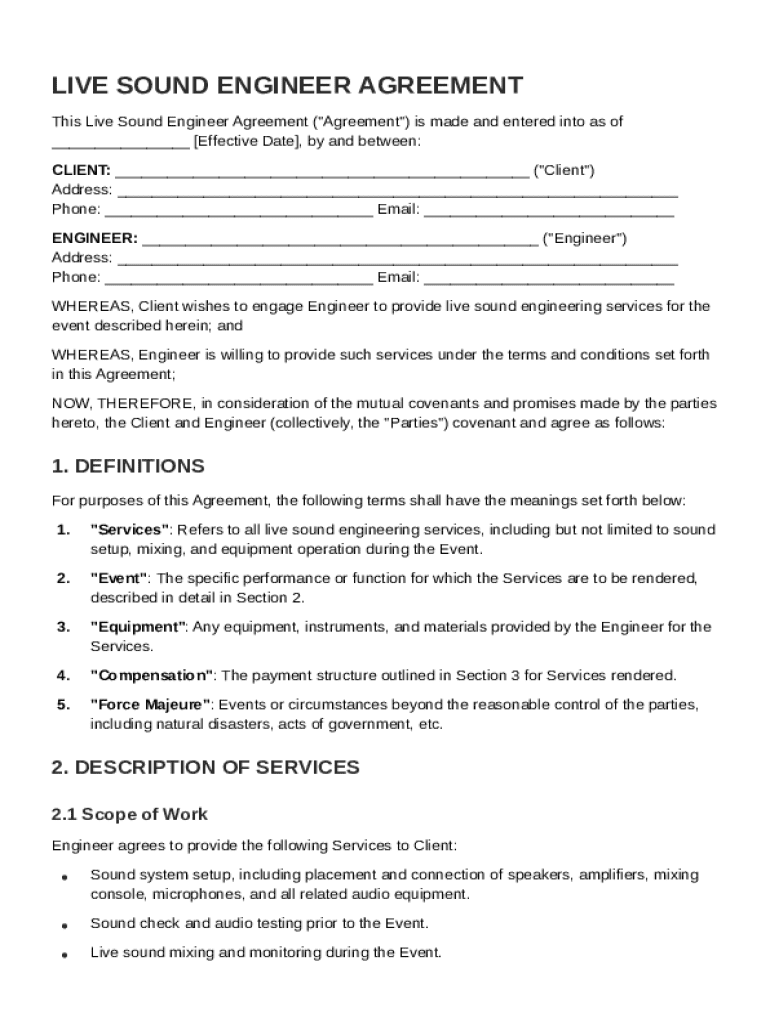







Key Elements of the Live Sound Engineer Contract Template
The Live Sound Engineer Contract Template serves as a foundational document outlining the responsibilities and expectations between a Client and a Live Sound Engineer. Key elements typically include:
- Scope of Work: Clearly defines the tasks and duties expected of the engineer, including set-up, sound checks, and breakdown processes for events.
- Compensation and Payment Terms: Details the payment structure, rates, deposits, and payment timelines agreed upon by both parties.
- Cancellation Policies: Outlines conditions and procedures regarding cancellations, including any fees or penalties applicable if either party cancels the agreement.
- Liability and Insurance: Covers liability limitations, responsibilities in case of equipment damage, and any insurance requirements.
- Confidentiality and Non-Disclosure: Specifies obligations related to confidential information which might be disclosed during the event.
- Governing Law: States which jurisdiction's laws will govern the agreement, crucial for legal clarity.
Steps to Complete the Live Sound Engineer Contract Template
Filling out the Live Sound Engineer Contract Template involves detailed attention to several sections:
- Input Basic Information: Start by entering the names and contact details of both the Client and the Engineer.
- Define Event Details: Specify the event location, date, and time to ensure clarity about the logistics.
- Detail Scope of Work: Describe the specific tasks the engineer is responsible for during the event. This might include equipment setup, sound levels adjustment during performances, etc.
- Set Compensation Terms: Clarify the payment amount, method, and schedule. Consider including specifics on overtime or additional pay for extended events.
- Outline Cancellation Policy: Make clear the terms under which the contract can be canceled and any associated costs or refund policies.
- Signatures: Allocate space for signatures. Ensure both parties sign and date the contract to validate the agreement.
How to Use the Live Sound Engineer Contract Template
The purpose of the template is to formalize the engagement between a Client and a Live Sound Engineer:
- Customizing Content: Modify sections to reflect specific details of the event contextual to the services provided. Use the form fields to add unique clauses or conditions.
- Legal Review: It's advisable for both parties to have the document reviewed by a legal professional to ensure compliance with applicable laws and protect respective interests.
- Distribution: Use DocHub's tools to share the document with relevant parties electronically via secure channels. The emphasis on real-time collaboration allows both the Client and Engineer to review and annotate the contract simultaneously if revisions are needed.
Who Typically Uses the Live Sound Engineer Contract Template
This template is widely used by various stakeholders in the event management and music industry:
- Freelance Sound Engineers: To formalize agreements when taking on gigs.
- Event Organizers: Ensures all technical sound aspects are covered contractually.
- Production Companies: Utilized to manage multiple sound engineers across different events.
- Music Venues: Applicable for retaining specialists for seasonal or recurring events.
These users benefit significantly by streamlining the negotiation processes and reducing potential conflicts through predefined terms.

Legal Use of the Live Sound Engineer Contract Template
This template supports the creation of legally binding agreements, safeguarding both parties' rights:
- Compliance: Must adhere to relevant state and federal regulations. Check whether any additional clauses need inclusion based on local governance.
- Amendments: Document allows for legal amendments which can be added post-discussion between parties before finalization.
- Litigation: Having a signed agreement provides substantial grounds for legal recourse should disputes arise, ensuring clarity and protection.
Important Terms Related to the Live Sound Engineer Contract Template
Common terminology within the contract includes terms like:
- Retainer Fee: Often required up-front to secure services.
- Decibel Levels: Specific sound level guidelines the engineer must maintain.
- Rider Requirements: Equipment or setup specifics requested by the client.
Each term requires explicit definitions within the contract to avoid misunderstandings.
State-Specific Rules for the Live Sound Engineer Contract Template
Legal requirements can vary significantly by state, affecting the agreement's terms:
- Licensing Requirements: Some states may require sound engineers to hold specific certifications or licenses to operate legally.
- Regulatory Compliance: Sound levels and time restrictions are often subject to state regulations impacting how the contract's terms should be framed.
Consider adapting the template to fit jurisdictional nuances applicable to the location of service delivery.
Examples of Using the Live Sound Engineer Contract Template
Real-world application scenarios enhance understanding:
- Concert Event: Used by a production team to hire sound engineers ensuring a unified approach to sound management.
- Corporate Seminars: Engages engineers for technical sound arrangements for large company meetings, adhering to professional sound standards.
- Festivals: Large-scale events use this contract to coordinate multiple engineers and systems harmoniously.
By solidifying these details in a contract, the potential for miscommunication is minimized, reinforcing successful event execution.




