






Definition and Purpose of the Paediatric Audiology Referral Form
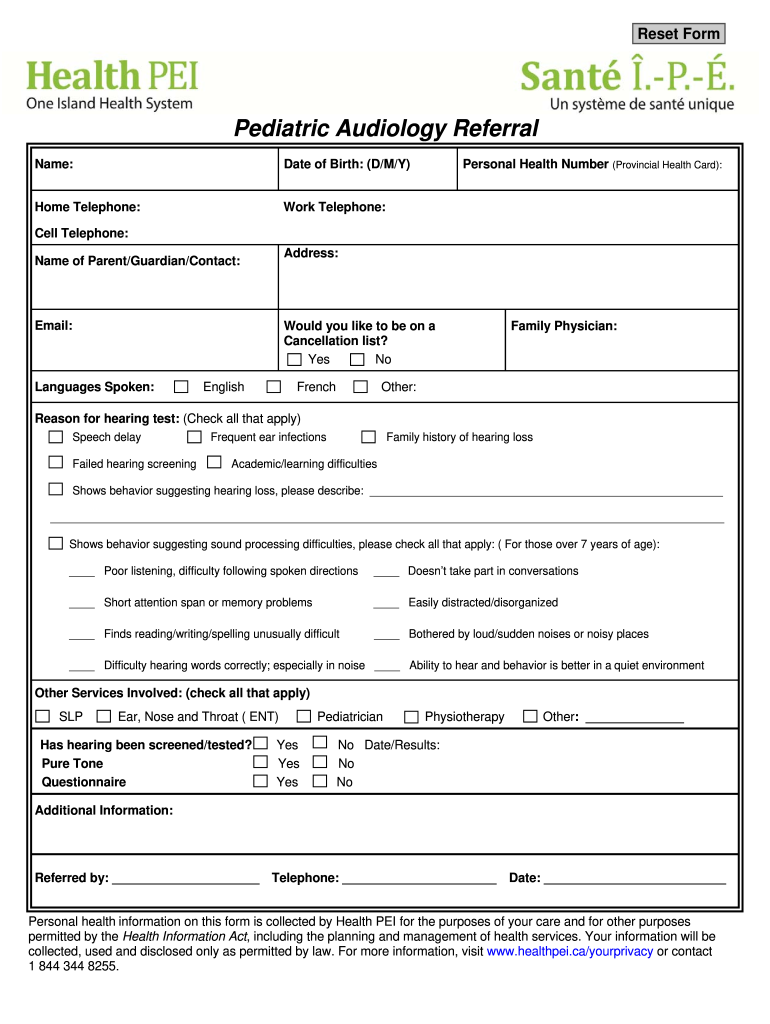
The Paediatric Audiology Referral Form is a specialized document used to gather essential information regarding children who require hearing tests. It serves as a formal tool to record personal and health-related data, ensuring a smooth and systematic referral process to audiology services. This form is instrumental in documenting the need for hearing assessments, capturing information such as reasons for referral, medical history, and previous hearing test results. This structured approach facilitates effective communication between healthcare providers, ensuring the child receives the appropriate audiological evaluation and treatment in a timely manner.
Key Elements of the Paediatric Audiology Referral Form
The form consists of several critical sections that ensure completeness and accuracy of data collection:
- Contact Information: This section includes details about the child, such as name, date of birth, and guardian contact information, ensuring that the healthcare professional can easily reach out for follow-up.
- Referral Reason: Identifying the primary reasons for referral, such as suspected hearing loss or speech delay, aids audiologists in tailoring the assessments and medical interventions needed.
- Medical and Hearing History: Information on any previous diagnoses, screenings, and family history of hearing issues, providing context that can affect the child's hearing capabilities.
- Additional Services and Care Providers: Record any other medical services the child is receiving, which helps integrate care across different health domains.
Steps to Complete the Paediatric Audiology Referral Form
Filling out the form accurately is crucial for successful referrals. Here's a step-by-step guide:
- Gather Required Information: Collect all necessary personal, contact, and medical history details before starting the form.
- Begin with Contact Details: Start by accurately inputting the child’s name, date of birth, and guardian information to establish a clear record.
- Provide Referral Reason: Clearly state the concern that prompted the referral, whether it be delayed speech or suspected hearing challenges.
- Document Medical History: Summarize any previous hearing tests, ear infections, or relevant medical issues that could impact hearing health.
- Include Additional Information: Add details of any other healthcare providers involved in the child’s care, as this supports coordinated care efforts.
How to Obtain the Paediatric Audiology Referral Form
Accessing the form is straightforward, ensuring that healthcare providers can easily facilitate necessary referrals:
- Healthcare Facilities: Most pediatric departments and clinics will provide this form upon request, often as part of routine medical examinations involving potential audiological concerns.
- Online Platforms: The form may be available for download on healthcare providers' websites, offering an electronic format for those who prefer digital documentation.
- Direct Requests: Families or guardians can directly request the form from pediatricians or audiologists, ensuring they have the necessary document on hand during medical appointments.
Importance of the Paediatric Audiology Referral Form
This form plays a pivotal role in early identification and management of hearing issues in children. Here’s why it’s essential:
- Facilitates early diagnosis of hearing problems, which is crucial for effective intervention and management.
- Ensures healthcare providers have a comprehensive overview of the child’s hearing-related concerns and medical history.
- Streamlines communication between various healthcare professionals involved in the child's care, promoting holistic treatment approaches.
Who Typically Uses the Paediatric Audiology Referral Form?
Several key participants utilize this form, each playing a pivotal role in the child's audiological care:
- Pediatricians and General Practitioners: These professionals often initiate the referral due to observed symptoms or concerns during routine examinations.
- Audiologists: Audiologists receive these forms to conduct thorough hearing assessments and determine necessary auditory interventions.
- Speech Therapists and Special Educators: These team members may also use the form to tailor their therapeutic approaches based on the child’s audiological findings.


Legal Considerations for the Paediatric Audiology Referral Form
Given that the form involves handling sensitive personal and health information, there are critical legal components to consider:
- Health Information Act Compliance: The form must align with regulations such as the Health Insurance Portability and Accountability Act (HIPAA) in the US, ensuring confidentiality and secure handling of personal data.
- Authorization and Consent: Guardians or parents must provide consent for the information to be shared with required healthcare providers, affirming their understanding and agreement.
Form Submission Methods
Convenience in submission is crucial for efficient processing:
- Online Submission: Some healthcare facilities may incorporate portals allowing for digital submission, enhancing accessibility and saving time.
- Mail or In-Person Delivery: Traditional methods remain available, catering to those who prefer a physical handover at healthcare facilities.
State-Specific Regulations
It’s important to note that regulations and procedures may vary across states. Healthcare professionals should ensure compliance with particular state guidelines, which may influence the form’s format and submission requirements. These variations underscore the importance of consulting relevant local health authorities for up-to-date procedural norms.