
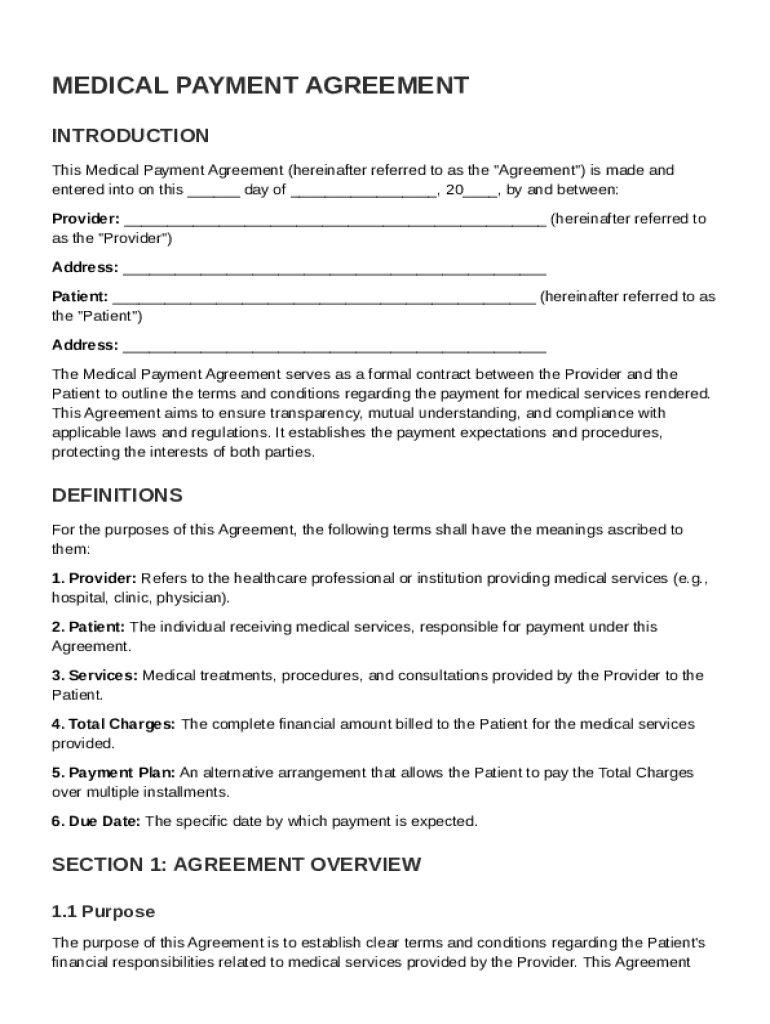







Understanding the Medical Payment Agreement Template
A Medical Payment Agreement Template is a foundational document used to formalize the financial obligations between healthcare providers and patients for services rendered. This contract serves to clarify the terms and conditions related to payments, which in turn helps prevent misunderstandings and disputes. By clearly outlining financial responsibilities, this template establishes a mutual understanding between both parties about payment methods, plans, and other financial matters. From a practical standpoint, a well-crafted agreement can ensure that providers receive timely payments while patients understand their liabilities and options.
How the Medical Payment Agreement Template is Utilized
Healthcare providers and patients use the Medical Payment Agreement Template to document the agreed-upon financial arrangements for medical services accurately. In practical use, providers can tailor this template to include specific payment plans, such as monthly installments for patients dealing with large medical bills. At the same time, patients benefit by having a clear record of payment schedules and obligations, reducing confusion. Utilizing such a template is crucial in maintaining transparency, fostering trust, and ensuring both parties are committed to a fair process.
Acquiring the Medical Payment Agreement Template
Acquiring a Medical Payment Agreement Template can be seamless and efficient. Many healthcare providers or institutions typically offer these templates as part of their patient intake or administrative processes. Alternatively, templates can be accessed via legal document websites where customizable versions are readily available. It is advisable to consult with a legal professional or use reputable sources to ensure all specific requirements and protective clauses are included, ultimately aligning the document with applicable state regulations.
Completing the Medical Payment Agreement Template
Finishing the Medical Payment Agreement Template involves several specific steps:
- Personal Information: Both parties should provide full names, addresses, and current contact details.
- Services Outlined: Clearly list the medical services to be covered by the agreement.
- Payment Details: Specify the cost of services, chosen payment method, and schedule.
- Alternative Arrangements: Add any special terms, such as payment plans or discounts.
- Confidentiality Clauses: Insert clauses to maintain the privacy of personal and financial details.
- Signature Section: Both parties should sign and date the document to indicate agreement and compliance.
It’s important to review the template with a legal advisor to ensure completeness and accuracy before signing.
The Importance of Using a Medical Payment Agreement Template
The use of a Medical Payment Agreement Template is crucial for ensuring financial clarity and compliance. Such agreements promote transparency, reduce the potential for conflicts over payment, and build a professional rapport between provider and patient. By formalizing payment arrangements, these templates can also help streamline billing processes, safeguard against unpaid services, and adhere to legal standards regarding patient financial interactions, which is particularly beneficial in today's complex healthcare environment.
Common Users of the Medical Payment Agreement Template
Primary users of the Medical Payment Agreement Template include healthcare providers, clinics, and hospitals that look to define financial expectations clearly. Patients, especially those incurring significant healthcare expenses, also rely on these agreements to understand their payment obligations comprehensively. In broader contexts, insurance companies might use these templates when overseeing claims, and legal professionals might reference them when advising clients on healthcare-related financial matters.


Key Components of the Medical Payment Agreement Template
Essential elements of a Medical Payment Agreement Template encompass:
- Service Description: Detailed enumeration of services covered.
- Payment Terms: Clear articulation of payment methods, due dates, and any interest or late fees.
- Default Conditions: Clauses outlining consequences of non-payment or late payment.
- Confidentiality Agreement: Provision for maintaining patient data privacy.
- Governing Law: Specification of applicable state laws governing the agreement.
These components ensure the template is not only comprehensive but also legally enforceable and adaptable to specific needs.
State-Specific Regulations Pertaining to the Template
The Medical Payment Agreement Template may need modifications to comply with particular state laws and regulations, which can influence elements such as interest rates on unpaid balances, billing cycles, and legal remedies in instances of default. Navigating these variations requires awareness of state healthcare and financial laws, which might necessitate consultation with legal professionals experienced in state-specific legislation to ensure the agreement aligns with local mandates.
Practical Application Examples
Practically, this template can be applied across numerous scenarios. For example, a small private practice may use the template to establish a monthly payment plan for a patient undergoing a costly treatment series. Similarly, a large hospital might use it to manage billing for elective surgeries not fully covered by insurance. Real-world applications demonstrate the template’s versatility and its role in promoting financial responsibility and transparency between medical service providers and recipients.




