






Definition and Meaning
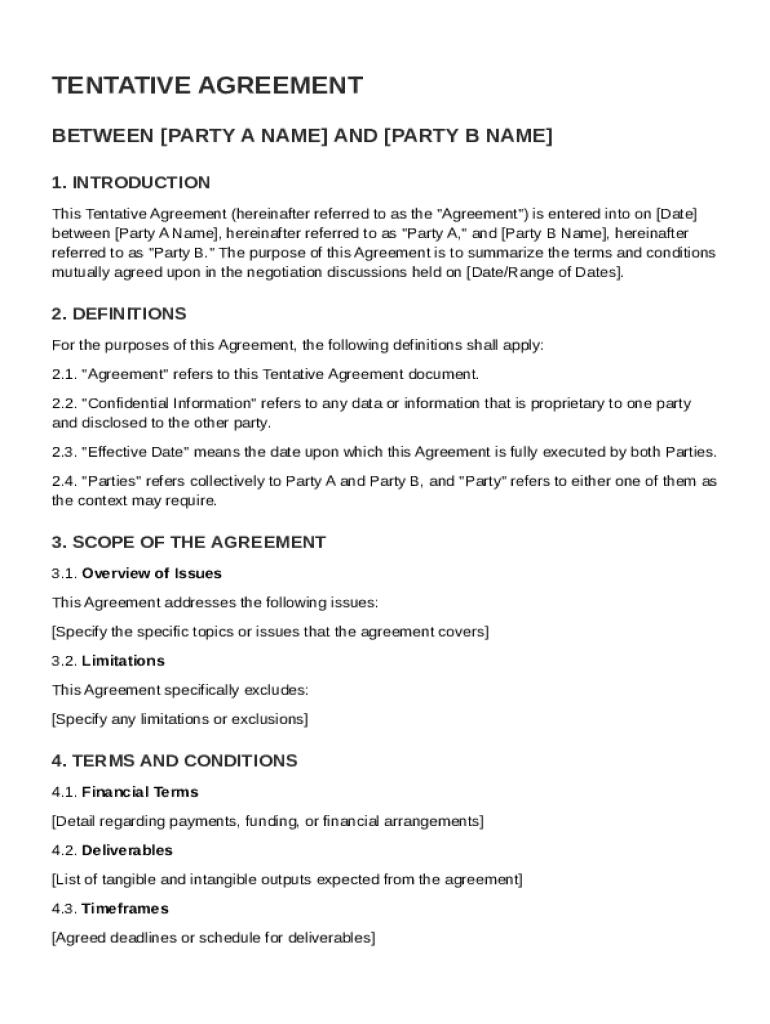
A Tentative Agreement Template is a document that outlines the initial terms and conditions agreed upon during negotiations between two or more parties. This agreement serves as a preliminary step in formalizing a partnership or deal, ensuring that all parties are aligned on fundamental aspects before finalizing the full contract. It typically includes details such as the parties involved, definitions of key terms, the scope of the agreement, financial terms, responsibilities, and other crucial elements like confidentiality obligations and dispute resolution processes. The primary aim of a Tentative Agreement Template is to establish a mutual understanding and a framework for collaboration.
Key Elements of the Tentative Agreement Template
A comprehensive Tentative Agreement Template typically consists of several key elements:
- Party Identification: Clearly defines who is involved in the agreement, often referred to as Party A and Party B.
- Definitions: Clarifies specific terms used within the agreement to ensure mutual understanding.
- Scope of Agreement: Outlines what the agreement covers, detailing the intended collaboration or transaction.
- Financial Terms: Includes payment terms, compensation structures, and any financial obligations of the parties involved.
- Responsibilities: Specifies the duties and obligations of each party to the agreement.
- Confidentiality Obligations: Establishes how information shared under the agreement will be protected.
- Dispute Resolution: Describes how conflicts will be managed, often through mediation or arbitration.
- Modification Procedures: Details how changes to the agreement can be made.
- Termination Clauses: Explains under what conditions the agreement can be terminated.
How to Use the Tentative Agreement Template
Utilizing a Tentative Agreement Template involves several systematic steps:
- Reviewing the Template: Understand the structure and components included in the template.
- Identifying the Parties: Clearly state the parties involved and their roles.
- Defining Key Terms: Ensure all technical terms related to the agreement are defined.
- Setting the Agreement Scope: Clearly outline the scope to avoid possible future disputes.
- Detailing Financial Terms and Responsibilities: Clearly document any financial agreements.
- Establishing Confidentiality and Dispute Resolution: Define how sensitive information and disputes will be handled.
- Finalizing and Signing: Once agreed upon, ensure all parties sign the template to indicate agreement.
Legal Use of the Tentative Agreement Template
In the United States, Tentative Agreement Templates are utilized to ensure all negotiations between parties are documented and compliant with legal standards. Such templates are crafted to align with the ESIGN Act and other legal statutes to make them valid and enforceable. It is essential for parties to review the document under legal counsel before finalizing it to ensure complete compliance with state-specific laws.
Steps to Complete the Tentative Agreement Template
Completing a Tentative Agreement Template involves detailed and careful steps:
- Initial Meeting: Parties must convene to discuss and agree on primary points.
- Drafting: Using the template, fill in the specific details of the agreement.
- Review and Amend: Parties should review the draft and suggest necessary amendments.
- Legal Review: Have the draft reviewed by legal counsel for compliance.
- Final Review: Do a final check to ensure all terms are clear and integrated properly.
- Approval and Signatures: Upon agreement, both parties should sign the document to indicate consent.
State-Specific Rules for the Tentative Agreement Template
Each state in the U.S. may have different statutory requirements when it comes to agreements and contracts. For instance, specific states might need particular clauses like jurisdiction or venue clauses which determine which state's laws will govern the agreement. Review local legal requirements or consult a legal professional to ensure compliance with state-specific rules.
Examples of Using the Tentative Agreement Template
Tentative Agreement Templates can be used in various scenarios, such as:
- Business Partnerships: Where two businesses outline the preliminary terms of a potential partnership.
- Employment Offers: Companies use them to draft initial terms with potential hires.
- Real Estate Transactions: Parties use it to discuss and agree on the terms of property sales.
Who Typically Uses the Tentative Agreement Template
Tentative Agreement Templates are commonly used by:
- Businesses Initiating Joint Ventures: To explore potential collaborations.
- Human Resources Departments: For drafting initial employment terms.
- Real Estate Agents and Developers: When negotiating property sales or leases.


Digital vs. Paper Version
The choice between a digital and paper version of the Tentative Agreement Template depends on various factors:
- Digital Version: Offers convenience, easier amendments, and integration with document management systems like DocHub for electronic signatures and simultaneous collaboration.
- Paper Version: Preferred when physical documentation is required, though it lacks ease in editing and updating compared to digital files.
Overall, a Tentative Agreement Template is a versatile document employed across numerous sectors to align all parties before entering binding contracts.