






Definition & Meaning
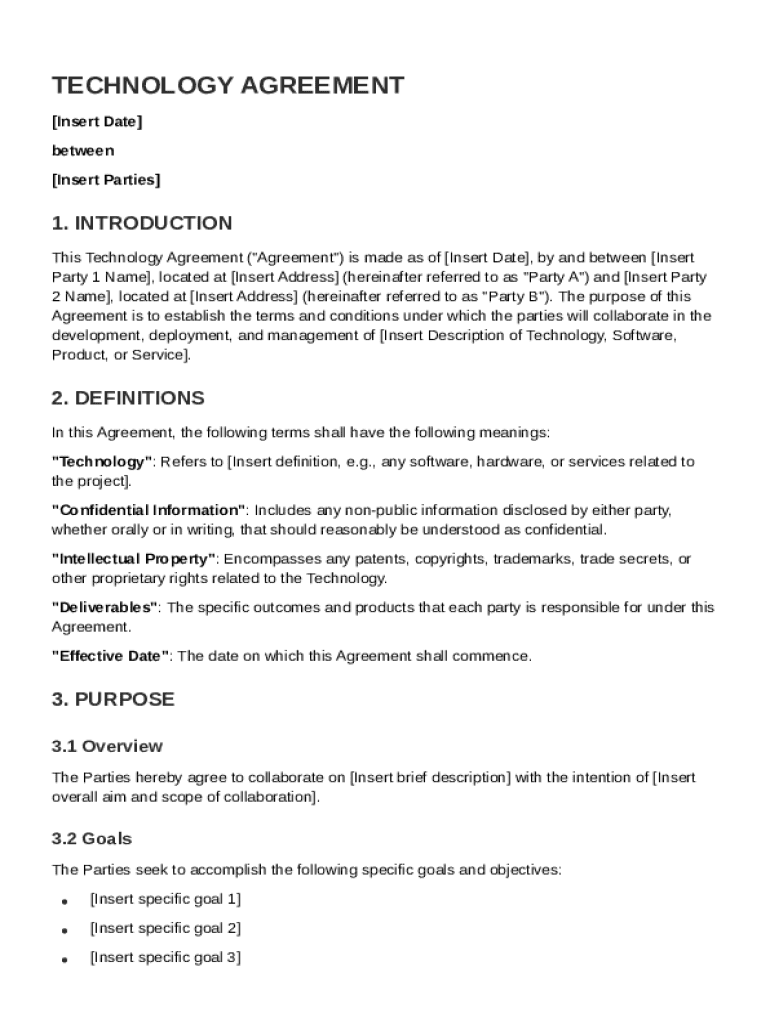
A Technology Agreement Template serves as a comprehensive framework outlining the terms and conditions for technological collaboration between two parties, often labeled as Party A and Party B. Its primary purpose is to facilitate clear communication and establish a mutual understanding regarding the development, implementation, and management of specified technologies. Within the agreement, comprehensive definitions ensure that both parties have a consistent interpretation of key terms and concepts, which is critical to preventing disputes or misunderstandings. By clearly delineating responsibilities and expectations, the template aids both parties in safeguarding their interests, including intellectual property rights, confidentiality, and the allocation of financial obligations.
Key Elements of the Technology Agreement Template
A well-structured technology agreement encompasses several critical components:
- Responsibilities: Clearly defines the roles and duties of each party, ensuring that tasks are assigned efficiently and comprehensively.
- Financial Arrangements: Outlines the cost-sharing mechanisms, payment terms, and any financial liabilities related to the project or collaboration.
- Intellectual Property Rights: Specifies ownership and usage rights regarding the inventions, software, or other innovations developed within the collaboration.
- Confidentiality Obligations: Details the measures required to protect sensitive information shared during the collaboration.
- Termination Conditions: Includes clauses on circumstances that may warrant the premature termination of the agreement and the consequent actions to follow.
- Dispute Resolution Procedures: Establishes the methods for negotiating and addressing conflicts that may arise, aiming for amicable and efficient resolutions.
How to Use the Technology Agreement Template
To employ the Technology Agreement Template effectively, parties should collaborate closely to tailor the document to their specific project requirements. Below are the general steps to follow:
- Initial Review: Both parties should review the template thoroughly, ensuring a mutual understanding of each section.
- Customization: Modify the sections of the template to reflect the unique aspects of the partnership. The customization may include project-specific goals, responsibilities, and technological specifications.
- Clarification: Discuss and delineate key terms, ensuring each party agrees on definitions and any nuanced interpretations.
- Legal Consultation: Engage with legal professionals to ensure the agreement complies with relevant laws and adequately protects the parties' interests.
- Finalization and Execution: Once revisions are complete, both parties should sign the document, making it a legally binding agreement.
Legal Use of the Technology Agreement Template
The legal enforceability of the Technology Agreement Template is significant, as it establishes a binding contract upon execution. To ensure the agreement's validity, parties must meet the following conditions:
- Mutual Consent: Both parties must understand and agree to all the terms outlined in the template.
- Capacity: Each signatory must have the legal capacity and authority to enter into and bind their respective organization to the agreement.
- Legality: The agreement must adhere to applicable laws, ensuring that all terms are enforceable in a court of law.
Legal professionals can assist in verifying that the agreement satisfies these conditions, thereby reducing potential risks associated with legal disputes.
Important Terms Related to the Technology Agreement Template
Familiarity with some essential terms in the context of technology agreements is beneficial. These may include:
- Licensing: Refers to granting rights to use or modify technology.
- Proprietary Information: Information that is owned by one party and contains business secrets or other confidential details.
- Patent Rights: Legal rights granted for the protection of inventions.
- Non-Compete Clause: A clause that prevents parties from engaging in business activities that directly compete with the agreement's purpose.
Understanding these terms helps parties to apply the technology agreement more efficiently and negotiate terms confidently.
Who Typically Uses the Technology Agreement Template
The template is invaluable across a range of sectors:
- Tech Companies: Engaging in software development, digital innovation, and collaborative R&D projects.
- Startups: Forming strategic partnerships to leverage new technologies while protecting proprietary innovations.
- Universities and Research Institutes: Cooperating with private firms to commercialize research findings.
- Consultancies: Providing expert technological services and requiring a clear framework to outline partnership terms.
The diversity of potential users underscores the template's adaptability to varying collaborative contexts.


Steps to Complete the Technology Agreement Template
Successfully completing the Technology Agreement Template involves these essential steps:
- Identification of Parties: Clearly document the details of both parties, including names, addresses, and relevant contact information.
- Comprehensive Detailing of the Scope of Work: Outline what the collaboration entails concerning the technology, including milestones and deliverables.
- Defining Financial Terms: Clearly specify any payments, funding, revenue-sharing agreements, and financial obligations involved.
- Establishing Confidentiality Measures: Incorporate specific clauses that detail how information will be handled and protected.
- Agreeing on Dispute Resolution: Agree upon a preferred method for addressing conflicts, which might include mediation or arbitration.
Each of these steps contributes to a well-rounded agreement that effectively meets the needs of both parties.
State-Specific Rules for the Technology Agreement Template
While the Technology Agreement Template provides a broad foundation, state-specific regulations may influence its development and execution. Some factors to consider include:
- State Contract Laws: Regulations governing the enforceability of contracts, which may vary by state.
- Intellectual Property Regulations: State laws influencing the management and protection of intellectual property rights.
- Confidentiality Obligations: Individual states may have additional requirements regarding the protection and disclosure of sensitive information.
By considering these variations, parties ensure that their agreement remains compliant and enforceable within the specific jurisdiction of their operations. Legal advisors can provide guidance tailored to particular state requirements, ensuring complete regulatory alignment.