Definition & Meaning
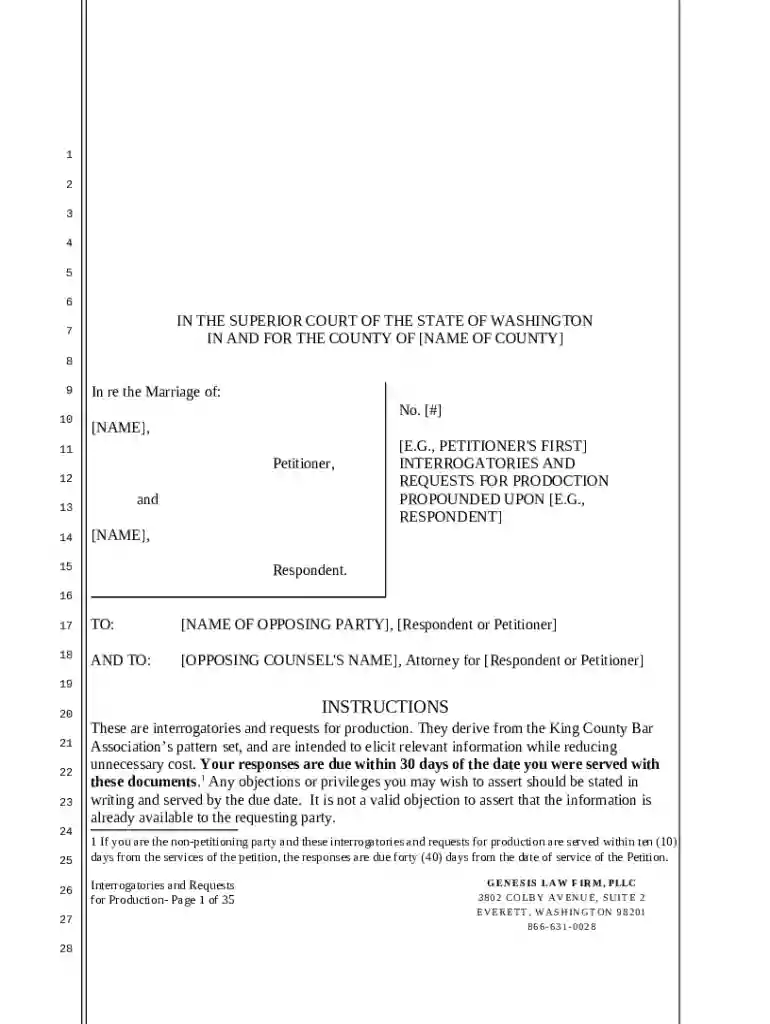
The "Superior Court of the State of Washington for the County" refers to the primary trial court of general jurisdiction in Washington State. These courts handle both civil and criminal cases, serving as a forum for resolving legal disputes, administering justice, and protecting rights under the law. As the highest trial court in the state's judicial system, the superior court deals with a wide range of cases, including family law matters, probate, juvenile cases, and major criminal prosecutions.
Jurisdiction Scope
- Civil Cases: The court handles disputes involving financial issues, property, torts, and contract disputes.
- Criminal Cases: Deals with serious criminal offenses, including felonies and major misdemeanors.
- Family Law: Includes divorce, child custody, and child support.
- Probate and Estates: Administers wills and estate matters.
- Juvenile Matters: Oversees cases involving minors, including delinquency and dependency issues.
Importance in the Judicial System
Superior courts maintain critical importance because they are the main point of entry for individuals seeking judicial relief for various disputes and legal matters.
How to Use the Superior Court of the State of Washington for the County
Understanding how to navigate the services of the Superior Court is essential for legal practitioners and laypersons alike. The court facilitates its processes through clear procedural guidelines.
Initiating a Case
- Filing a Complaint: Begin by filing a detailed complaint or petition relevant to your case type.
- Service of Process: Legally notify the opposing party that a case has been filed against them.
Court Appearances
- Initial Hearings: Attend scheduled hearings to establish timelines and preliminary court orders.
- Evidence Submission: Prepare and submit necessary documents and evidence during discovery.
Final Representation
- Trial Proceedings: Present your case through legal representation or self-representation, ensuring compliance with courtroom protocols.
Steps to Complete the Superior Court Form
Completing the Superior Court form entails several key steps, beginning with understanding the form's purpose in your legal process.
- Access the Form: Obtain the relevant form by visiting the court's website or in person at the courthouse.
- Fill in Personal Details: Provide accurate personal information, such as names, addresses, and contact details.
- Document Key Information: Accurately list details pertinent to the case, e.g., case number, court location, and filing dates.
- Review Instructions: Follow step-by-step instructions listed on the form to avoid errors.
- Submit Required Attachments: Attach supporting documents as specified in the form guidelines.
- File with Court Clerk: Submit the form at the court clerk's office, along with any filing fees.
Important Terms Related to the Superior Court of the State of Washington for the County
Several legal terms are critical when dealing with the superior court system.
Common Legal Terms
- Plaintiff: The person who initiates the lawsuit.
- Defendant: The individual or entity the complaint is against.
- Subpoena: A command ordering someone to attend court.
- Affidavit: A written statement confirmed by oath or affirmation, used as evidence in court.
- Discovery: A pre-trial procedure where parties obtain evidence from each other.
Understanding these terms can significantly enhance comprehension and navigation of your court case.
Legal Use of the Superior Court of the State of Washington for the County
The court’s legal utility is vast, serving as a keystone in ensuring justice across multiple legal spheres.
Primary Legal Functions
- Adjudication: Resolves disputes according to law, resulting in judgments or settlements.
- Enforcement of Rights: Ensures legal rights are upheld through legal decisions and orders.
- Supervisory Role: Provides oversight on lower courts and public entities in certain matters.
Case Examples
- Family Law: A petitioner files for child custody modification.
- Criminal Law: A defendant is tried for a felony.
- Civil Disputes: A business seeks remedy for breach of contract.
Key Elements of the Superior Court Form
Recognizing essential sections within a superior court form aids in successful completion and submission.
Form Components
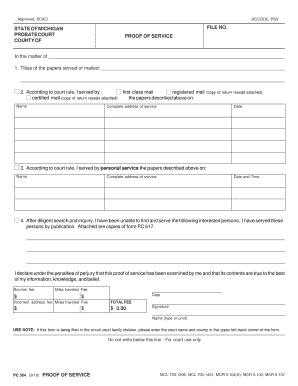
- Petition Information: Details regarding the type and nature of the case.
- Parties Involved: Comprehensive list of all parties participating in the case.
- Legal Grounds: Clear explanation of the legal principles supporting the case.
- Request for Relief: Specifying what legal outcomes or remedies are desired.
Each component is critical in articulating the basis and objectives of the legal action.
State-Specific Rules for the Superior Court
Washington State has specific rules governing court proceedings, ensuring consistency and procedural integrity.
Procedural Rules
- Filing Deadlines: Strict deadlines exist for filing motions and responses to adhere to court schedules.
- Notice Requirements: Parties must be given adequate notice before hearings and trials.
Documentation Protocols
- Document Formatting: Compliance with state-mandated document formatting rules for clarity in court records.
- Electronic Filing: Certain documents may be filed electronically through state-approved systems, enhancing accessibility.
These rules promote efficient case management and legal adherence.
Filing Deadlines & Important Dates
Awareness of crucial filing deadlines is imperative to ensure compliance and avoid delays.
Typical Deadlines
- Complaint Filing: Specific timelines for when a complaint must be filed post-incident.
- Response Periods: Defendants typically have a set number of days to respond.
- Pre-trial Motions: Deadlines exist for submitting motions, often requiring significant lead time ahead of trial dates.
Adhering to these timelines ensures one's ability to present arguments and evidence effectively in court.