
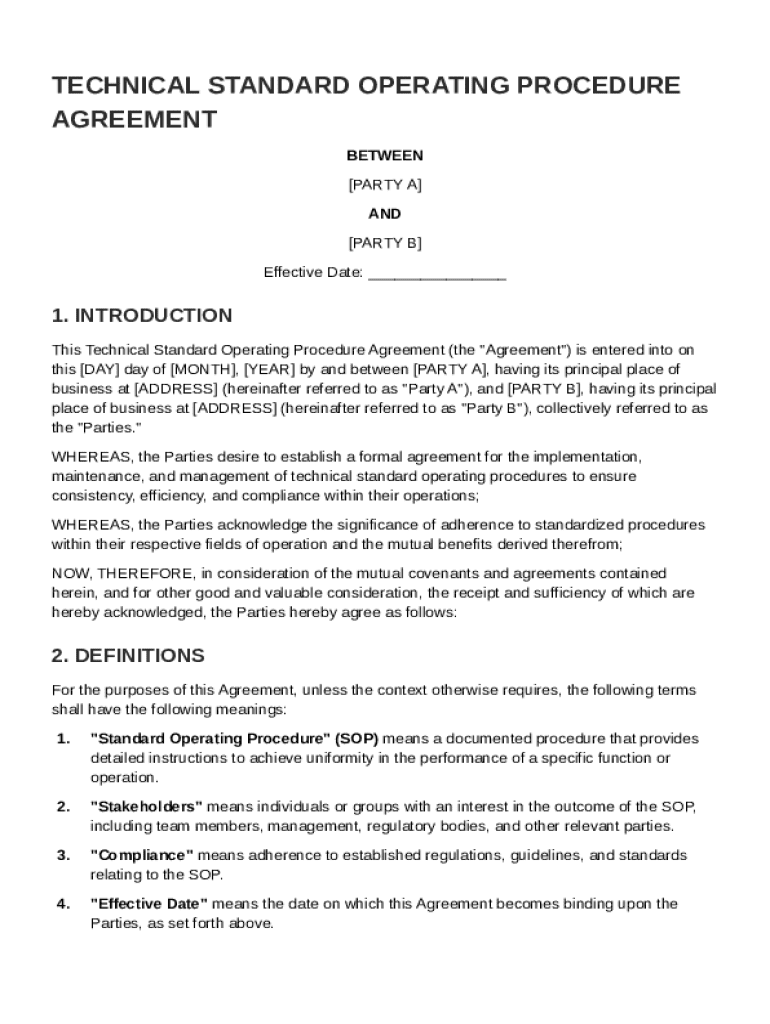







Definition & Meaning
The "Technical SOP Agreement Template" serves as a formal agreement between two parties, referred to as Party A and Party B, delineating a structured framework for the creation, implementation, and maintenance of standardized operating procedures (SOPs). The primary goal is to ensure consistency, efficiency, and compliance within operational processes. This document formalizes commitments and responsibilities of the parties involved to create an environment of transparency and collaboration.
Key Components of Definition
- Purpose: Establishes a structured approach to SOP development and adherence.
- Parties Involved: Identifies Party A and Party B, creating accountability.
- Framework Elements: Includes shared objectives, scope, and guiding principles.
- Compliance Focus: Emphasizes adherence to industry regulations and standards.
Practical Example
For instance, a multinational corporation and a local supplier might use the Technical SOP Agreement Template to ensure that all manufacturing processes comply with specific quality standards critical for both parties' reputational and operational success.
Key Elements of the Technical SOP Agreement Template
The template outlines several critical components to ensure its effectiveness and comprehensive nature. Each section plays a substantial role in achieving the agreement's objectives.
Essential Sections
- Definitions and Terms: Clarifies key terms to prevent misunderstandings.
- Roles and Responsibilities: Details the expected duties of each party.
- Training Requirements: Specifies necessary training sessions for effective SOP implementation.
- Monitoring and Compliance: Establishes procedures for regular checks and audits to ensure ongoing compliance.
- Confidentiality Obligations: Protects sensitive information shared between the parties.
- Dispute Resolution Processes: Provides mechanisms for resolving disagreements.
- Termination Conditions: States conditions under which the agreement may be dissolved.
Real-World Scenarios
In a healthcare setting, such an agreement might detail compliance with federal health regulations to minimize legal risks and enhance patient care quality.
Steps to Complete the Technical SOP Agreement Template
Completing the Technical SOP Agreement Template involves several meticulous steps to ensure accuracy and completeness.
Step-by-Step Process
- Review Definitions: Familiarize with all terms and definitions within the document.
- Detail Responsibilities: Clearly outline duties for both Party A and Party B.
- Specify Training: Define necessary training programs and schedules.
- Establish Monitoring: Set up compliance checkpoints and reporting structures.
- Agree on Confidentiality: Determine what information must remain private.
- Outline Dispute Resolution: Agree on dispute handling and resolution methods.
- Define Termination Conditions: Clearly articulate the terms for terminating the agreement.
- Finalize Documentation: Ensure all sections are thoroughly completed and reviewed by both parties.
Practical Tips
Consulting with legal professionals during the drafting stage can help mitigate potential future legal issues and ensure all sections are enforceable and compliant with relevant regulations.
Who Typically Uses the Technical SOP Agreement Template
Various entities find the Technical SOP Agreement Template valuable due to its capacity to standardize operations and promote consistency.


Common Users
- Corporations: Particularly those operating across multiple jurisdictions requiring harmonized procedures.
- Government Agencies: Agencies needing structured processes to comply with federal and state laws.
- Healthcare Organizations: Hospitals and clinics maintaining standardized practices across departments.
- Educational Institutions: Schools and universities implementing uniform teaching and administrative processes.

Use Case Example
A university implementing new research protocols may use the template to ensure all departments adhere to consistent, research-enhancing SOPs.
Legal Use of the Technical SOP Agreement Template
This template is often employed within legal frameworks to ensure compliance with regulations and standards pertinent to each industry.
Legal Considerations
- Adherence to Laws: Aligns with industry-specific regulatory requirements.
- Enforceability: Drafted by legal professionals to ensure legally binding terms.
- Dispute Framework: Provides predefined solutions for resolving legal conflicts between parties.
Industry Example
In the pharmaceutical industry, companies may use the template to comply with FDA regulations, helping to avoid non-compliance penalties.
State-Specific Rules for the Technical SOP Agreement Template
While this template aims for broad application, state variances introduce unique considerations that must be taken into account.
Key State-Specific Variations
- Jurisdictional Differences: Individual state laws may affect conditions like employee training mandates and confidentiality clauses.
- Regulatory Bodies: Specific state agencies may impose additional compliance requirements.
- Resource Allocation: States may differ in how resources, such as training facilities, are allocated.




