







Definition & Meaning
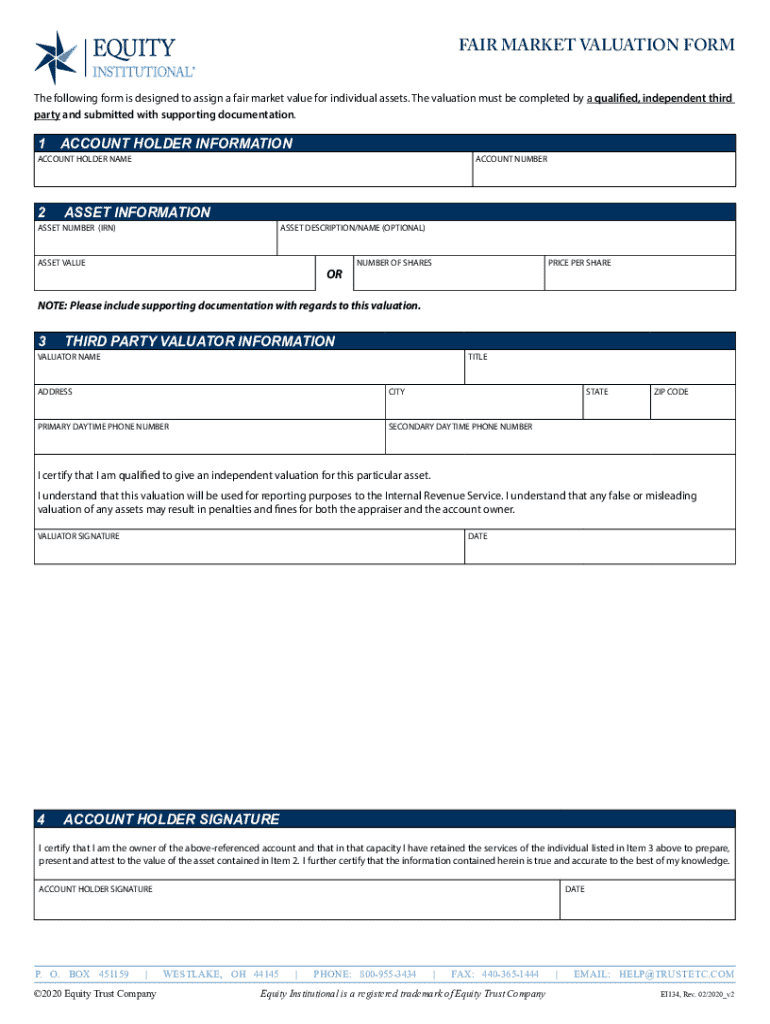
The Fair Market Valuation Form associated with Amazon S3 is typically utilized to evaluate the market value of an asset. This form plays a crucial role in financial transactions, especially when assessing assets for tax reporting purposes. It aims to establish a fair market value that is impartial and might be needed during asset distribution or transfers. Such valuation ensures that all financial assessments are accurate and legally compliant.
How to Use the Fair Market Valuation Form - Amazon S3
To effectively use the Fair Market Valuation Form via Amazon S3, follow these steps:
- Access the Form: Obtain the form from Amazon S3, either through direct download or via a cloud service that hosts the document.
- Enter Asset Information: Fill in the details of the asset including description, current condition, and location.
- Provide Valuation Details: Include any estimated values or appraisals previously obtained, ensuring that these are sourced from a qualified, independent third party.
- Submit Required Documentation: Attach any necessary documents such as prior appraisals or financial statements to support the valuation.
- Review and Submit: Carefully review the completed form for accuracy and completeness before submitting it through the designated channel on Amazon S3 or through other required submission methods.
Steps to Complete the Fair Market Valuation Form - Amazon S3
Completing the Fair Market Valuation Form involves multiple key steps:
- Information Gathering: Collect all necessary documents and data related to the asset being valued.
- Form Filling: Enter the asset details into the respective sections of the form.
- Supportive Documentation: Attach relevant financial documents, appraisals, or transaction histories.
- Consultation with Experts: Engage independent appraisers if required to provide insights that ensure the valuation is unbiased and legitimate.
- Final Review: Double-check all entries and corrections before submission. Ensure all required fields are completed to prevent a delay in processing.
Key Elements of the Fair Market Valuation Form - Amazon S3
The form contains several key elements that must be addressed:
- Asset Description: Detailed information regarding the type and characteristics of the asset.
- Valuation Date: Specific date on which the market value is assessed.
- Estimated Market Value: The appraised value determined for the asset.
- Supporting Documentation: Any necessary attachments that back up the declared value.
- Qualified Appraiser’s Signature: If applicable, a certified acknowledgment from a third party verifying the valuation.
Legal Use of the Fair Market Valuation Form - Amazon S3
Utilizing the Fair Market Valuation Form for tax-related purposes requires stringent adherence to legal frameworks. The form must be completed honestly and accurately, as discrepancies can lead to legal consequences, including fines or penalties. It serves as a formal declaration of asset value in scenarios such as inheritance, gifting, or investment assessments.
Examples of Using the Fair Market Valuation Form - Amazon S3
Consider the case of an individual receiving an inheritance that includes antique furniture. The form would be used to document the market value of these antiques to ensure they are incorporated into the estate’s total valuation correctly. Similarly, a business aiming to collateralize equipment against a loan might use the form to ascertain and declare the worth of the equipment involved.
IRS Guidelines
When using the Fair Market Valuation Form, compliance with IRS guidelines is essential. The IRS outlines that valuation must be determined based on a transaction between a willing buyer and seller. This guideline ensures that asset values are neither under- nor overestimated, which could otherwise lead to inaccuracies in financial reporting or inflated tax liabilities.
Required Documents
To accompany the Fair Market Valuation Form, ensure the following documents are prepared:
- Appraisal reports from accredited financial experts.
- Recent asset transaction records or purchase receipts.
- Photographs of the asset if applicable, to detail condition.
- Previous financial statements that might reflect the asset’s historical valuation trends.
These documents support the claimed asset value, providing clear evidence to substantiate valuation entries on the form.




