
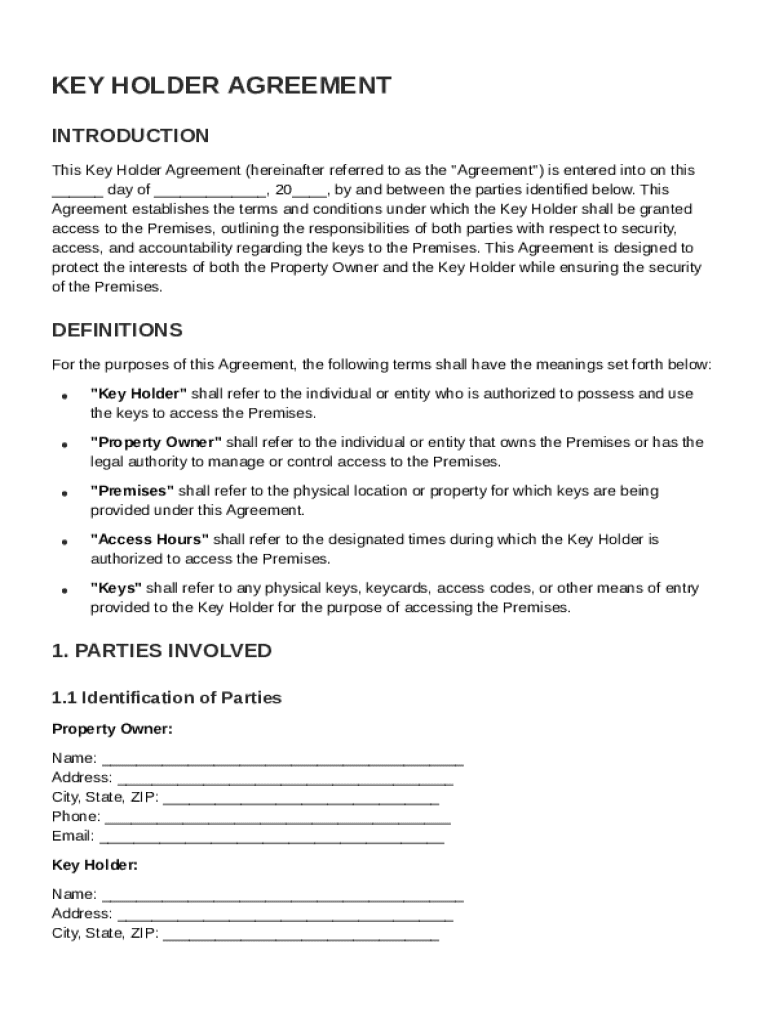







Definition and Meaning
A Key Holder Agreement Template is a structured document that outlines the terms and conditions related to granting an individual or entity access to specific premises using keys. It serves as a legal contract between the Property Owner and the Key Holder, detailing responsibilities for security, access, and keys accountability. The template ensures both parties are aware of their roles, minimizing potential disputes related to unauthorized access or key mismanagement. It typically includes sections such as definitions of roles, access protocols, liability clauses, and procedures for terminating the agreement.
How to Use the Key Holder Agreement Template
To effectively utilize the Key Holder Agreement Template, both parties should review all sections to ensure mutual understanding and agreement. The template should be customized to reflect the specific needs and conditions of the premises and parties involved. Start by identifying key details such as the parties' names, description of the premises, and key holder responsibilities. Fill out each section carefully, ensuring all terms align with your property security policies. After completion, both parties should sign and date the document to signify their agreement and understanding.
Customization Steps
- Identify Parties: Clearly state the names and addresses of the Property Owner and Key Holder.
- Premises Description: Specify location and boundaries of the property to which access is being granted.
- Access Conditions: Define the hours and conditions under which the Key Holder can access the premises.
Key Elements of the Key Holder Agreement Template
The Key Holder Agreement Template comprises several critical components to ensure comprehensive detailing of responsibilities and conditions. These elements include:
- Definitions: Clearly defined terms for easy understanding.
- Roles and Responsibilities: Detailed description of duties for both parties.
- Reporting Protocols: Procedures for reporting lost or stolen keys.
- Liability Clauses: Conditions under which parties are liable for breaches.
- Termination Conditions: Guidelines for terminating the agreement.
Examples of Key Clauses
- Access: States restricted areas and times for Key Holder.
- Confidentiality: Ensures protection of sensitive information.
- Maintenance: Outlines responsibilities for maintaining key security.
Legal Use of the Key Holder Agreement Template
In the United States, the legal enforceability of a Key Holder Agreement is crucial for protecting the interests of both parties. This template serves as a credible document, establishing clear terms that can be upheld in legal circumstances. Given its contractual nature, it is advised that those involved understand all legal obligations and consequences, perhaps consulting legal professionals to ensure compliance with state and federal laws.
State-Specific Considerations
- Jurisdiction: Ensure alignment with local property and tenancy laws.
- Representation: Legal advice may help clarify unclear or complex clauses.
Steps to Complete the Key Holder Agreement Template
- Review the Template: Familiarize yourself with all sections.
- Customize Content: Tailor the template to fit specific requirements.
- Complete Required Fields: Fill in all necessary information.
- Review and Revise: Cross-check for any errors or omissions.
- Sign and Date: Both parties should sign and date to validate the agreement.
- Distribute Copies: Provide a signed copy to each party for their records.
Who Typically Uses the Key Holder Agreement Template
The Key Holder Agreement Template is primarily used by Property Owners, landlords, and facilities managers who need to grant access to their properties. This might include:
- Residential Properties: Landlords offering access to tenants or maintenance staff.
- Business Facilities: Companies delegating access to employees or service personnel.
- Event Venues: Event managers granting temporary access to vendors or clients.


Important Terms Related to the Key Holder Agreement Template
Understanding key terms is vital for accurately interpreting the agreement. Here are some important terms:
- Key Holder: Individual or entity granted access.
- Premises: The physical location to which access is granted.
- Liability: Legal responsibility for damages or breaches.
- Termination: Process for ending the agreement.
- Confidentiality: Assurance of privacy regarding accessible information.
Examples of Using the Key Holder Agreement Template
Real-world scenarios illustrate the utility of the Key Holder Agreement Template:
- Landlord-Tenant Arrangements: Secures premises access for maintenance personnel.
- Corporate Security: Aligns employee access with company security protocols.
- Event Management: Temporary key access to vendors during event preparations.
Versions or Alternatives to the Key Holder Agreement Template
Depending on requirements, different versions of Key Holder Agreement Templates might be used. These may vary in complexity and scope, catering to:
- Full Access vs. Limited Access Agreements: Differentiating levels of access rights.
- Short-Term Agreements: Designed for temporary access situations.
- Comprehensive Security Agreements: Includes additional security and confidentiality clauses.
These variations allow flexibility in accommodating distinct scenarios and needs, ensuring agreements are tailored to specific circumstances while maintaining legal protection.




