






Definition & Meaning
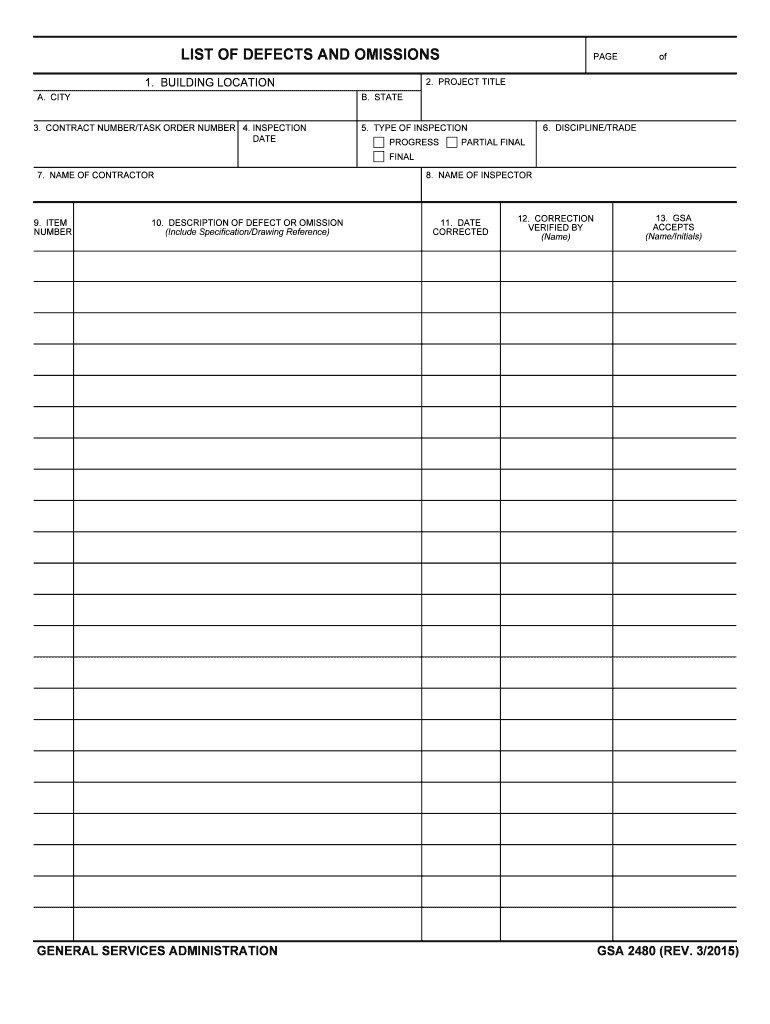
The "inspection report on work under contract - GSA" pertains to a structured documentation process designed to evaluate, record, and report the status and quality of construction projects facilitated by agreements under the General Services Administration (GSA). This report serves as an official checklist to identify any defects, omissions, or compliance issues concerning the project's specifications and contractual obligations. It is an essential means for ensuring that the construction work meets regulatory standards and expectations outlined in the contract.
Key Elements of the Inspection Report
The inspection report is comprised of several critical components that collectively ensure comprehensive documentation of the construction project's status:
-
Project Details: Includes information such as the project title, building location, and contractor name, providing context for the inspection.
-
Inspection Date: A record of when the inspection took place, crucial for project timelines and accountability.
-
Defect and Omission Documentation: Detailed descriptions of any issues identified during the inspection, including their nature and potential impact on the project.
-
Compliance Checks: Assessment of the project's adherence to contractual and regulatory standards, ensuring all work aligns with the agreed terms.
-
Inspector's Observations: Qualitative notes that may provide insights beyond the recorded defects, helping to contextualize findings.
How to Use the Inspection Report
Using the inspection report effectively involves several key steps to maximize its utility:
-
Preparation: Before the inspection, ensure all necessary documents and previous reports are reviewed to understand the project's scope and critical areas.
-
Conducting the Inspection: Utilize a systematic approach to examine all elements of the construction site, documenting both satisfactory and problematic areas.
-
Filling Out the Report: Accurately record findings in the designated sections, ensuring clarity and precision in describing defects or compliance issues.
-
Review and Sign-Off: Collaborate with involved parties to review the report’s findings and draw up a plan of action for addressing any noted issues.
Steps to Complete the Inspection Report
Completing the inspection report involves a methodical process to ensure thoroughness:
-
Gather Necessary Information: Collect all pertinent data regarding the project, including contract details and prior inspection outcomes.
-
Inspect the Worksite: Go through the site meticulously, attending to areas previously noted as concerns and looking for new potential issues.
-
Record Observations: Use detailed descriptions and avoid ambiguous language when noting down defects and compliance issues.
-
Evaluate Compliance: Confirm that all aspects of the construction meet local, state, and federal regulations, as well as contractual agreements.
-
Final Review and Submission: Proofread the report for accuracy and completeness before seeking approval from project stakeholders and submitting it to the appropriate authorities.
Why Should You Use the Inspection Report
Utilizing the inspection report is crucial for several reasons:
- Enhance Accountability: By formally documenting issues, the report increases accountability for contractors and project managers.
- Ensure Compliance: It helps in verifying that all aspects of the construction conform to legal and contractual requirements.
- Facilitate Communication: Acts as a communication tool between stakeholders, providing a clear record of project status.
- Advance Project Quality: Regular inspections and reports contribute to maintaining high standards of quality and resolving issues promptly.
Who Typically Uses the Inspection Report
The inspection report is commonly used by:
- Contractors: To assess work quality and ensure alignment with contractual obligations.
- Project Managers: For oversight and management of construction progress and addressing issues.
- GSA Representatives: In ensuring the work meets federal standards and is conducted according to the agreed contract.
- Regulatory Bodies: To confirm compliance with safety and construction codes.


Legal Use of the Inspection Report
The legal application of the inspection report involves:
- Contractual Compliance: Used as evidence in verifying that construction work fulfills the terms set out in contracts.
- Dispute Resolution: Acts as a documented account that can be referenced in legal disputes or negotiations.
- Regulatory Enforcement: Regulatory bodies may use it to enforce construction standards and ensure public safety.
State-Specific Rules for the Inspection Report
Different states may have unique regulations impacting the inspection report:
- Building Codes: Varying state building codes dictate specific compliance requirements that inspections must adhere to.
- Environmental Regulations: State-specific environmental laws may require additional considerations documented in the report.
- Regulatory Agency Requirements: Some states may have additional reporting standards from local agencies that need to be integrated into the inspection process.