Definition and Meaning of Intra Group Data Sharing Agreement
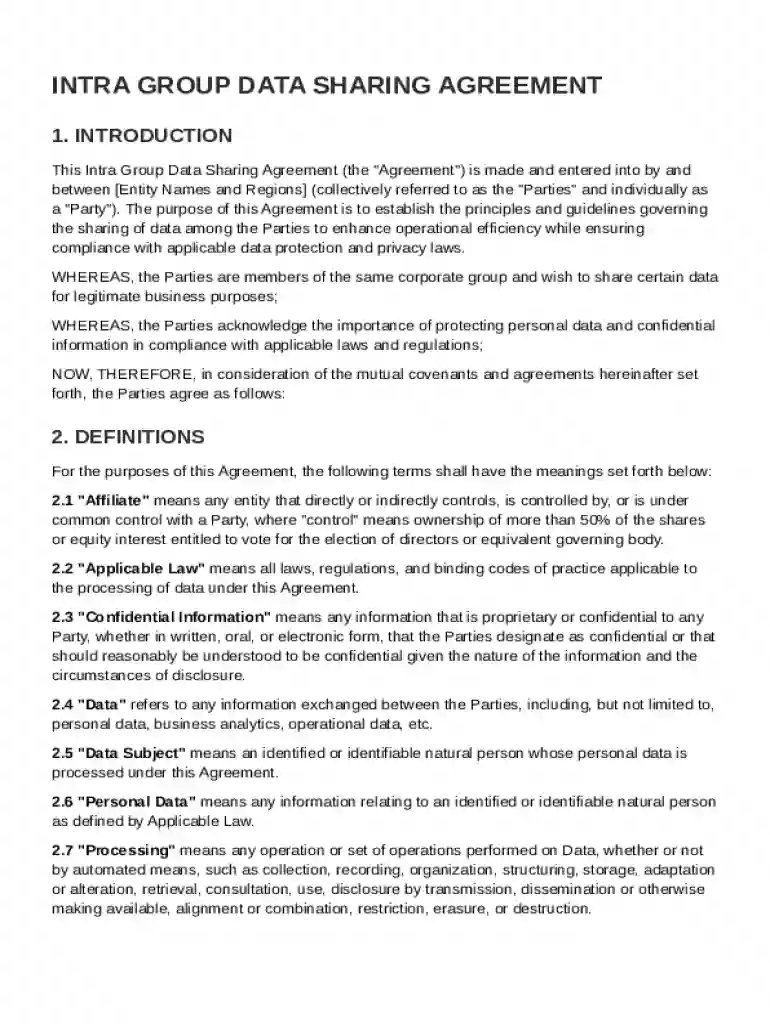
An Intra Group Data Sharing Agreement is a legally binding document designed to facilitate data sharing between different entities within the same corporate group. The agreement aims to ensure compliance with relevant data protection laws, enhance operational efficiency, and establish standardized protocols for data handling. It outlines the scope and purpose of data sharing, clarifies responsibilities for data security, and sets restrictions on data use. By clearly defining the terms of data exchange, it minimizes the risk of data breaches and legal disputes.
Core Components
- Purpose and Scope: Describes the intended objectives and boundaries of data sharing activities.
- Data Protection Compliance: Ensures adherence to applicable data privacy regulations, such as GDPR in the EU or CCPA in California.
- Security Protocols: Specifies the security measures to be implemented to protect shared data from unauthorized access.
- Usage Restrictions: Limits the ways in which shared data can be utilized to prevent misuse.
- Confidentiality Clauses: Safeguards sensitive information against unauthorized disclosures.
- Dispute Resolution: Provides mechanisms for resolving disagreements related to data sharing.
How to Use the Intra Group Data Sharing Agreement Template
Utilizing the Intra Group Data Sharing Agreement Template can streamline the drafting process and ensure all necessary considerations are addressed. Here's how to effectively use the template:
Customization Steps
- Identify Parties Involved: Clearly specify the corporate entities or divisions that will engage in data sharing.
- Define Data Types: List the specific categories of data that will be shared, such as customer information or financial records.
- Establish Security Measures: Describe the technical and organizational security measures to be implemented.
- Set Terms and Conditions: Outline the conditions under which data can be shared, including timeframes and usage limitations.
- Legal Review: Have the drafted agreement reviewed by legal professionals to ensure compliance with relevant laws and regulations.
Practical Tips
- Utilize clear and precise language to avoid ambiguity.
- Include clear guidelines for updating the agreement to accommodate changes in data protection laws.
- Ensure all parties have access to, and have acknowledged understanding of, the final agreement.
Steps to Complete the Intra Group Data Sharing Agreement Template
Completing the template requires careful attention to detail to ensure it meets all necessary legal and operational needs. Follow these steps to complete the template:
Step-by-Step Process
- Collect Information: Gather all relevant data that will be covered by the agreement.
- Consult Stakeholders: Engage with key personnel from each corporate entity to align on objectives.
- Draft the Agreement: Utilize the template to draft a preliminary version of the agreement.
- Review and Revise: Circulate the draft among stakeholders for feedback and make necessary revisions.
- Finalize the Agreement: Obtain final approval from legal advisors and executives within the organization.
Considerations
- Ensure clarity on who is responsible for data protection within each participating entity.
- Include contingencies for data breaches or unauthorized data access scenarios.
- Update the agreement regularly to reflect changes in business practices or data protection laws.
Key Elements of the Intra Group Data Sharing Agreement Template
The template includes several key elements that must be addressed to create a comprehensive data sharing agreement.
Essential Clauses
- Identification of Data Controllers and Processors: Specifies the roles of each party involved in data processing.
- Data Protection Impact Assessments: Addresses risk assessments required for data sharing activities.
- Liability and Indemnification: Details the responsibilities and liabilities of each party in the event of non-compliance or data breaches.
- Audit Rights: Grants the right to audit data handling practices to ensure adherence to security protocols.
Additional Provisions
- Term and Termination: Defines the duration of the agreement and conditions for its termination.
- Transfer Mechanisms: Outlines procedures for data transfers across international borders.
- Amendment Procedures: Establishes the process for modifying the agreement.
Legal Use of the Intra Group Data Sharing Agreement Template
The legal use of the Intra Group Data Sharing Agreement Template ensures that data sharing practices comply with relevant data protection laws.
Key Legal Considerations
- Data Regulation Compliance: Ensure the agreement complies with regulations like GDPR or CCPA.
- Legal Jurisdiction: Specify the legal jurisdiction that will govern the agreement to prevent disputes.
- Consent and Notification: Ensure that appropriate consent is obtained from data subjects and notifications are provided where necessary.
Importance of Legal Oversight
- Engage with experienced legal professionals to navigate complex data protection regulations.
- Conduct periodic legal audits to assess ongoing compliance with the agreement.
Examples of Using the Intra Group Data Sharing Agreement Template
Practical examples can illustrate the effective use of the template across different corporate settings.
Corporate Case Studies
- Financial Services Group: A multinational banking corporation uses the template to coordinate customer data sharing between its international branches.
- Retail Chains: A global retail company utilizes the agreement to manage exchange of sales data between its various regional subsidiaries.
- Healthcare Providers: A network of clinics incorporates the agreement to ensure secure sharing of patient data for improved service delivery.
Real-World Scenarios
- Data sharing during corporate mergers or acquisitions.
- Collaborative projects involving shared research data between allied corporate divisions.
- Access to centralized databases for improved customer service delivery.
Important Terms Related to Intra Group Data Sharing Agreement Template
Understanding key terms associated with the template is essential for effective implementation.
Common Terminologies
- Data Controllers and Processors: Entities that determine the purpose and means of processing personal data.
- Data Minimization: Practice of limiting data collection to only what is necessary for the intended purpose.
Glossary of Terms
- Data Subject: An individual whose personal data is being collected, held, or processed.
- Personal Data: Information that relates to an identified or identifiable living individual.
- Encryption: A method of converting information or data into a code to prevent unauthorized access.
Digital vs. Paper Version
Considering the format of the Intra Group Data Sharing Agreement can impact its accessibility and practicality.
Pros and Cons of Each Format
Digital Version:
- Benefits: Easier to disseminate and update, environmentally friendly.
- Challenges: Requires secure digital platforms to prevent unauthorized access.
Paper Version:
- Benefits: Provides a physical record, easier to review in offline settings.
- Challenges: More difficult to update and distribute.
Format Selection Criteria
- Choose based on the technological capabilities of involved parties.
- Consider environmental implications and organizational policies on data handling.
Typical Users
- Large Corporations: Utilize the agreement for coordinating internal data exchanges.
- Legal Departments: Oversee the drafting and implementation of data sharing agreements.
- IT Security Teams: Implement the security protocols outlined in the agreement.
Sector-Specific Applications
- Technology Firms: Use the template to manage developer data sharing across global teams.
- Healthcare Organizations: Ensure compliant sharing of patient information within hospital networks.
- Educational Institutions: Facilitate student data exchange between school branches.