






Definition & Meaning
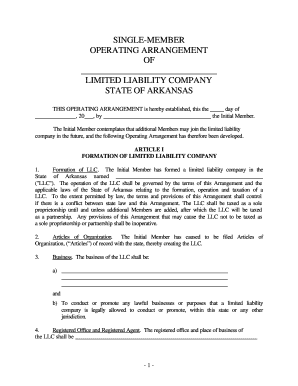
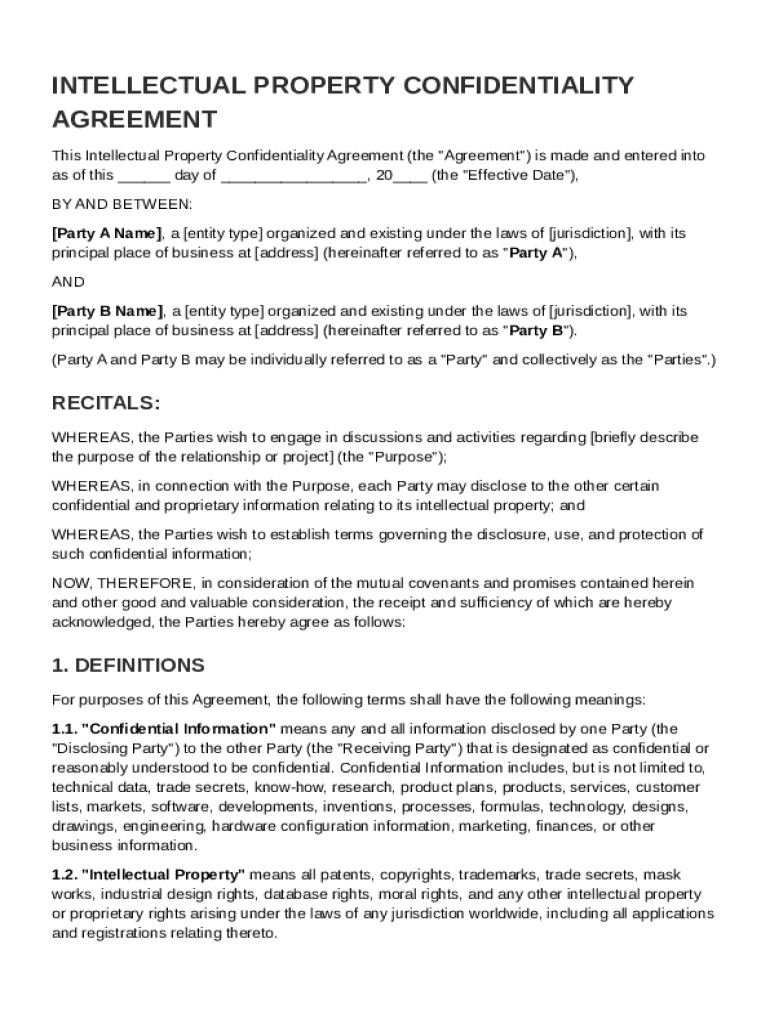
An Intellectual Property Confidentiality Agreement Template is a legally binding document designed to protect sensitive information related to intellectual property when shared between parties. This template sets out the terms and conditions under which the disclosed information must be treated, ensuring that it remains confidential and is not exploited without permission. Typically, the agreement outlines what constitutes confidential information, the obligations of the receiving party, and repercussions for unauthorized disclosure.
Key Components
- Confidential Information: Clearly defines what information is considered confidential, such as trade secrets, patents, designs, or any proprietary data.
- Obligations: Details the responsibilities of the receiving party to maintain the confidentiality of the disclosed information.
- Exclusions: Specifies scenarios where disclosure of information might be deemed permissible, like prior known information or public knowledge.
By understanding the core definition and key components, parties can ensure they craft an agreement that effectively protects their intellectual rights.
How to Use the Intellectual Property Confidentiality Agreement Template
To effectively use the Intellectual Property Confidentiality Agreement Template, follow these essential steps:
- Customize the Template: Begin by tailoring the agreement to suit the specific nature of your business relationship and the intellectual property involved.
- Identify the Parties: Clearly identify all parties involved, including their roles (e.g., disclosing and receiving party).
- Detail the Confidential Information: Specify the type of intellectual property covered and what constitutes confidential information.
It is crucial to seek legal advice when drafting the agreement to ensure all elements adhere to legal standards and protect your interests sufficiently.
Steps to Complete the Intellectual Property Confidentiality Agreement Template
Completing the Intellectual Property Confidentiality Agreement Template involves several detailed steps:
- Gather Necessary Information: Compile details about the parties entering the agreement and the intellectual property being protected.
- Define Confidential Information: Clearly state the specific information that must be kept confidential, including examples and boundaries.
- Set Terms and Conditions: Outline the duration of confidentiality, permissible disclosures, and conditions under which information may be shared.
Comprehensive Example
- Duration of Agreement: Specify a timeframe during which the confidentiality obligations remain in force, such as five years after the initial disclosure.
- Permissible Use: Indicate how the disclosed information can be used by the receiving party, ensuring it aligns with the intended purpose of the disclosure.
By adhering to this structured approach, parties ensure the agreement is thorough and enforceable.
Legal Use of the Intellectual Property Confidentiality Agreement Template
The legal use of the Intellectual Property Confidentiality Agreement Template necessitates compliance with relevant laws to ensure enforceability. This includes adhering to contract law principles such as offer, acceptance, and mutual consideration.
U.S. Legal Standards
- ESIGN Act Compliance: If the agreement is signed electronically, both parties must acknowledge and consent to this form of signature to meet authenticity standards.
- Underpinning Legislation: The agreement should reference specific laws pertinent to confidentiality and intellectual property in the United States, such as the Defend Trade Secrets Act.
Leveraging legal advice can ensure the agreement complies with applicable laws and sufficiently protects the intellectual property rights of involved parties.
Key Elements of the Intellectual Property Confidentiality Agreement Template
The template encompasses several critical components essential for protecting intellectual property:
- Definitions and Terms: A glossary of terms as applied in the context of the agreement to ensure mutual understanding by all parties.
- Confidentiality Obligations: Concrete actions required by the receiving party to preserve confidentiality.
- Dispute Resolution: Outlines mechanisms for resolving disputes that arise from alleged breaches of confidentiality.
Example Clause
- Governing Law: Specify the state or jurisdiction's law that governs the agreement, which is commonly the state of primary business operation for one of the parties.
Utilizing these elements ensures the agreement is comprehensive and serves its primary function of protecting intellectual property.
Important Terms Related to Intellectual Property Confidentiality Agreement Template
Understanding terminology is crucial for the effective use of the agreement:
- Proprietary Information: Unique data or knowledge owned by a business that provides competitive advantage.
- Non-Disclosure Agreement (NDA): A broader form of agreement used generally for protecting various forms of confidential information beyond intellectual property.
- Breach of Contract: Failing to uphold terms within the agreement, leading to potential legal implications.
Awareness of these terms helps clarify the intentions and commitments within the agreement, thereby enhancing its efficacy.
Who Typically Uses the Intellectual Property Confidentiality Agreement Template
The Intellectual Property Confidentiality Agreement Template is utilized by a diverse range of entities:
- Technology Companies: To protect proprietary code or software development processes.
- Startups: When discussing innovative ideas and seeking investment or partnerships.
- Legal Professionals: For advising clients and offering a standard framework for creating tailored agreements.
Using such agreements helps secure business interests while engaging in collaborations and discussions that involve sensitive information.


Business Types That Benefit Most from Intellectual Property Confidentiality Agreement Template
Businesses across various sectors leverage the confidentiality agreement template to safeguard their intellectual assets:
- Pharmaceutical Firms: Protects formulas and research data in drug development.
- Design and Creative Agencies: Secures designs and creative concepts from unauthorized replication.
- Manufacturing Businesses: Shields trade secrets involved in the production process.
These agreements offer a practical solution for businesses aiming to maintain competitive advantage while engaging in potential partnerships or disclosures.