






Definition & Purpose of a Real Estate Non Disclosure Agreement
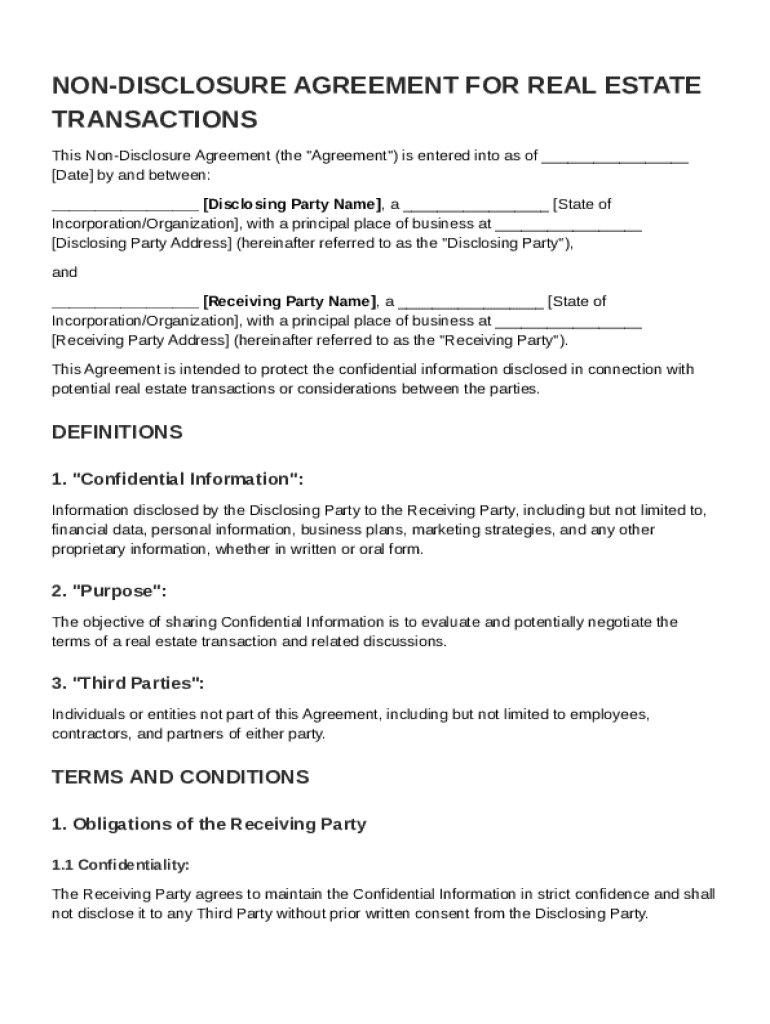
A Real Estate Non Disclosure Agreement (NDA) is a legal document used to protect confidential information exchanged between parties during real estate transactions. It outlines the meaning of 'Confidential Information' and the 'Purpose' of the agreement. The NDA is designed to prevent the unauthorized disclosure of sensitive data such as property details, financial records, and personal information. It legally binds the receiving party to maintain confidentiality and restricts the usage of the information to the specified purpose.
Confidential Information and Exclusions
The agreement details what constitutes 'Confidential Information' and specifies any exclusions. Information typically protected includes transaction details, pricing, property specifications, and client data. Exclusions might cover information that is publicly available or not protected due to prior knowledge. Companies and individuals involved in real estate transactions use NDAs to prevent leaks that could penalize their negotiation or competitive position.
Key Elements of the Agreement
An NDA in real estate covers several crucial components:
- Obligations of the Receiving Party: Details on how the receiving party must handle confidential data.
- Duration of Confidentiality: Specifies the time frame during which information must remain confidential.
- Remedies for Unauthorized Disclosure: Defines the legal consequences for breaches of confidentiality.
- Miscellaneous Provisions: Includes governing law, amendment processes, severability clauses, and assignment rights.
Duration and Governing Law
Agreements often specify the term of confidentiality obligations. They also include a governing law clause to determine which state’s jurisdiction applies in the event of a violation. It is critical for parties to understand these terms to ensure compliance and appropriate legal recourse.
How to Use the Template Effectively
The Real Estate NDA template provides users with a framework to efficiently draft an agreement. To use the template:
- Identify the Parties: Clearly state the names and roles of all involved parties.
- Detail the Confidential Information: Specify what information is to be protected.
- Define the Purpose: Establish why the information is being shared and how it should be used.
- Customize Terms: Modify clauses and obligations to fit the specific transaction and parties' requirements.
Customization for Different Transactions
Each real estate transaction is unique. Users should adjust clauses to suit the nature of the transaction, using legal counsel if needed to ensure all areas are covered adequately.
Who Typically Uses This Agreement
A variety of parties engaged in real estate transactions utilize NDAs:
- Real Estate Agents and Brokers: To protect client lists and transaction details.
- Property Developers and Investors: To secure development plans and financial data.
- Buyers and Sellers: During negotiation stages to protect sensitive negotiations.
- Lenders and Financing Companies: To maintain confidentiality of financial agreements.
Applicability for Individuals and Corporations
The NDA is appropriate for both individual parties and corporate entities. Its flexibility allows it to be adapted to various sizes and types of real estate transactions.
Legal Use and Compliance
The template ensures compliance with legal standards set forth by the Uniform Trade Secrets Act and the Defend Trade Secrets Act. It adheres to federal and state regulations regarding proprietary data protection and lawful disclosure. Legal advisors often review such agreements to tailor them to applicable laws and mitigate risks.
Potential Legal Recourse
Including clear legal recourse options in the case of a breach strengthens the enforceability of the NDA. Remedies might include financial compensation, injunctions, or other appropriate court orders.
Obtaining the Template
The Real Estate NDA template is typically available through document management platforms like DocHub, which allow users to download and customize legal forms.
- Access the Platform: Log in to a platform offering legal forms.
- Search for Template: Use search functions to locate the NDA template for real estate.
- Download and Edit: Save the file and adjust the content to fit the specific requirements of your transaction.
Benefits of Digital Templates
Digital templates offer ease of use, accessibility from various devices, and straightforward modifications. This flexibility supports timely and efficient preparation of legal documents.
Important Terms and Concepts
Key terms in the NDA include:
- Receiving Party: The entity or individual obligated to maintain confidentiality.
- Purpose: The specific reason the confidential information is being shared.
- Confidential Information: Defined scope of what is considered proprietary data.
- Exclusions: Information not covered by the NDA.
Clarification of Terms
Understanding each term’s scope is crucial for the parties involved, as it determines the obligations and protections under the agreement.
State-Specific Considerations
While a general template can be used broadly, it is essential to consider state variations in legal standards and enforceability. Certain states may have differing requirements regarding non-disclosure durations or remedies.
Customization for State Laws
It may be necessary to consult with a legal professional familiar with state laws to tailor the NDA in compliance with local regulations. State-specific adjustments can enhance the agreement's validity and enforceability.
Each of these detailed sections provides comprehensive insight into the Real Estate Non Disclosure Agreement Template, offering the highest level of utility and relevance tailored to users involved in real estate transactions in the U.S.