






Definition & Meaning
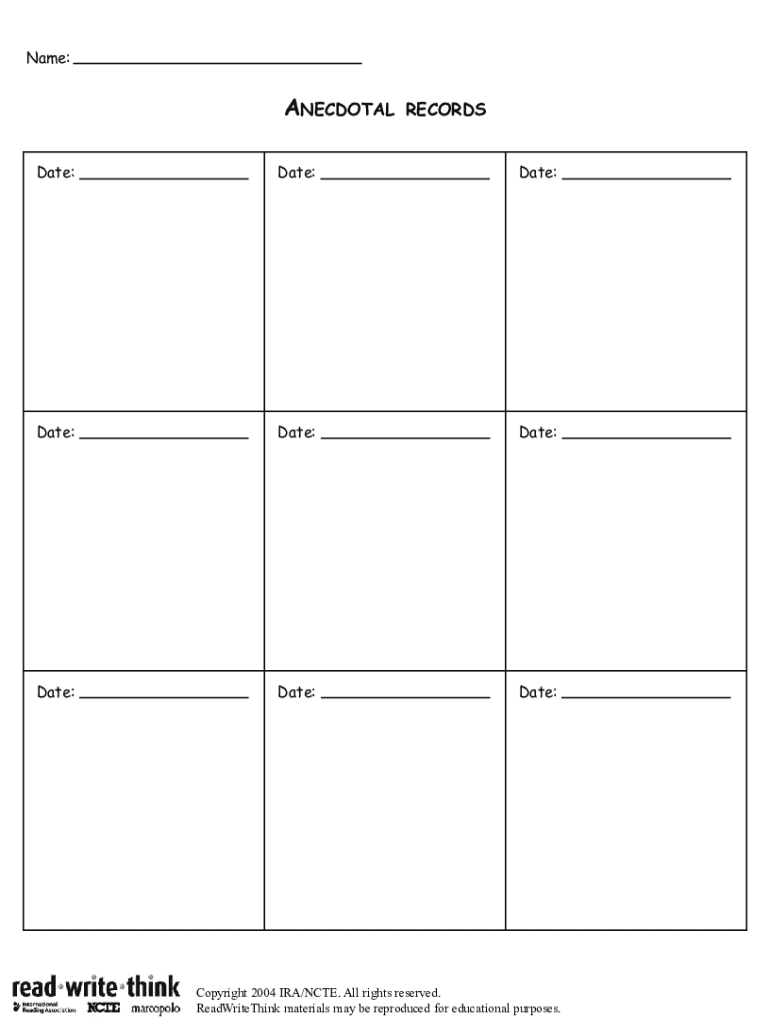
The "Anecdotal Record Log Student - Utah Montessori - utahmontessori" is a tool used by educators, particularly within the Montessori education system in Utah, for recording detailed observations of students. This form captures information such as the date, time, and setting of observations and includes spaces for comments. It serves as a narrative account of a student's experiences and interactions which can inform teaching strategies and support individualized learning.
Key Features
- Date and Time Logging: Records when observations are made, providing context for the observed behaviors.
- Observation Setting: Defines where the observation took place, aiding in understanding environmental influences on student behavior.
- Comment Section: A space for in-depth notes or observations, facilitating personalized educational approaches.
How to Use the Anecdotal Record Log
Using the Anecdotal Record Log requires educators to systematically document student interactions and behaviors. The process involves keen observation and detailed note-taking.
Steps for Effective Use
- Prepare for Observation: Before beginning, ensure you have a clear understanding of what to observe, focusing on behavior, interactions, and learning processes.
- Record Observations Promptly: Write down details as events unfold to ensure accuracy. Note the context, including the student's mood and engagement level.
- Reflect and Analyze: Post-observation, review the notes to identify patterns or insights that could influence teaching strategies.
Practical Examples
- Behavioral Analysis: A child consistently engages more in math activities in the morning, suggesting a morning focus for challenging tasks.
- Social Interaction Tracking: Noting changes in how a student interacts with peers can indicate shifts in social development.
Key Elements of the Anecdotal Record Log
The log comprises several critical areas that ensure comprehensive documentation of student behavior.
Important Sections
- Header Information: Includes student name, date of observation, and observer's name.
- Detailed Observations: Captures behaviors, reactions, and interactions.
- Summary Notes: Allows for personal reflection and educational implications of the observations.
Real-World Application
Educators can adapt their teaching based on patterns noticed in logs, like increased student engagement in certain subjects, allowing for tailored lesson plans.
Steps to Complete the Anecdotal Record Log
Completing the Anecdotal Record Log involves a structured approach to ensure all relevant information is captured accurately.
Procedure
- Set Observation Goals: Decide what behaviors or activities will be the focus.
- Document in Real Time: Use direct quotes and objective descriptions to avoid subjective bias.
- Review and Reflect: After the observation, analyze the data to draw actionable insights.
Edge Cases
- Group Observations: When observing multiple students, note names and specific interactions clearly to prevent data muddling.
- Non-Observable Scenarios: Situations where observation is challenging require creative solutions like using indirect observation methods or follow-up questions.
Why Use the Anecdotal Record Log
Anecdotal records provide rich, qualitative insights into student development, surpassing basic quantitative data.
Benefits
- Individualized Instruction: Helps tailor education to each student's unique needs and strengths.
- Development Tracking: Long-term use reveals development and progress over time.
- Parent-Teacher Communication: Enhanced reports for parent-teacher meetings, providing concrete examples of student progress.
Who Typically Uses the Anecdotal Record Log
This log is primarily utilized by educators within the Montessori education system but can also benefit other education professionals.


Users' Profiles
- Montessori Educators: Tailoring lesson plans to fit individual student needs.
- Special Education Teachers: Using detailed observations to inform individualized education plans (IEPs).
- School Administrators: Analyzing logs to evaluate curriculum effectiveness.
Important Terms Related to the Anecdotal Record Log
Understanding key terminology associated with the Anecdotal Record Log enhances the quality of recorded observations.
Glossary
- Observation: The act of monitoring student behavior without interference.
- Feedback: Constructive responses shared with students based on observations, aimed at encouraging specific behaviors.
- Developmental Milestones: Key indicators of student progress, frequently referenced in logs.
Variations and Use Cases
- Narrative Observations vs. Checklists: While anecdotal records provide narrative accounts, checklists are used for quick, structured data collection.
State-Specific Rules for the Anecdotal Record Log
Utah Montessori settings may have specific guidelines regarding the use of anecdotal records.
Guidelines in Utah
- Compliance with State Regulations: Ensuring all records abide by state educational standards for documentation, including data privacy requirements.
- Parental Access: Policies regarding parental rights to access and review their child's records.
Considerations
Utah's unique educational landscape may involve additional reporting requirements or consent forms to accommodate local policies and practices.