






Definition of a Scope Agreement Template
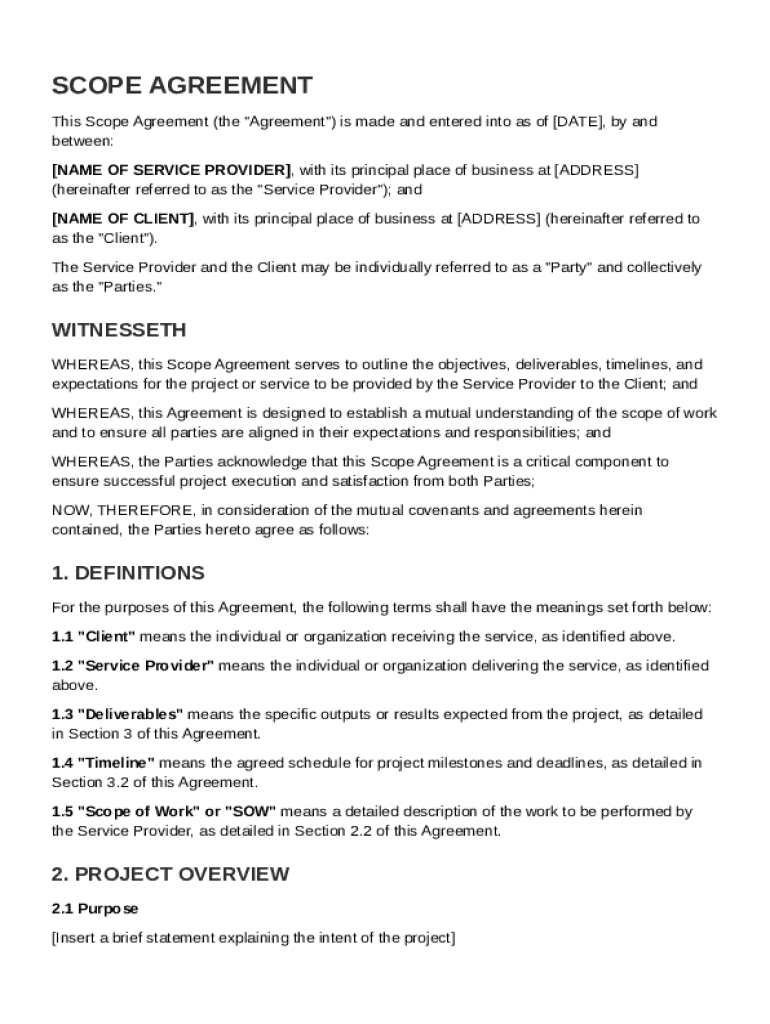
A Scope Agreement Template is a structured document used to outline the specific terms and conditions of a project between a service provider and a client. This template serves as a legally binding agreement that ensures both parties are aligned on the project's objectives, deliverables, timelines, and responsibilities. By defining these elements clearly, the Scope Agreement Template seeks to mitigate misunderstandings and facilitate successful project execution.
Key Elements of a Scope Agreement Template
The template typically includes several important sections:
- Objectives and Deliverables: Clearly defines what the project aims to achieve and what will be delivered upon completion.
- Timelines and Milestones: Outlines the schedule for project phases, completion dates, and any intermediate milestones to track progress.
- Roles and Responsibilities: Details the duties and expectations of both the service provider and the client throughout the project lifecycle.
- Payment Terms: Specifies the payment structure, including fees, schedules, and conditions for payment.
- Confidentiality: Addresses the handling of sensitive information and sets conditions for non-disclosure.
- Termination Clauses: Establishes the conditions under which the agreement may be terminated by either party.
Legal Use and Compliance
The Scope Agreement Template must adhere to legal standards to ensure enforceability. In the U.S., it aligns with contract law principles and includes clauses like dispute resolution to handle disagreements effectively. Adopting a well-drafted template minimizes risks and provides a solid foundation for legal protection in case of disputes.
How to Use the Scope Agreement Template
Using a Scope Agreement Template involves several steps to ensure that it effectively captures the necessary project details and mutual expectations.
- Customizing the Template: Adjust the template to fit the specific details of your project, including the unique objectives, timelines, and responsibilities.
- Reviewing with Stakeholders: Collaborate with all involved parties to review the document's contents, ensuring everyone agrees with the outlined terms.
- Finalizing the Document: Make any necessary adjustments based on stakeholder feedback before finalizing the agreement for signatures.
- Secure Signatures: Use electronic signature platforms like DocHub to obtain legally binding signatures from all parties involved.
Important Terms to Consider
The terminology within a Scope Agreement Template is crucial for clarity and precision:
- Scope Creep: Refers to uncontrolled changes or deviations in the project's scope.
- Deliverable: A tangible or intangible output that must be provided as part of the project.
- Milestone: Specific point in time within the project timeline that indicates progress.
Steps to Complete the Scope Agreement Template
Completing a Scope Agreement Template involves a series of detailed actions:
- Identify Project Needs: Begin by listing the core objectives and expected outcomes of the project.
- Detail Deliverables: Clearly describe what will be delivered, including any specifications or standards.
- Set Timelines: Establish a timeline with realistic deadlines for each stage of the project.
- Assign Roles: Define the role of each stakeholder involved, including any external partners or vendors.
- Define Payment Terms: Specify the payment methods, amounts, and schedules associated with the project.
- Include Confidentiality Provisions: Ensure there is clear guidance on how sensitive information should be handled.
- Outline Termination Conditions: Clearly state the criteria under which the agreement can be terminated by either party.
Why You Should Use a Scope Agreement Template
Using a Scope Agreement Template provides several advantages that facilitate better project management and risk mitigation.
- Clarity and Alignment: Ensures that all parties are aware and in agreement on what the project entails and what is expected from each party.
- Risk Mitigation: Clearly delineates roles and expectations, reducing the chances of disputes or misunderstandings.
- Efficiency: Streamlines the project setup process, saving time and allowing for faster implementation.
- Legal Protection: Provides a platform for recourse and resolution in case of disagreements or breaches, protecting both parties' interests.
Who Typically Uses the Scope Agreement Template
Scope Agreement Templates are used across various industries by professionals who engage in project-based work. Common users include:
- Consultants: Individuals or firms providing expert advice and direct services on specific projects.
- Freelancers: Independent contractors working on projects ranging from creative design to complex IT solutions.
- Project Managers: Professionals who oversee project execution and coordination to ensure that deliverables meet specified requirements.
- Businesses: Companies of all sizes that engage external service providers for specialized work or collaboration.


Important Terms Related to Scope Agreement Template
Understanding certain key terms enhances the effective use of a Scope Agreement Template:
- Service Level Agreement (SLA): Often accompanies a scope agreement, detailing the expected level of service.
- Non-Disclosure Agreement (NDA): May be included to protect confidential information shared during the project.
- Force Majeure: A clause that frees both parties from liability in the event of unforeseen circumstances beyond their control.
State-Specific Rules for the Scope Agreement Template
While Scope Agreement Templates are generally uniform, state-specific rules may influence their contents:
- Governing Law: Each state may have specific laws governing contract enforcement that must be referenced in the template.
- Dispute Resolution: Preferences for arbitration or mediation can differ by state and may be included as stipulated by local laws.
- Regulatory Compliance: Industry-specific regulations in different states may require additional clauses to ensure complete compliance.
Examples of Using the Scope Agreement Template
To illustrate the breadth and flexibility of a Scope Agreement Template, consider the following scenarios:
- IT Services: A software development company uses the template to outline deliverables for a new app, including timelines, payment, and confidentiality terms.
- Marketing Campaign: An agency drafts a scope agreement detailing campaign phases, deliverables like ad copies, and milestones.
- Construction Projects: A contractor uses the template to define the scope of work for a property renovation, establishing timelines and responsibilities.
These examples underline the versatility of the Scope Agreement Template across various industries, helping streamline project management and enhance productivity.