






Definition & Significance of Sale Rebate Agreement Template
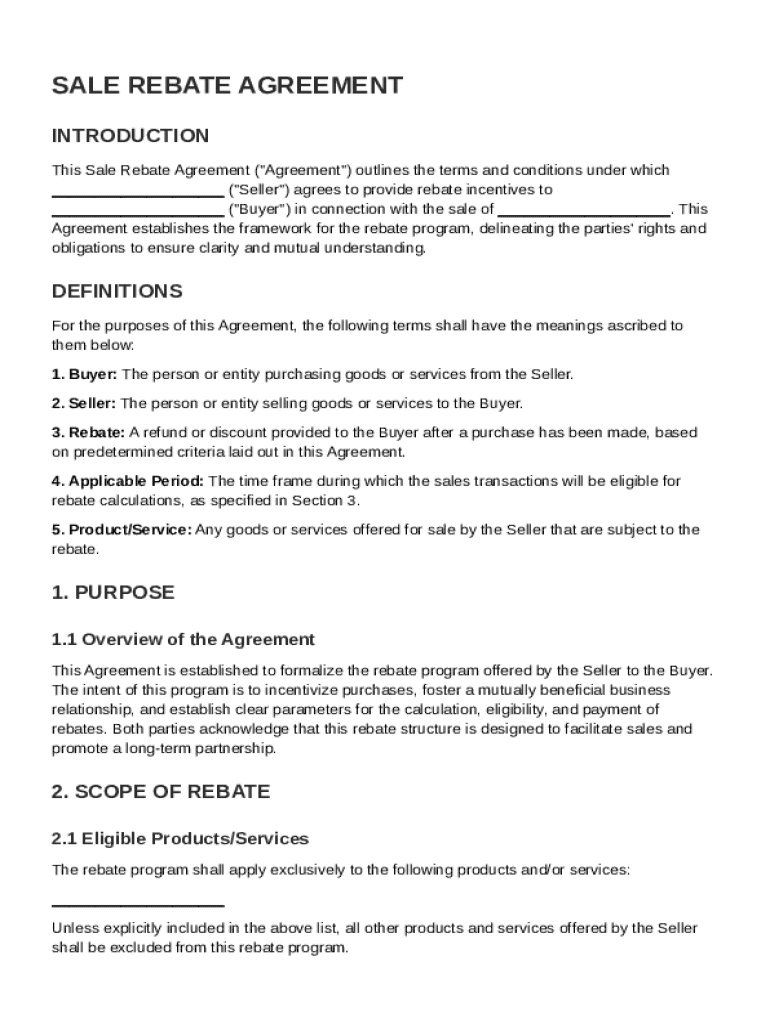
The Sale Rebate Agreement Template is a legal document used to establish rebate incentives between a seller and a buyer pertaining to certain goods or services. It outlines critical components like the terms and conditions under which rebates are granted, providing clear definitions to avoid misunderstandings. Key sections typically include the scope of the rebate program, eligibility criteria, and the calculation method for rebates. This contract is crucial as it ensures both parties are aware of their rights and responsibilities, fostering transparency and reducing potential disputes.
How to Obtain and Utilize the Template
-
Accessing the Template: Users can obtain the Sale Rebate Agreement Template from reputable document management platforms like DocHub. By leveraging DocHub’s robust feature set, individuals can access and manage the template seamlessly from any device, ensuring convenience and accessibility.
-
Utilizing the Template:
- Review all Terms: Before putting the template to use, carefully examine every section of the document to ensure it aligns with your specific needs and business objectives.
- Customization: Modify the template to fit particular arrangements between the parties, including adjusting terms related to rebate calculations and eligibility criteria.
- Secure Signatures: Utilize DocHub’s electronic signature feature to obtain legally binding endorsements from all parties involved.
Steps to Complete the Sale Rebate Agreement Template
- Initiate the Document: Open the template in DocHub and familiarize yourself with the content structure.
- Enter Basic Information: Fill in the initial details such as the names of the parties involved and the date of agreement commencement.
- Define Rebate Conditions: Specify the criteria under which rebates will be applicable, including product classes and transaction timelines.
- Detail the Calculation Method: Outline the formula or computation method used to determine rebate amounts, ensuring clarity for financial planning.
- Set the Rebate Period: Define the duration over which the rebate incentives will be valid.
- Establish Confidentiality Terms: Include sections that safeguard the privacy of shared information relating to rebates.
- Signature and Finalization: Ensure all required signatures are collected electronically for the agreement to become enforceable.
Key Elements of the Sale Rebate Agreement Template
- Eligibility Criteria: Defines who qualifies for the rebates and under what conditions, helping to prevent claims from unintended parties.
- Rebate Calculation: Elaborates on how the rebates are computed, often using a formula considering purchase volume and payment timeliness.
- Period of Validity: Specifies the timeframe in which rebates can be claimed, ensuring both parties are aware of the start and end dates.
- Termination Clause: Details conditions under which the agreement may be nullified, providing a safeguard for unforeseen business changes.
- Confidentiality: Includes terms that protect sensitive information from unauthorized disclosure.
Legal Use and Compliance
The Sale Rebate Agreement Template is crafted to ensure compliance with relevant laws, rendering it a reliable tool within the legal framework observed in the United States. It allows businesses to legally enforce promises of rebates, reducing the risk of ambiguous interpretations. Before executing the template, legal counsel should review the document to ensure adherence to state-specific legislation, minimizing the likelihood of non-compliance penalties.
Important Terms and Their Impact
- "Rebate": A partial refund following a purchase, pivotal for incentivizing bulk purchases and encouraging consumer loyalty.
- "Confidentiality": Safeguards sensitive information disclosed during the contractual relationship, crucial for maintaining competitive advantages.
- "Effective Date": The date from which the agreement's terms become enforceable, marking the legal inception of rebate obligations.
State-Specific Rules and Adaptations
State laws may impose specific adaptations on rebate agreements, notably concerning permissible rebate rates and consumer protection clauses. Businesses employing this template must ensure it reflects the stipulations of the state where the transaction primarily occurs. Legal advisement is usually necessary to adjust the template accordingly, ensuring full compliance with local statutes and regulations.
Who Typically Uses the Sale Rebate Agreement Template
This template is primarily utilized by businesses in industries where competitive pricing strategies are essential, including:
- Retail Chains and Suppliers: Large-scale transactions make rebate agreements a useful strategy for encouraging repeat purchases.
- Manufacturing Companies: Utilize rebates to incentivize distributors to purchase higher volumes.
- Service Providers: Craft agreements to reward customers for long-term engagements or bulk service orders.


Examples and Use Cases
Consider a consumer electronics manufacturer offering a rebate on bulk purchases of its latest model. By utilizing the Sale Rebate Agreement, the company can clearly outline the discount structure based on purchase quantities, ensuring the distributor understands the rebate process. This fosters a collaborative relationship, providing the distributor financial incentives to prioritize the manufacturer’s products.
Another example includes a SaaS provider using a rebate agreement to incentivize clients on annual contract renewals. By providing a financial reward for customer loyalty, the provider secures long-term contracts while enhancing client satisfaction.