01. Edit your form online
Type text, add images, blackout confidential details, add comments, highlights and more.

Type text, add images, blackout confidential details, add comments, highlights and more.

Draw your signature, type it, upload its image, or use your mobile device as a signature pad.

Send it via email, link, or fax. You can also download it, export it or print it out.
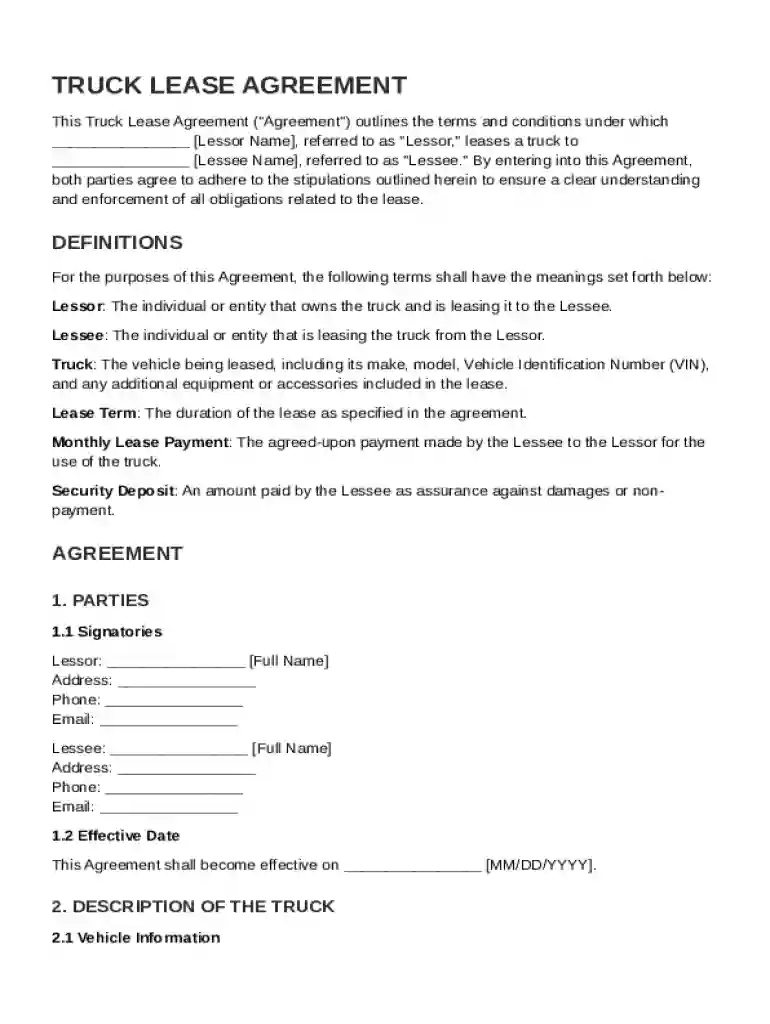
A Truck Lease Contract Template outlines critical components that define the relationship between the lessor and lessee. The agreement specifies the terms and conditions under which the truck is leased. Essential elements include payment obligations, where it is detailed how and when payments are to be made. Maintenance responsibilities are typically outlined, detailing which party is accountable for regular servicing and repairs. The template also covers insurance requirements, ensuring the vehicle has adequate coverage. Liability clauses detail the responsibilities and potential risk exposure of each party. Conditions for termination explain how either party may end the lease, considering the notice period and any penalties.
Lease agreements require that payment details are clear and precise. This includes the amount due, payment schedule, and acceptable methods of payment. Some contracts may include provisions for late fees and penalty charges if payments are not made on time. Ensuring clarity reduces the likelihood of disputes between lessor and lessee.
The maintenance obligations section defines who is responsible for regular upkeep and necessary repairs. This can range from routine checks to more substantial repairs due to wear and tear. The template should specify the process for addressing and authorizing repairs to avoid conflicts.
Insurance provisions ensure that the truck has adequate coverage to protect against accidents, theft, or other damages. The contract specifies the minimum required coverage and whether the lessor or lessee will maintain the policy. Proof of insurance is often required before the lease can begin.
Using a truck lease contract template ensures the agreement is legally sound and enforceable. By following a standardized template, both parties can be confident that all necessary legalities are addressed. It should comply with relevant federal and state laws, covering essential aspects such as disclosures and warranties. Having a written contract aids in upholding the rights and obligations of both the lessor and lessee in disputes.
Truck lease agreements must comply with the Federal Motor Vehicle Lease Act and applicable state laws. These regulations ensure fairness and transparency in lease transactions. The template should include section references to relevant laws to enhance its validity.
A transparent lease agreement includes necessary disclosures and warranties, informing the lessee of any known issues or special conditions associated with the truck. This transparency helps prevent misunderstandings or legal disputes and reinforces trust between both parties.
Completing the Truck Lease Contract Template involves a methodical approach to ensure every detail is accurate and agreed upon. This process enhances communication between the lessor and lessee and helps avoid potential legal issues. Here are the sequential steps:
Review and Customize the Template: Begin by thoroughly reviewing the template. Customize sections like vehicle details, payment terms, and lease duration to align with your specific agreement.
Fill in Both Party's Information: Enter the lessor and lessee's full names, contact details, and any identifying information relevant to the lease.
Specify Vehicle Details: Clearly list the truck's make, model, VIN, and any additional equipment included in the lease.
Detail Payment Terms and Conditions: Outline the agreed rental amount, payment schedule, accepted payment methods, and any penalties for late payments.
Agree on Maintenance, Repairs, and Insurance: Specify who is responsible for routine maintenance and repairs, and confirm insurance requirements are understood and met.
Include Legal Clauses: Add details regarding liability, termination conditions, and any other necessary legal clauses.
Review and Sign: Both parties must review the document for accuracy and understanding. Once satisfied, both parties should sign the document, completing the agreement.
The lexicon within a truck lease agreement encapsulates specific legal and industry terms crucial to understanding the contract fully. Familiarity with these terms helps both parties comprehend their rights and responsibilities. Below are key terms:
Lessor and Lessee: The lessor is the owner of the truck leasing the vehicle to another party, the lessee, who is granted the right to use it under the lease's terms.
Lease Term: This refers to the period during which the lessee has the right to use the vehicle, typically specified in months or years.
Depreciation: Refers to the decrease in the vehicle's value over time, which may affect the residual value considered at the lease's end.
Residual Value: The estimated value of the truck at the end of the lease term, which may influence end-of-lease options such as purchase or lease renewal.
Understanding these terms ensures both parties are well-informed, helping to prevent misunderstandings or disputes.
Truck lease agreements must be tailored to comply with state-specific regulations that can affect how contracts are structured. These rules can influence payment terms, taxes, and insurance requirements, among other areas. Being aware of these differences enhances compliance and minimizes the risk of legal challenges.
Different states might impose unique tax obligations on lease agreements, such as sales tax applied on monthly payments or upfront costs. Clearly identifying these differences in the agreements helps lessees anticipate and plan for potential costs.
States may stipulate specific minimum insurance coverage levels. Ensuring that these minimums are met within the contract protects against regulatory penalties and provides appropriate protection during the lease term.
Practical examples of truck lease agreements offer insight into different scenarios and how such agreements function in real-world applications. These examples demonstrate how flexibility in the template accommodates varying needs.
For small businesses running delivery services, a truck lease allows expansion without the up-front purchase cost. Where a company requires multiple trucks, leases can be staggered to manage cash flow effectively and adapt to business growth.
Independent drivers might use a lease agreement to secure a single truck for personal or commercial use. This allows the driver freedom to undertake trucking jobs without significant initial investment.
Both examples highlight how lease agreements can support diverse business models while providing the necessary legal and operational structure.
Modern lease agreements can be managed using digital or traditional paper formats, each having specific benefits. Digital contracts offer flexibility and efficiency, while paper agreements might benefit those preferring physical documentation.
Choosing between digital or paper versions depends on the specific preferences and operational practices of the involved parties.
Platforms like DocHub streamline editing, signing, and managing lease contracts by ensuring compatibility with various file types and software ecosystems, including Google Workspace. This compatibility facilitates document handling, from drafting and finalizing to sharing and enforcing agreements.
DocHub’s integration with cloud storage options like Google Drive enhances workflow by allowing direct file imports and exports. This efficiency reduces time spent on document handling and increases productivity.
The platform supports multiple formats such as PDF, DOC, and XLS, ensuring that all parties can access and edit the contract regardless of the original file type, which is crucial in accommodating diverse technology preferences.
At DocHub, your data security is our priority. We follow HIPAA, SOC2, GDPR, and other standards, so you can work on your documents with confidence.