






Definition and Meaning
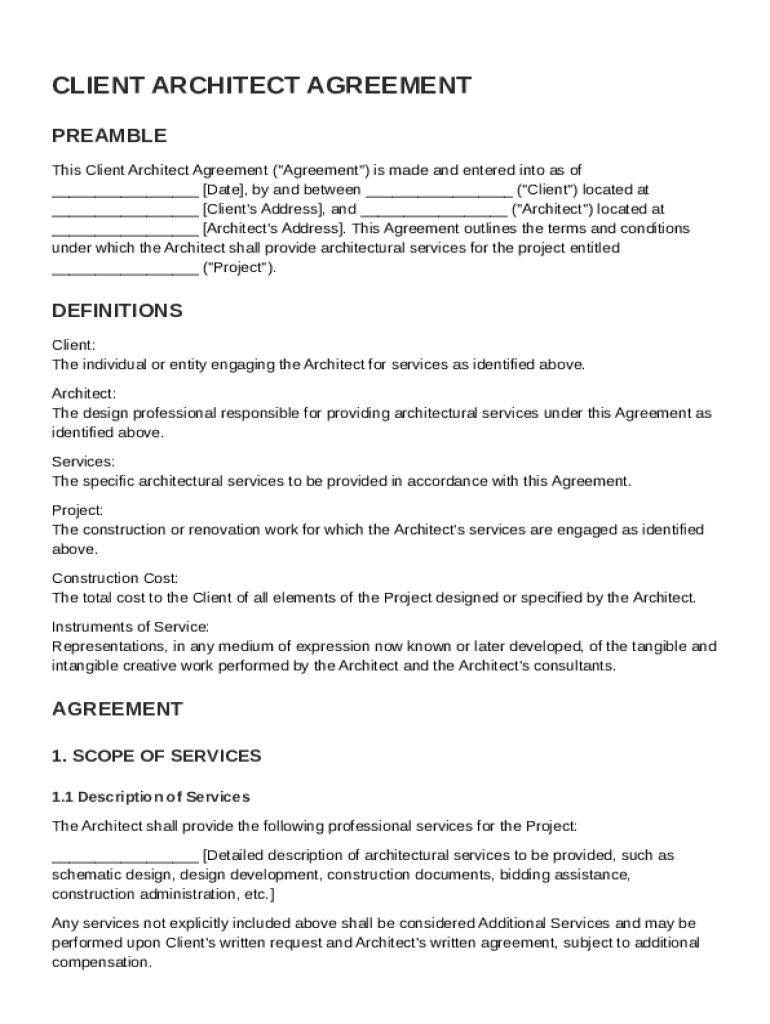
The Client Architect Agreement Template is a formalized document that delineates the responsibilities, obligations, and expectations between an architect and their client. It outlines various aspects of the professional engagement, such as the scope of architectural services, compensation structure, and timeline for project completion. This agreement serves as a pivotal reference, ensuring all parties are clear on their roles and responsibilities. It includes provisions such as client responsibilities, ownership of documents, and dispute resolution procedures. By establishing a mutual understanding, the agreement minimizes the likelihood of conflicts and misunderstandings throughout the project duration.
Steps to Complete the Client Architect Agreement Template
-
Overview of Project and Parties Involved: Begin by detailing the project's basic information, including its name, location, and participants. Clearly state the individual or entity entering into the agreement as the client and the architect's identity.
-
Defining the Scope of Services: Elaborately outline the architectural services to be provided. This section should specify architectural design tasks, consultations, and site observations as necessary.
-
Compensation and Payment Terms: Define the financial agreement, including how the architect will be compensated. Specify payment schedules, rates, or fees and any payment terms such as penalties for late payments.
-
Duration and Termination Clauses: Indicate the expected timeline for project completion and any steps for extension or termination. Clearly detail conditions under which either party may terminate the agreement.
-
Legal and Risk Considerations: Warrant a discussion on liabilities, insurance requirements, and governing laws applicable to the agreement. Outline dispute resolution mechanisms, such as mediation or arbitration.
-
Final Approval and Signatures: Once all sections are completed, both parties must review and sign the document to formalize their agreement. Electronic signatures should consider authenticity and legality, adhering to the ESIGN Act as necessary.
Key Elements of the Client Architect Agreement Template
-
Service Scope Description: Comprehensive detailing of services provides clarity on the architect's duties.
-
Client Responsibilities: Outline tasks that the client must complete, assets they must provide, or other responsibilities to fulfill.
-
Document Ownership: Define who maintains the rights to designs, drawings, and other intellectual property during and after project completion.
-
Liability and Insurance: Establish insurance requirements and liabilities for both parties to cover potential risks.
-
Dispute Resolution: Outline processes or contacts for conflicts, enabling efficient resolution steps if disputes arise during the project.
Important Terms Related to Client Architect Agreement Template
-
Scope of Work: Specifies responsibilities, deliverables, and services one party must perform to fulfill contractual obligations.
-
Indemnity Clause: Protects one party from being held liable for harm or loss caused by the other.
-
Addendum: Supplementary additions or changes to the existing agreement without rewriting the entire document.
-
Breach of Contract: Occurs when a party fails to execute its responsibilities as stated in the agreement. Remedies or penalties must be clearly outlined.
-
Standard of Care: A measure that defines the professional skill level expected of architects to carry out their duties.
Legal Use of the Client Architect Agreement Template
Utilization of the Client Architect Agreement Template requires adherence to specific legal standards. Its primary function is to create a legally binding document that protects both the architect and the client. The agreement must comply with federal, state, and local laws, which may include licensing requirements and professional standards. Engaging a legal advisor for drafting or reviewing is often prudent, ensuring all elements are enforceable and align with legal criteria. The agreement also facilitates legal actions like mediation if disputes escalate, contributing to a legally compliant project environment.
Examples of Using the Client Architect Agreement Template
-
Residential Projects: Suitable for architects hired to design private homes, emphasizing bespoke design services tailored to individual needs.
-
Commercial Buildings: Applicable to large-scale retail or office complexes involving multiple stakeholders where detailed project outlines and stringent compliance are imperative.
-
Public Sector Developments: Used in collaborations with government agencies that require adherence to specific public-sector policies.
-
Renovation Projects: Provides structure for transforming existing buildings, focusing on timelines, potential disruption, and compliance with local building codes.
Who Typically Uses the Client Architect Agreement Template
-
Independent Architects: Individuals or small firms specializing in client-focused, customized architectural services.
-
Architectural Firms: Larger entities managing comprehensive construction projects requiring formalized agreements to standardize operations across various projects.
-
Real Estate Developers: Entities employing architects for the conceptual design of property developments.
-
Government Agencies: Institutions needing architectural services for public infrastructure projects, ensuring standardized agreements across public sector building initiatives.


Software Compatibility for a Client Architect Agreement Template
The Client Architect Agreement Template is designed for broad compatibility across various software applications. It can be easily imported and edited using DocHub’s online tools, which support file formats like PDF, DOC, and XLS. Since architectural projects often require collaboration, compatibility with other software, such as architectural design software and general document tools like Google Workspace, is essential. This allows architects and clients to insert specifications or attach additional documents seamlessly, enhancing overall document management and collaboration efficiency.
Filing Deadlines and Important Dates
While no universal filing deadlines are associated with the Client Architect Agreement Template, timely execution remains crucial. Parties should establish interim deadlines aligned with project milestones within the agreement, ensuring accountability at various project phases. These may include date-specific submissions for plans, permit applications, or construction milestones that the architect and client agree upon. Establishing these deadlines upfront instills a structured approach, helping manage project timelines efficiently.