
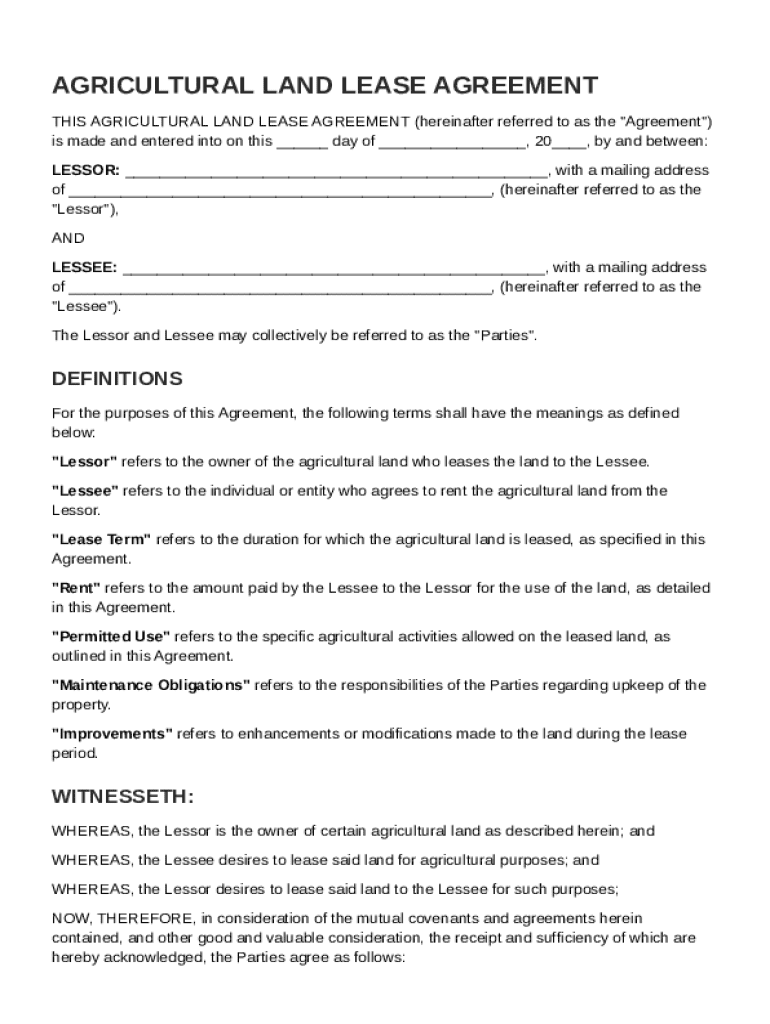







Definition and Purpose of the Agricultural Land Lease Agreement Template
The "Agricultural Land Lease Agreement Template" is a legal document that establishes the terms and conditions for leasing agricultural land between a lessor (landowner) and a lessee (tenant). This template serves to outline the specific agreements reached by both parties, including permissible land use, rental payment terms, and responsibilities related to maintenance and insurance. By providing a structured format, the template helps ensure all essential elements are addressed, reducing the likelihood of misunderstandings or disputes. It is tailored to meet the needs of U.S. legal requirements, providing a comprehensive foundation for agricultural lease agreements.
Key Objectives
- Define the roles and responsibilities of both the lessor and lessee.
- Establish clear terms for the usage and condition of the leased property.
- Provide a legal framework for managing agricultural property effectively.
- Protect the interests of both parties by outlining consequences for breach of agreement.
How to Use the Agricultural Land Lease Agreement Template
Utilizing the Agricultural Land Lease Agreement Template effectively involves a series of steps that both the landowner and tenant should follow. This guide outlines the process to ensure that all aspects of the agreement are addressed, leading to a mutually beneficial and legally sound lease.
Steps for Customized Agreements
-
Review the Template: Understand the pre-set clauses and conditions included in the template. Consider any specific needs or conditions unique to the property or agreement.
-
Customize for Specific Use: Adjust clauses related to terms of lease, rental payments, and land use permissions to align with the specifics of the lease. Add or remove sections as needed to reflect unique contractual obligations.
-
Consult Legal Advice: For complex agreements, seek legal advice to ensure compliance with state laws and address any potential legal complexities specific to agricultural leases.
-
Discuss and Negotiate: Both parties should discuss the template, negotiating any clauses to reach an equitable agreement. Ensure all modifications are mutually accepted and understood.
Key Elements in the Agricultural Land Lease Agreement Template
The Agricultural Land Lease Agreement Template contains several critical components that ensure a balanced and enforceable contract for both the lessor and lessee. Each section plays a role in defining the rights and responsibilities of the parties involved.
Core Components
-
Lease Duration: Specifies the start and end dates of the lease period, including options for renewal.
-
Rental Payment Structure: Details the amount, frequency, and method of rental payments. It may include provisions for adjustments based on factors like inflation or cost indices.
-
Permitted Land Use: Clearly defines acceptable agricultural activities, ensuring land use aligns with both parties' expectations and legal requirements.
-
Maintenance and Repairs: Assigns responsibility for maintaining the leased premises, covering repairs, improvements, and land sustainability practices.
Legal Use and Compliance with the Agricultural Land Lease Agreement Template
Ensuring legal compliance is critical in any leasing arrangement, particularly for agricultural land where specific regulations and practices must be followed.
Legal Considerations
-
Governing Law: The agreement should specify which state’s laws govern the lease, critical for resolving disputes and interpreting the lease’s terms.
-
Insurance Requirements: Details expectations for insurance coverage, protecting against risks such as natural disasters or crop damage. Both parties should have adequate insurance in place.
-
Termination Conditions: Outlines the conditions under which the lease can be terminated by either party, providing a clear process for early lease termination if necessary.
State-Specific Rules and Differences
Agricultural lease agreements can vary significantly based on state laws, affecting various aspects of contract formation and enforcement.
Variations by State
-
Zoning Laws: State and local zoning regulations may impact how the land can be used and should be considered when drafting the agreement.
-
Environmental Regulations: State-specific environmental protections may dictate certain farming practices or conservation efforts, necessitating compliance within the lease.
-
Tax Considerations: Each state may have different property tax obligations for leased agricultural land, which should be addressed within the agreement.
Examples of Using the Agricultural Land Lease Agreement Template
Understanding how this template has been utilized successfully can provide valuable insight for prospective users.
Case Scenarios
-
Family-Owned Farm Lease: A landowner of a multi-generational farm leases sections of the property to neighboring farmers, customizing the template to include shared water rights and equipment use.
-
Corporate Farming Lease: A large agricultural corporation uses the template to lease multiple land plots across different states, incorporating state-specific clauses to manage compliance with local regulations.
Important Terms Related to the Agricultural Land Lease Agreement Template
Understanding the terminology within the template is essential for both drafting and interpreting the agreement successfully.
Key Terms
-
Lessor/Lessee: The parties in the agreement — the landowner and the tenant farmer.
-
Leasehold Improvements: Changes or additions made to the property by the lessee that may enhance its value or utility.
-
Force Majeure: Provisions detailing unforeseen events like natural disasters that might affect lease compliance.




