Definition & Meaning
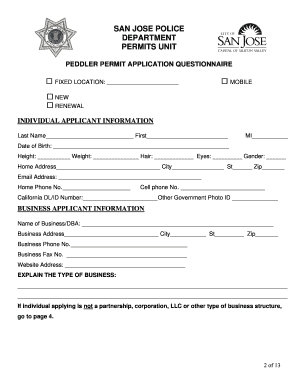
An "Extended Daily Permit Application" is a formal request form used to obtain authorization for activities or operations that require regulatory permissions beyond typical daily limits. This application is crucial in contexts where standard daily permits do not suffice due to the extended duration or scope of the requested activities. Commonly, this form is used to extend permissions related to environmental regulations, construction activities, business operations, or events needing regulated oversight. Understanding the specific context and requirements of the permit allows applicants to properly complete and submit pertinent information, ensuring compliance with governing bodies.
Practical Examples
- A construction company needing prolonged use of public land for a new project.
- An event organizer wishing to extend the days for which a venue's usage has been permitted.
Nuances and Variations
Extended daily permit applications can vary widely depending on the jurisdiction, the nature of the activity, and the overseeing regulatory authority. Applicants should consult specific guidelines governing their particular permit type to guarantee accurate and complete submissions.
Steps to Complete the Extended Daily Permit Application
Completing an extended daily permit application involves a detailed process to ensure compliance with regulatory standards.
-
Understand Permit Requirements
- Review the guidelines and regulations relevant to your activity.
- Identify the correct form variant applicable to your needs.
-
Gather Necessary Information
- Collect all details related to your operation, including locations, nature of activities, and duration.
- Ensure availability of required supporting documentation.
-
Complete the Form
- Fill out each section meticulously, following the instructions provided.
- Check for mandatory fields and special notes for certain sections.
-
Review for Accuracy
- Verify all entries for correctness and completeness.
- Avoid common errors such as incorrect dates, omitted sections, or improper signatures.
-
Submit to Proper Authority
- Identify the submission method (online, mail, or in-person).
- Ensure timely submission to avoid permit delays.
Edge Cases
Consider special scenarios like conducting activities in environmentally sensitive areas where additional approvals may be required.
Key Elements of the Extended Daily Permit Application
The form typically comprises essential elements that applicants must furnish to be considered for approval.
- Applicant Details
- Name, contact information, and relevant affiliations.
- Activity Description
- Comprehensive breakdown of intended operations or events.
- Duration and Timing
- Specific days and hours for the requested extension.
- Location
- Exact sites or addresses where activities will occur.
- Compliance Assurance
- Evidence or statements of adherence to local laws and regulations.
Detailed Breakdown
Each form should be segmented to allow applicants to clearly delineate their intentions and provide all necessary assurances requested by the issuing authorities.
Legal Use of the Extended Daily Permit Application
Obtaining an extended daily permit is a legal prerequisite for conducting certain extended operations to maintain compliance with established statutes and regulations. Legal use entails:
- Conforming to Regulations
- Assurance that activities meet local, state, and federal legislative standards.
- Avoiding Unauthorized Expansion
- Restrictions against extending operations beyond approved limits or purposes without formal authorization.
Implications for Non-Compliance
Operating without such a permit, or with an expired permit, can result in fines, legal action, or operational shutdowns.
State-Specific Rules for the Extended Daily Permit Application
Rules surrounding extended daily permits vary by state, reflecting distinct legislative environments and regional concerns.
- Texas
- Includes specific environmental impact assessments.
- California
- Requires additional sign-off for activities affecting coastal regions.
Practical Scenario
Different states may impose unique stipulations on facilities or emissions, requiring additional documentation or certifications.
Required Documents
Preparing required documentation is critical for an efficient application process.
- Identification
- Proof of identity and, where applicable, business registration documents.
- Prevailing Permits
- Copies of existing permits or licenses must be included.
- Environmental Reports
- Relevant to applications affecting natural resources or public land usage.
Document Management
Ensure all documents are current and double-check for any additional state-specific document requirements before submission.
Form Submission Methods (Online / Mail / In-Person)
Submitting an extended daily permit can be done through various channels, offering flexibility depending on the applicant's preference and the jurisdiction's facilities.
- Online Submission
- Fast and eco-friendly method using designated digital platforms.
- Mail Submission
- Ensure proper postage and address to the designated regulatory office.
- In-person Submission
- Provides direct contact and immediate confirmation of receipt.
Best Practices
If submitting digitally, ensure documents are scanned clearly and follow specific file format instructions, such as PDF or DOC.
Penalties for Non-Compliance
Failure to comply with permit requirements or timelines can lead to stringent penalties.
- Fines
- Financial repercussions varying by extent and nature of violation.
- Legal Actions
- Potential for court proceedings and liability claims.
- Operational Impacts
- Immediate cessation of activities and operations related to the permit.
Compliance Strategies
Create a compliance checklist to track permit deadlines and ensure timely renewals or extensions. Regularly consult with legal advisors specializing in regulatory compliance for oversight and updates.
By understanding and addressing these diverse facets of the extended daily permit application, applicants can navigate the process more effectively, ensuring their activities remain authorized and legally protected.