






Definition & Meaning
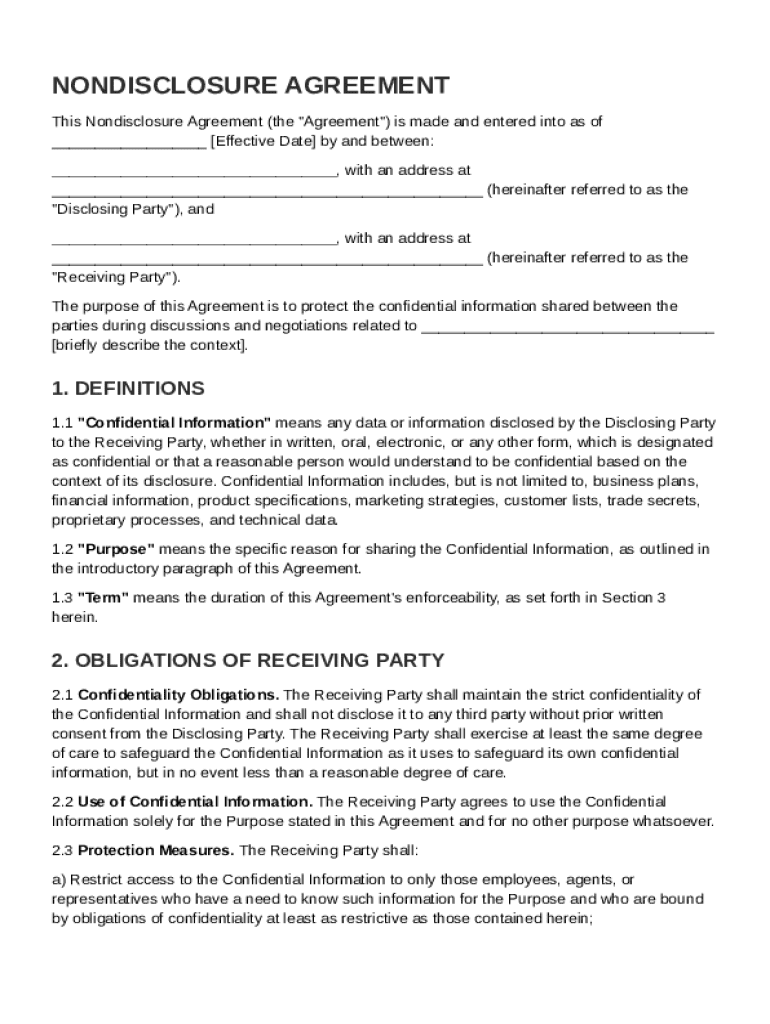
The "Nondisclosure Agreement Template" (NDA) is a legally binding document designed to protect confidential information shared between two or more parties during discussions or collaborations. This agreement typically involves a Disclosing Party, who shares the confidential information, and a Receiving Party, who agrees to keep it secret. The NDA outlines the types of information considered confidential, such as trade secrets, financial data, or proprietary processes, and establishes a framework for how this information should be handled. It is crucial for safeguarding sensitive data against unauthorized access or use.
How to Use the Nondisclosure Agreement Template
To effectively implement a Nondisclosure Agreement, first ensure that both parties clearly understand the terms and conditions outlined in the document. Begin by identifying the specific types of confidential information being shared and stipulate how it can be used. Define any restrictions on disclosing this information to third parties. Once both parties agree to the terms, each should sign the document, acknowledging their understanding and agreement. It's essential for the NDA to be comprehensive, detailing the obligations of the Receiving Party and the penalties for any breach of contract. This helps maintain trust and security throughout the business relationship.
Steps to Complete the Nondisclosure Agreement Template
-
Identify the Parties Involved: Clearly list who the Disclosing Party and the Receiving Party are in the agreement.
-
Define Confidential Information: Specify what types of data or information are considered confidential.
-
Set Usage Limitations: Establish clear guidelines on how the disclosed information should be used and any restrictions that apply.
-
Determine Timeframe: Outline the duration for which the NDA will remain in effect, and under what conditions it can be terminated.
-
Include Exclusions: Detail any situations or types of information that are exempt from being considered confidential, such as information already in the public domain.
-
Describe Breach Consequences: Specify the legal and financial repercussions for failing to adhere to the NDA terms.
-
Signatures: Ensure that all parties involved sign the document, validating the agreement.
Key Elements of the Nondisclosure Agreement Template
- Confidential Information: Precise definition of what is deemed confidential.
- Obligations of Receiving Party: Clearly stated obligations for maintaining the confidentiality of shared information.
- Term and Termination: Duration of the agreement's validity and conditions under which it can be terminated.
- Exclusions from Confidentiality: Situations where information is not protected under the NDA.
- Governing Law: Legal jurisdiction that will oversee the enforcement of the agreement.
- Miscellaneous Provisions: Any additional terms that do not fall into the other categories but are critical for tailoring the NDA to specific circumstances.
Legal Use of the Nondisclosure Agreement Template
In the United States, NDAs are commonly used in various business transactions to protect intellectual property and maintain privacy during sensitive negotiations. They are legally enforceable documents, underpinned by U.S. contract law, ensuring that parties who breach the agreement can be held accountable in court. It's integral to ensure that the language used in the NDA is clear and precise to avoid ambiguities that could void its enforceability. Legal advice might be necessary to tailor the NDA to specific industries or types of information, ensuring full protection.
Who Typically Uses the Nondisclosure Agreement Template
NDAs are widely used across different sectors, including:
- Businesses: To safeguard trade secrets and sensitive business information.
- Freelancers and Consultants: When working on proprietary projects requiring confidentiality.
- Startups: To protect innovative ideas and business plans when seeking investments.
- Partnerships: When companies form alliances, NDAs help protect shared intellectual property.
- Researchers and Inventors: To maintain confidentiality around new discoveries until they are ready for public release.


Business Types That Benefit Most from Nondisclosure Agreement Template
- Technology Companies: Where innovations and proprietary technology require protection from competitors.
- Manufacturing Firms: To keep production methods and product specifications confidential.
- Pharmaceutical Corporations: Protecting research data and formulation processes.
- Media and Publishing: To handle scripts and content ideas confidentially before release.
- Financial Institutions: For safeguarding sensitive client data and financial strategies.
Examples of Using the Nondisclosure Agreement Template
-
Startup Scenario: A tech startup shares its proprietary software development techniques with a potential investor. The NDA protects these techniques from being disclosed or used without permission.
-
Partnership Agreement: Two companies enter into a collaboration on a joint project. An NDA ensures that both parties keep each other's information private and only use it for the intended project.
-
Employee Agreement: A new hire at a corporation signs an NDA to prevent sharing the company's confidential strategies with other employers or to the public.
Providing these comprehensive blocks offers detailed insights into the Nondisclosure Agreement Template's utility, allowing users to fully understand its application, legal considerations, and benefits across various business contexts.