01. Edit your form online
Type text, add images, blackout confidential details, add comments, highlights and more.

Type text, add images, blackout confidential details, add comments, highlights and more.

Draw your signature, type it, upload its image, or use your mobile device as a signature pad.

Send it via email, link, or fax. You can also download it, export it or print it out.
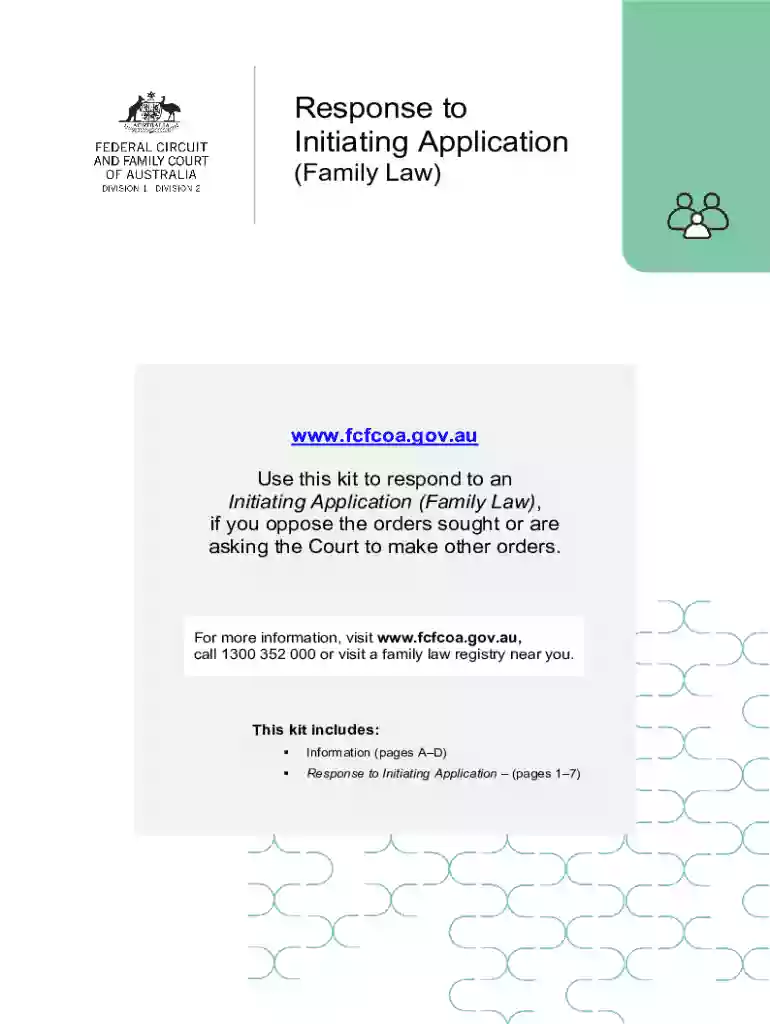
The Response to Initiating Application serves as a formal reply to an initial family law application, typically used in the context of divorce, custody, or other family-related court matters. This document allows respondents to indicate their agreement or disagreement with the orders sought by the applicant and to request alternative orders if needed. It plays a critical role in the litigation process as it sets the stage for the issues that need to be addressed during proceedings. By effectively responding to the initiating application, individuals can ensure that their perspective is considered and that they are prepared for any subsequent legal processes.
For instance, if a parent receives an initiating application for child custody, they may use the response form to contest the proposed custody arrangements and instead suggest a different custody schedule that aligns with the child's best interests.
Review the Initiating Application: Start by thoroughly examining the claims and orders sought in the initiating application. Understanding what is being requested is crucial for formulating a comprehensive response.
Drafting the Response: Use the form to agree, disagree, or propose alternatives to the orders sought by the applicant. Each section of the form should clearly articulate your position.
Gathering Supporting Documents: Attach any necessary documentation that supports your case, such as financial records or affidavits. These documents are essential to substantiate claims made in the response.
Legal Review: It is advisable to consult with a family law attorney to ensure that your response complies with legal standards and effectively communicates your position.
Submission of the Form: Submit the completed form to the court using the specified method, ensuring adherence to any filing deadlines.
If responding to a financial order, include pay stubs and expense records as part of your supporting documentation.
For instance, if the initiating application requests sole custody, your response might propose joint custody, backed by a detailed parenting plan outlining shared responsibilities.
When you submit a Response to Initiating Application, you formally enter the legal proceedings as a respondent. This document not only communicates your positions but also preserves your right to present evidence and contest claims during hearings or trials. Failing to respond can lead to the court granting orders solely in favor of the applicant, which underscores the importance of timely and accurate completion.
If the applicant seeks a restraining order as part of their application, the respondent can use the response document to either contest or agree to this request.
The response form is primarily used by individuals who have been served an initiating application in family law matters. This typically includes:


Timeliness is pivotal when responding to an initiating application. Each jurisdiction may have specific deadlines by which a response must be lodged to be considered valid. Missing these deadlines can result in unfavorable outcomes, such as default judgments that automatically favor the applicant's demands.
In some jurisdictions, a response must be filed within 28 days of receiving the initiating application to ensure eligibility for contestation.
Multiple submission methods provide respondents with flexibility in submitting their forms:
Each method has its own set of requirements, so ensure you follow the specific instructions and guidelines provided by the court handling the case.
We've got more versions of the Response to Initiating Application (family Law) form. Select the right Response to Initiating Application (family Law) version from the list and start editing it straight away!
At DocHub, your data security is our priority. We follow HIPAA, SOC2, GDPR, and other standards, so you can work on your documents with confidence.