






Definition and Key Features of a Music Non Disclosure Agreement
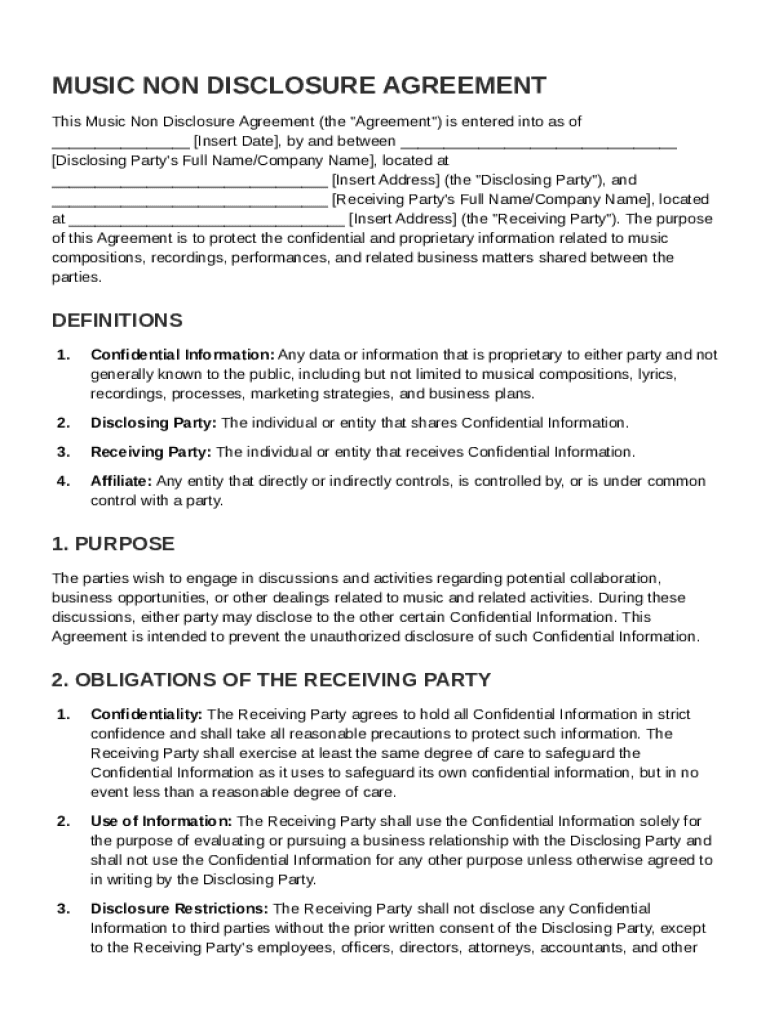
A Music Non Disclosure Agreement (NDA) is a binding legal document specifically tailored for the music industry. It aims to secure confidential information shared between a Disclosing Party, typically the owner of the material, and a Receiving Party, who could be a collaborator, producer, or anyone privy to sensitive information. The agreement includes details such as definitions of confidentiality, the obligations of each party, exceptions to confidentiality, and the duration and termination clauses of the agreement. Furthermore, it details ownership rights of any disclosed information, along with governing law and remedies for any breaches.
Key Components of the Agreement
- Definitions of Confidential Information: Provides a clear understanding of what constitutes confidential information.
- Obligations of the Receiving Party: Details the responsibilities in maintaining confidentiality.
- Exclusions: Lists what information may not be considered confidential, such as publicly known or independently developed information.
Who Typically Uses a Music Non Disclosure Agreement
Music NDAs are essential for various stakeholders within the music industry who aim to safeguard proprietary information. Typical users include:
Artists and Composers
Musicians and composers use NDAs to protect their original compositions and unreleased songs from unauthorized use.
Producers and Record Labels
These parties secure NDAs to ensure that production plans, marketing strategies, and unreleased tracks remain confidential pending official release.
Collaborators and Performers
Collaboration between artists often necessitates sharing sensitive creative material, making NDAs vital to prevent leaks or unauthorized usage.
How to Use the Music Non Disclosure Agreement Template
Utilizing a Music Non Disclosure Agreement Template involves several straightforward steps:
- Download and Review: Obtain the template and thoroughly review the clauses to ensure relevance to your specific circumstances.
- Customize: Modify sections to fit specific needs, like adding particular details about the confidential information being shared.
- Agreement by All Parties: Ensure all parties involved understand the terms and consent to them.
Customization Tips
- Tailor exclusions and obligations based on the type of musical content being protected.
- Specify the duration of confidentiality obligations, which could exceed the term of the specific project.
Steps to Complete the Music Non Disclosure Agreement Template
Completing the NDA template involves precise steps to ensure both parties are legally bound:
- Initiate with Parties' Information: Include names and contact details of both the Disclosing and Receiving Party.
- Describe the Confidential Information: Clearly define what constitutes confidential information.
- Specify Terms and Conditions: Detail the obligations of confidentiality, exceptions, and how breaches will be handled.
- Signatures: Collect signatures from both parties to indicate acceptance of the terms.
Important Considerations
- Ensure all legal language aligns with U.S. legal standards.
- Implement extra clauses for specific situations, like non-compete clauses if applicable.
Key Elements of the Music Non Disclosure Agreement Template
The template encapsulates critical elements essential for robust protection of confidential music-related information:
Scope of Confidentiality
Defines the breadth of information deemed confidential and outlines how this information should be handled.
Rights and Obligations
Clarifies the rights of the Disclosing Party to seek legal remedies in case of unauthorized disclosures.
Term and Termination
Discusses how long the agreement remains in force and conditions under which it might be terminated prematurely.
Legal Implications and Guidelines
Adhering to legal requirements is crucial when drafting NDAs in the music industry:
Compliance with State Laws
Ensure the NDA complies with state-specific regulations, as laws can vary significantly across different jurisdictions.
Remedies for Breaches
Outline legal recourses available, including potential damages in the case of a breach.
Examples and Real-world Scenarios
Music NDAs are utilized across multiple scenarios to protect sensitive information:
- Pre-release Album Coordination: Artists use NDAs to keep details about upcoming album releases confidential.
- Film Scoring Projects: Composers working on film scores often sign NDAs to prevent leaks of music intended for future release.
- Music Licensing Negotiations: NDAs help protect the confidentiality of negotiations regarding music use in commercial advertisements.
State-specific Rules and Regulations
Understanding unique state laws concerning NDAs in the music industry ensures agreements are enforceable:
Variations by State
Some states enforce stricter laws on NDAs, concentrating on the clarity of language and the enforceability of specific clauses like non-disclosure periods.
Key Legal Precedents
Landmark cases in particular states may have established precedents influencing how NDAs should be composed or interpreted.
Versions or Alternatives to the Music Non Disclosure Agreement Template
While music NDAs have a standardized structure, alternative versions can accommodate different legal and business needs:
Alternatives and Customizations
- Mutual NDAs: Both parties agree to protect each other's confidential information.
- One-way NDAs: Only one party discloses information deemed confidential.
Importance of Both Versions
Depending on the collaboration dynamic, one type may be more suitable than the other, ensuring both parties’ interests are adequately safeguarded.