







Definition & Meaning
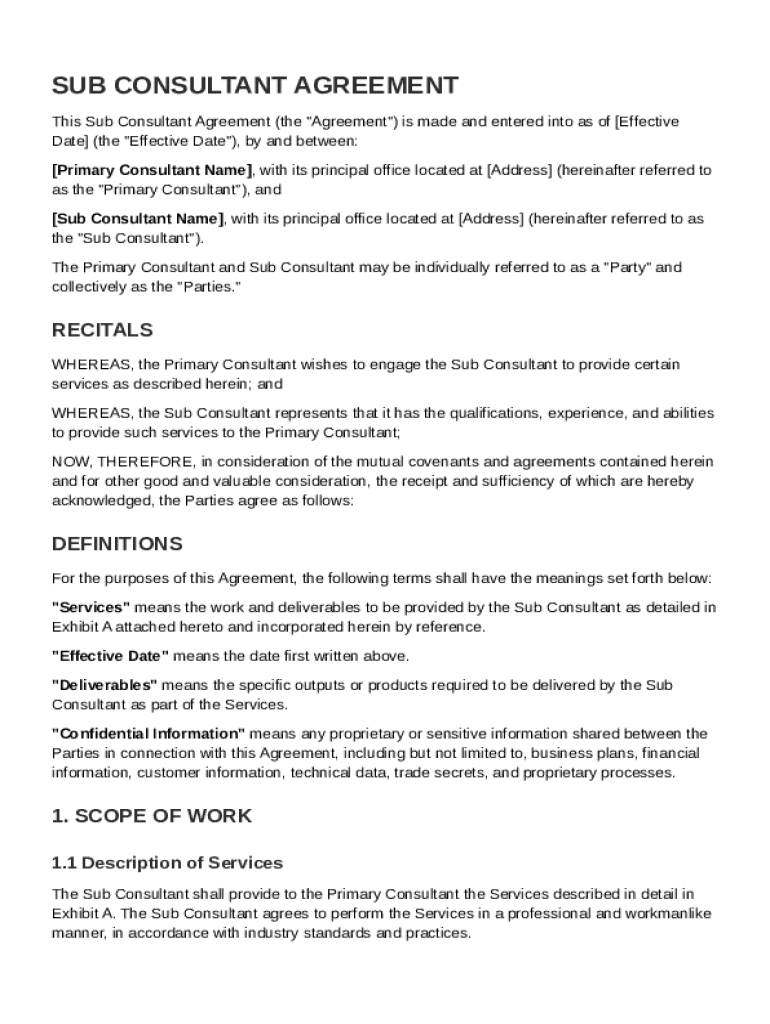
The Sub Consultant Agreement Template is a critical legal document that establishes the terms under which a primary consultant hires a sub consultant to execute specific tasks or services. This agreement delineates roles, responsibilities, and expectations, ensuring both parties understand their obligations. Commonly included elements are definitions of services, payment terms, confidential obligations, intellectual property rights, and termination conditions. The structure of this agreement typically underscores the independent contractor status of the sub consultant, distinguishing their role from that of an employee. This independence is essential to avoid misclassification, which may have legal and tax implications.
Key Elements of the Sub Consultant Agreement Template
When crafting or reviewing a Sub Consultant Agreement Template, understanding its core components is crucial. These elements include:
- Scope of Work: Specifies the tasks or services the sub consultant is expected to deliver.
- Compensation Structure: Details payment terms, such as rates, schedules, and any contingencies like bonuses or deductions.
- Confidentiality Clauses: Protects sensitive information shared during the course of the engagement.
- Intellectual Property Rights: Defines ownership of any work products or inventions generated under the agreement.
- Termination Conditions: Establishes the grounds for ending the agreement and the subsequent obligations of each party.
- Indemnification Clauses: Protects parties from liabilities arising from the other's actions.
- Governing Law: States the jurisdiction that will preside over legal disputes.
Steps to Complete the Sub Consultant Agreement Template
- Review and Understand the Scope: Carefully read the proposed services in detail to ensure clarity on expectations and deliverables.
- Negotiate Terms: Discuss and agree on compensation, timelines, and any specific conditions relevant to the engagement.
- Define Proprietary Rights and Confidentiality: Clearly outline ownership of work products and protocols for handling confidential information.
- Discuss Termination Terms: Agree on notice periods and acceptable grounds for ending the agreement.
- Finalize and Execute: Once all parties agree on the terms, sign the document to make it legally binding.
These steps are crucial for ensuring the agreement aligns with both parties’ intentions and mitigates future disputes.
Important Terms Related to Sub Consultant Agreement Template
To effectively navigate a Sub Consultant Agreement Template, one must understand key legal and contractual terms:
- Independent Contractor: Indicates that the sub consultant operates autonomously and is not an employee.
- Non-Disclosure Agreement (NDA): A contract enforcing confidentiality to protect shared information.
- Force Majeure: Refers to unforeseeable events preventing parties from fulfilling their contractual obligations.
- Indemnity: A clause that ensures one party compensates the other for specific losses or damages.
- Work For Hire: Denotes intellectual property created under the contract is owned by the employer or primary consultant.
Proficiency in these terms aids in effective drafting and comprehension of the agreement.
Legal Use of the Sub Consultant Agreement Template
The legality of using a Sub Consultant Agreement Template is backed by adherence to federal and state laws governing contracts. These documents must:
- Ensure Compliance with Labor Laws: The agreement must clearly define the nature of the relationship to comply with the Fair Labor Standards Act (FLSA) and other relevant statues.
- Specify Binding Arbitration Clauses: Offers a mechanism for resolving disputes outside of court, saving time and costs.
- Address Tax Implications: Both parties should consult tax professionals to understand obligations, such as self-employment taxes for the sub consultant.
- Adapt to State-Specific Requirements: Different states might have unique requirements regarding specific clauses, especially involving worker classification.
State-Specific Rules for the Sub Consultant Agreement Template
State laws can significantly affect the content and enforcement of a Sub Consultant Agreement Template:
- California: Due to strict labor regulations, the ABC test is used to classify contractors.
- New York: Requires detailed wage and hour provisions to be explicit in contracts.
- Texas: Specific non-compete clauses are strictly governed to protect worker mobility.
Understanding these distinctions helps tailor the agreement to comply with regional mandates, minimizing legal risks.
Examples of Using the Sub Consultant Agreement Template
Sub Consultant Agreements are widely applicable across various industries:
- Construction: A general contractor may hire a sub consultant for specialized tasks like electrical or plumbing work.
- Information Technology: A tech company might engage a sub consultant for a project requiring niche expertise in software development.
- Healthcare: Hospitals can use such agreements to engage experts for specialized medical research projects.
These examples illustrate how an effective agreement can optimize collaboration, flexibility, and innovation while safeguarding legal interests.
Business Types that Benefit Most from the Sub Consultant Agreement Template
Various business models can leverage the utility of Sub Consultant Agreement Templates:
- Startups and Small Businesses: They often rely on independent experts to remain agile and cost-effective.
- Large Corporations: Engage sub consultants for strategic projects requiring specific expertise that isn’t available in-house.
- Freelancers and Consulting Firms: As primary consultants, they frequently outsource components of a project to sub consultants, necessitating clear agreements.
Using these templates helps mitigate risks, clearly define roles, and foster successful collaborations across industries.




