






Definition and Meaning of a Sub Agreement Template
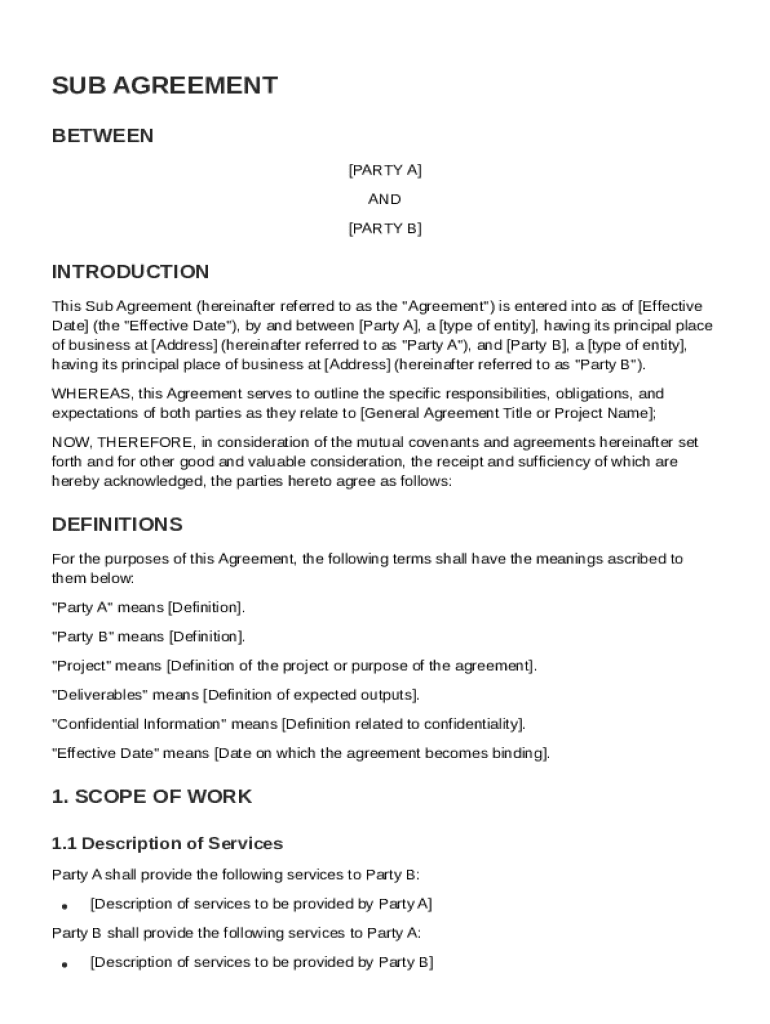
A Sub Agreement Template is a structured document used to outline the specific terms and conditions of a collaboration between two or more parties on a particular project. It serves as a subsidiary agreement to a primary contract, ensuring that all parties involved have a clear understanding of their responsibilities and obligations. Essential elements typically outlined in a sub agreement include the scope of work, compensation details, timeline, confidentiality obligations, termination conditions, indemnification and liability clauses, and dispute resolution procedures.
The primary goal of a sub agreement is to set clear expectations and provide legal protections for all involved parties. This helps in preventing misunderstandings and disputes by explicitly stating each party's role, contribution, and accountability in the project.
How to Use the Sub Agreement Template
Utilizing a Sub Agreement Template involves several steps to ensure it aligns with the specific needs of the project it supports:
- Preparation: Identify the scope of work and objectives of the agreement.
- Customization: Modify the template to include relevant project details, such as timelines, responsibilities, and payment terms.
- Review: Ensure all parties involved review the document for accuracy and completeness.
- Finalization: Once all parties agree with the terms, finalize the document with signatures.
Using a template helps streamline the drafting process, reduce errors, and ensure that critical legal language is included consistently. Most templates are editable, allowing for easy adaptation to different projects.
Key Elements of the Sub Agreement Template
A comprehensive Sub Agreement Template should include the following critical elements:
- Scope of Work: Clearly defines the tasks and responsibilities of each party.
- Compensation: Details concerning how and when payments will be made.
- Timeline: Includes deadlines and milestones for project completion.
- Confidentiality: Sets conditions for handling sensitive information shared between parties.
- Termination: Details possible causes and procedures for terminating the agreement.
- Liability and Indemnification: Specifies the liabilities and protects parties from potential losses.
- Dispute Resolution: Establishes methods for resolving conflicts, such as mediation or arbitration.
These elements ensure legal safeguards and establish clear guidelines for all parties involved in the agreement.
Steps to Complete the Sub Agreement Template
Completing a Sub Agreement Template requires a systematic approach to ensure all necessary components are addressed:
- Gather Information: Collect all details related to the project scope, duration, and parties involved.
- Fill the Template: Enter the gathered data into relevant sections of the template, ensuring accuracy.
- Consultation: Engage legal professionals to check for compliance with applicable laws and potential gaps.
- Review by Parties: All parties should review to ensure that all terms are acceptable.
- Signatures: Finalize the document by having all parties sign the agreement.
This process ensures that the sub agreement is legally sound, comprehensive, and customized to the specific needs of the involved parties.
Who Typically Uses the Sub Agreement Template
Sub Agreement Templates are generally used by parties engaged in collaborative projects. Common users include:
- Businesses: Companies partnering on joint ventures.
- Contractors: Individuals or entities outsourcing parts of a project.
- Legal Entities: Lawyers and legal departments drafting agreements for client projects.
- Project Managers: Overseeing complex projects with multiple contributors.
These templates are often used in industries like construction, software development, and consulting where clear communication of roles and terms is crucial.


Legal Use of the Sub Agreement Template
In the United States, Sub Agreement Templates are subject to state laws and their enforceability depends on meeting certain legal principles:
- Consistency with State Law: Must adhere to specific legal requirements for contracts within each state.
- Legally Binding Terms: Contains all necessary clauses to ensure enforceability.
- Clear Language: Utilizes precise language to avoid ambiguity and ensure clarity of obligations and rights.
Proper legal use involves ensuring compliance with industry-specific regulations and consulting with legal professionals to tailor the agreement to meet legal standards.
State-Specific Rules for the Sub Agreement Template
Sub agreements can be subject to varying rules and requirements depending on state-specific legislation:
- Jurisdictional Variations: Different states may have unique requirements for enforceability.
- State Legislation: Certain clauses, like non-compete agreements, are regulated differently across states.
- Local Compliance: Ensure compliance with local laws pertaining to contract execution and enforcement.
Understanding these differences is crucial for anyone drafting or entering into a sub agreement in the U.S., as state law can significantly impact contract terms and enforcement.
Examples of Using the Sub Agreement Template
Sub Agreement Templates have diverse applications across several industries:
- Construction Projects: Outlining roles of subcontractors and payment schedules.
- IT and Software Development: Partnering companies defining responsibilities for different software components.
- Consulting Services: Detailing terms for subcontracted work and client deliverables.
- Academic Collaborations: Agreements between researchers for joint studies or publications.
These examples highlight the flexibility and necessity of sub agreements for ensuring clear communication and accountability in multi-party projects.