






Definition & Meaning of Pondering and Meditation
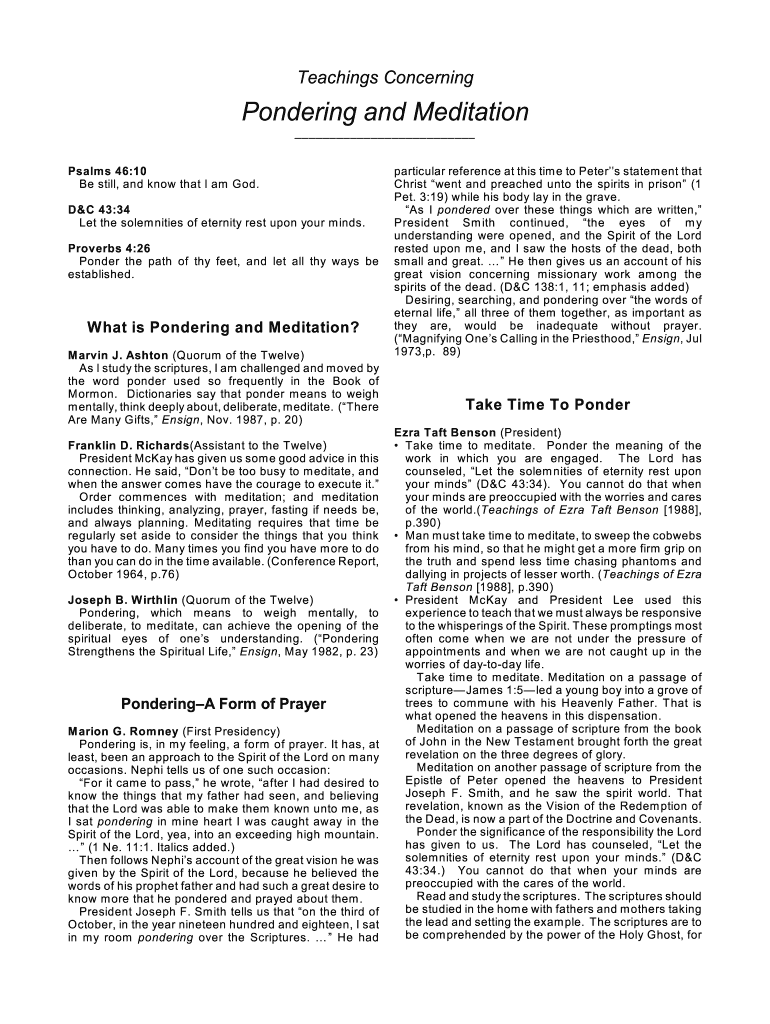
Pondering and meditation are introspective practices that emphasize the thoughtful reflection on one's personal beliefs and faith. Both practices are crucial in spiritual life as they aid individuals in comprehending scripture and forming a closer bond with the divine. Pondering involves considering and weighing different aspects of your spiritual beliefs, while meditation serves as a form of prayer, inviting individuals to focus deeply on their inner thoughts and connect with a higher power. These practices can provide greater clarity and insight into spiritual matters, enhancing personal growth and understanding.
How to Use Pondering and Meditation in Daily Life
To incorporate pondering and meditation effectively, it is essential to set aside dedicated time free from distractions. Early mornings or quiet moments before sacrament meetings are ideal for reflection. Begin by creating a calm environment, perhaps with soft lighting or soothing music. Close your eyes, take deep breaths, and focus your thoughts on specific spiritual topics or questions you seek clarity about. Reflect on the teachings of religious leaders or personal experiences that resonate with you. By regularly practicing pondering and meditation, individuals can develop a deeper understanding and connection to their faith.
Why You Should Engage in Pondering and Meditation
Engaging in pondering and meditation offers numerous benefits, particularly in the spiritual realm. These practices promote mental clarity, helping individuals to gain insights into scripture and receive personal revelations. They also foster a sense of peace and well-being by encouraging mindfulness and introspection. In addition, regular meditation enhances one's ability to receive spiritual guidance, leading to stronger and more meaningful relationships with the divine. This, in turn, can result in a more purposeful and fulfilling life, aligned with one's core beliefs and values.
Important Terms Related to Pondering and Meditation
Understanding key terminology related to pondering and meditation is pivotal. Meditation is often described as a deep state of reflection, similar to prayer, where individuals seek to align their thoughts with spiritual truths. Pondering involves actively thinking through and considering different aspects of one's faith and life experiences. Other relevant terms include mindfulness, which refers to being fully present and engaged in the moment, and contemplation, which is a focused form of meditation on religious texts or themes. Familiarity with these terms can enhance the practice and understanding of meditation and pondering.
Steps to Complete a Pondering and Meditation Session
-
Create a Quiet Environment: Choose a serene location free of noise and distractions, where you can focus entirely on your thoughts and feelings.
-
Set an Intention: Determine the focus or theme for your session. This could be a scripture passage, a life question, or a personal goal.
-
Relax Physically and Mentally: Begin by sitting comfortably, closing your eyes, and taking several deep breaths to relax your mind and body.
-
Focus Your Thoughts: Concentrate your thoughts on your chosen intention. Let your mind explore related ideas while maintaining an open heart.
-
Reflect and Record Insights: After the session, take a few moments to reflect on any insights or revelations you experienced. Recording these in a journal can help solidify and integrate them into your life.
Key Elements of an Effective Meditation Practice
To ensure that meditation is effective, several core elements must be observed. First, consistency is key—regular practice, even for short periods, can significantly enhance its benefits. Second, maintaining a relaxed and open mindset encourages the free flow of thoughts and insights. Third, incorporating sensory elements, like calming music or diffuse lighting, can enhance the meditative experience. Lastly, embracing patience and self-compassion allows for growth and development over time, acknowledging that mastery of meditation is a gradual process.
Legal and Cultural Considerations in the United States
In the U.S., pondering and meditation practices are widely accepted and respected as part of freedom of religion and personal spirituality. Many individuals integrate these practices into their daily routines irrespective of religious affiliation, as they provide mental health benefits, such as reducing stress and promoting well-being. Although meditation is not subject to legal restrictions, it is often incorporated into wellness programs within educational, corporate, and healthcare settings, reflecting its cultural significance and acceptance.
Practical Examples of Pondering and Meditation
There are numerous ways to integrate pondering and meditation into daily life. For example, before starting a new project at work, taking a short meditation break can help clarify goals and inspire creativity. Students might use meditation to focus their minds before a big exam. In family settings, individuals can engage in collective meditation to strengthen familial bonds and mutual understanding. Such practices enable people from various walks of life to benefit from the profound insights and calm afforded by pondering and meditation.