






Definition & Meaning
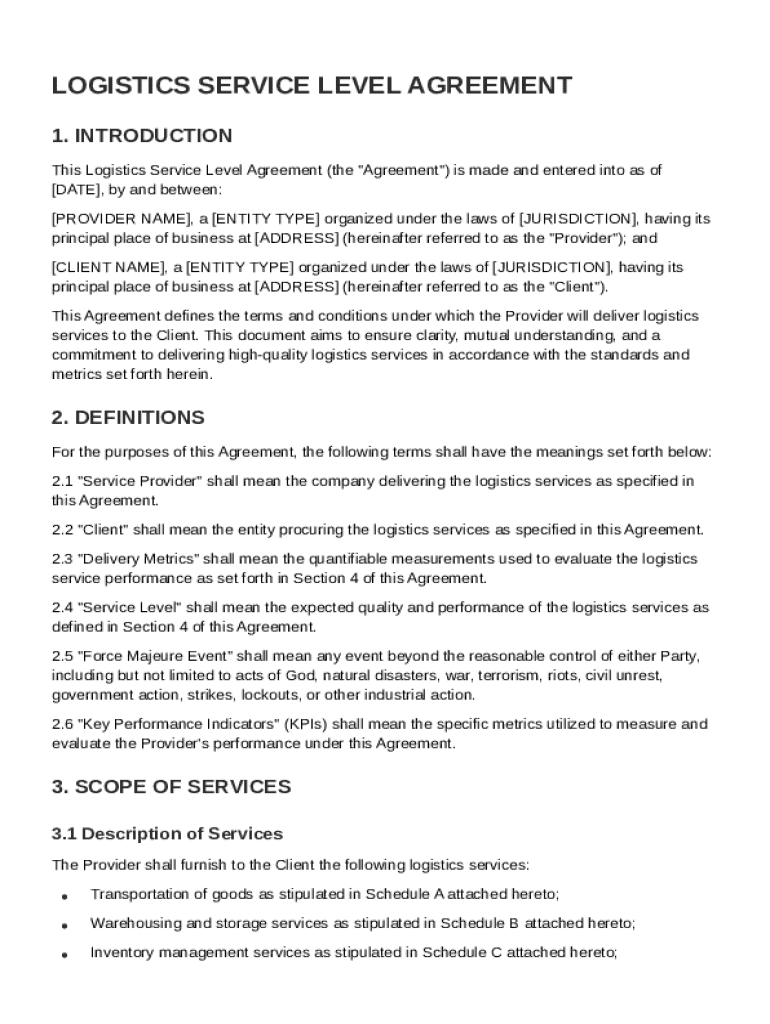
The "Logistics Service Level Agreement Template" is a formal document that outlines the terms and conditions under which logistics services are provided by a designated provider to a client. This template serves as a critical framework for ensuring clarity and mutual understanding between parties, detailing the expected standards of service and performance metrics. The aim is to facilitate a smooth and effective logistics process by clearly defining roles, responsibilities, and expectations.
- Key Terms: The template typically includes definitions of critical terminologies used within the agreement, such as "provider," "client," "performance metrics," and other logistics-specific jargon.
- Purpose: It ensures both parties have a comprehensive understanding of what is expected, mitigating potential disputes by establishing clear guidelines and obligations.
Key Elements of the Logistics Service Level Agreement Template
The Logistics Service Level Agreement Template comprises several pivotal components, each designed to ensure a comprehensive and enforceable agreement between parties.
- Scope of Services: This section outlines the specific logistics services to be provided. It includes details such as transportation, warehousing, delivery schedules, and inventory management.
- Performance Metrics: Key performance indicators (KPIs) are set to measure the quality and efficiency of logistics services. Common metrics include delivery times, accuracy, and customer satisfaction rates.
- Roles and Responsibilities: Defines the specific duties and obligations of both the provider and client, ensuring accountability and clear delineation of tasks.
- Compensation Structure: Details the payment terms, including payment schedules, methods, and any penalties for late payments.
Steps to Complete the Logistics Service Level Agreement Template
Completing a Logistics Service Level Agreement Template involves several steps to ensure all necessary information is accurately captured and agreed upon by both parties.
-
Review the Template: Start by carefully reviewing the template to understand its structure and the type of information required in each section.
-
Define the Scope of Services: Clearly outline the services to be provided, including any specific conditions or requirements.
-
Establish Performance Metrics: Agree on the performance indicators that will be used to measure the effectiveness of the services provided.
-
Assign Roles and Responsibilities: Precisely document the roles of both the logistics provider and the client to avoid misunderstandings.
-
Agree on Compensation Structure: Determine the payment terms and conditions, including any incentives or penalties.
-
Include Confidentiality Obligations: Ensure that any proprietary or sensitive information is protected within the agreement.
-
Finalize and Sign: Once all parties agree on the terms, the document should be signed to make it legally binding.
Who Typically Uses the Logistics Service Level Agreement Template
The Logistics Service Level Agreement Template is utilized across various sectors and by different types of organizations that require logistics support.
-
Logistics Companies: Providers of transportation, warehousing, and delivery services often use this document to formalize agreements with their clients.
-
Manufacturers and Retailers: Businesses that rely on the timely and efficient delivery of goods use this template to ensure that their logistics providers meet service expectations.
-
E-commerce Companies: Online retailers that manage high volumes of product shipments benefit from such agreements to streamline their logistics processes.
-
Importers and Exporters: Businesses involved in international trade use this document to set clear expectations with their logistics partners about service levels, timing, and compliance with trade regulations.


Legal Use of the Logistics Service Level Agreement Template
The Logistics Service Level Agreement Template is not only a practical tool for outlining service expectations but also serves legal purposes.
- Contractual Obligations: By signing the agreement, both parties legally agree to adhere to the terms and conditions outlined, which can be enforced in a court of law if necessary.
- Protection Against Disputes: The template serves as a reference point for resolving conflicts, as it provides clear documentation of agreed terms and performance standards.
- Confidentiality and Data Protection: Legal clauses within the agreement often include confidentiality agreements to protect proprietary information and compliance with data protection laws.
Examples of Using the Logistics Service Level Agreement Template
Real-world scenarios demonstrate the diverse applications of the Logistics Service Level Agreement Template.
-
Retail Chains: A national retail chain utilizes the template to ensure consistent service levels across multiple distribution centers, enhancing inventory management and delivery performance.
-
Automotive Industry: An automotive parts manufacturer may use such an agreement with logistics providers to guarantee timely delivery of parts to assembly plants, minimizing production delays and ensuring quality control.
-
Food and Beverage Sector: Food distributors employ this template to set standards for transportation conditions, ensuring that perishable goods are delivered fresh and within safe temperature ranges.
Important Terms Related to Logistics Service Level Agreement Template
Understanding the terminology associated with logistics service level agreements is crucial for parties involved.
-
KPIs (Key Performance Indicators): Metrics used to evaluate the success of logistics activities, including delivery accuracy and timeliness.
-
Force Majeure: A clause in contracts that frees parties from liability or obligation when an extraordinary event or circumstance beyond their control prevents one or both parties from fulfilling their contractual obligations.
-
Indemnity: A contractual obligation of one party to compensate the loss incurred by another party.
Software Compatibility and Digital Tools
To facilitate the efficient management of logistics service level agreements, several digital tools are compatible with such templates.
-
Document Management Software: Tools like DocHub can be used to edit, sign, and share logistics agreements digitally, simplifying the document workflow.
-
Cloud Storage Integration: Integration with Google Drive, Dropbox, and similar services allows for easy access and storage of logistics agreements.
-
Collaboration Platforms: Real-time collaboration features in document software enable multiple stakeholders to contribute to the agreement's drafting, ensuring comprehensive input and consensus.
State-by-State Differences
While the Logistics Service Level Agreement Template can be a standardized document, specific state laws and regulations may affect its application.
-
Regulatory Compliance: Certain states have unique transportation and logistics regulations requiring customization of the agreement to comply with state-specific laws.
-
Tax Implications: State-imposed taxes on logistics services may need to be accounted for within the agreement's compensation structure.
By selecting these blocks, the content offers comprehensive coverage on the Logistics Service Level Agreement Template, providing users with valuable insights and practical guidelines for leveraging this document effectively.