






Definition & Meaning
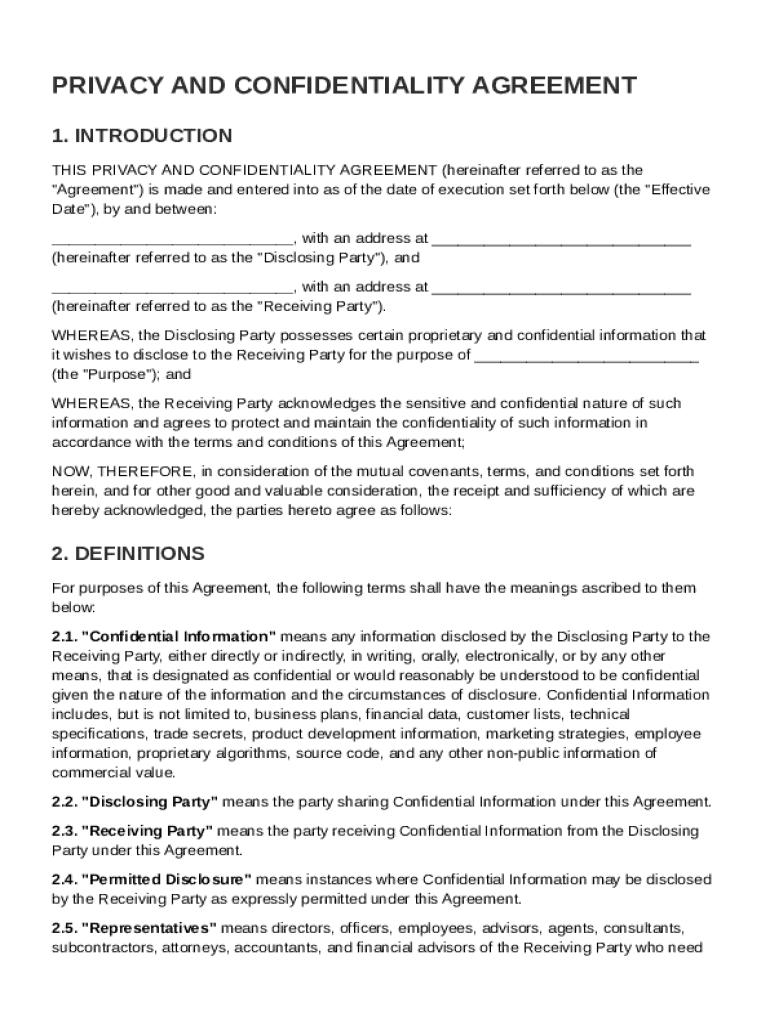
The Privacy and Confidentiality Agreement Template serves as a legal document that establishes terms and conditions for sharing confidential information between two parties. It typically identifies one party as the Disclosing Party, who shares proprietary or sensitive information, and the other as the Receiving Party, who agrees to maintain confidentiality. This agreement is crucial for protecting intellectual property and business secrets, ensuring that sensitive data is not disclosed or misused.
Key Components
- Disclosing and Receiving Parties: Clearly identifies both parties involved in the agreement.
- Confidential Information: Specifies what constitutes confidential information, ensuring clarity on what needs protection.
- Obligations: Outlines responsibilities for maintaining confidentiality, including non-disclosure and non-use clauses.
Use Cases
- Corporate Partnerships: Protects shared proprietary information during collaborative projects.
- Employee Contracts: Ensures employees do not disclose sensitive company information.
Key Elements of the Privacy and Confidentiality Agreement Template
Crafting a comprehensive Privacy and Confidentiality Agreement Template involves including specific, crucial elements to ensure its effectiveness and enforceability. These components provide a robust framework for safeguarding sensitive information.
Essential Clauses
- Non-Disclosure Obligations: Specifies conditions under which the Receiving Party must maintain confidentiality, including duration and limitations.
- Return or Destruction of Information: Details procedures for the return or destruction of confidential materials upon termination of the agreement.
- Remedies for Breach: Highlights consequences and legal recourse available if confidentiality obligations are breached.
Additional Elements
- Definitions: Clarifies technical terms and content to avoid ambiguity.
- Governing Law: States which jurisdiction’s law will govern the agreement.
Practical Example
A tech firm sharing product design details with a supplier would include these elements to protect its designs from being leaked to competitors.
Steps to Complete the Privacy and Confidentiality Agreement Template
Filling out a Privacy and Confidentiality Agreement Template requires careful attention to detail to ensure accuracy and legal compliance. The following steps guide you through the process.
Step-by-Step Process
- Identify the Parties: Clearly state the full legal names of the Disclosing and Receiving Parties.
- Define Confidential Information: List all types of information considered confidential within the context of the agreement.
- Specify Duration: Determine how long the Receiving Party is obligated to maintain confidentiality.
- Outline Obligations and Exceptions: Detail specific obligations to protect information and any exceptions, such as information disclosed with prior consent.
- Detail Remedies: Include remedies for breaches to enforce compliance.
- Review and Sign: Conduct a final review to ensure all information is accurate and clear, then proceed to signatures from authorized representatives of both parties.
Real-World Scenario
A startup entering into negotiations with a potential investor would follow these steps to safeguard its business plan and financial data.
Who Typically Uses the Privacy and Confidentiality Agreement Template
The Privacy and Confidentiality Agreement Template is a versatile document used by a range of entities to protect sensitive information. Understanding the typical users helps in tailoring the template for specific needs.


Common Users
- Corporations and Businesses: Large organizations often utilize these agreements during mergers or when engaging in strategic partnerships.
- Contractors and Freelancers: To protect client information or intellectual property when working on specific projects.
- Legal and Consulting Firms: Maintain client confidentiality and protect sensitive data during consultancy engagements.

Example Scenarios
- Consultancy Firms: Protect client business plans shared during strategic consultations.
- Healthcare Providers: Use these templates to comply with patient data privacy regulations.
Legal Use of the Privacy and Confidentiality Agreement Template
Legal considerations are paramount when using a Privacy and Confidentiality Agreement Template to ensure the agreement is enforceable and compliant with relevant laws.
Legal Aspects
- Compliance with Applicable Laws: Ensure the template aligns with relevant federal and state laws, including privacy regulations.
- Enforceability: The agreement must be clearly drafted and mutually agreed upon to be legally binding.
- Dispute Resolution: Include clauses for resolving disputes, such as arbitration or mediation before resorting to litigation.
Case Study
An information technology company might face legal scrutiny if their confidentiality agreement does not comply with federal data protection laws, leading to potential court battles or settlements.
Important Terms Related to the Privacy and Confidentiality Agreement Template
Understanding key terms associated with the Privacy and Confidentiality Agreement Template enhances comprehension and application of the document.
Critical Terminology
- Non-Disclosure Agreement (NDA): A broader term often used interchangeably but can differ in scope and specific legal requirements.
- Proprietary Information: Information that is owned by a company, giving them competitive advantage and requiring protection.
- Trade Secret: A specific subset of confidential information critical to business success and protection against unfair competition.
Clarifications and Examples
- Proprietary Information VS. Public Information: Proprietary information is protected under the agreement, while public information isn’t covered and can be freely shared.
State-Specific Rules for the Privacy and Confidentiality Agreement Template
State laws can influence the specifics of a Privacy and Confidentiality Agreement Template. Awareness of these variations ensures local compliance and effectiveness.
Variations by State
- California: Strict regulations around non-compete clauses, impacting confidentiality agreements when parties attempt to restrict future employment.
- New York: Offers sophisticated legal infrastructure supporting contract enforcement, beneficial for complex confidentiality agreements.
Implementation Example
A Silicon Valley-based company must tailor its confidentiality agreements to comply with California’s unique employment regulations, avoiding non-compete clauses while maintaining non-disclosure requirements.
Examples of Using the Privacy and Confidentiality Agreement Template
Providing tangible examples of how the Privacy and Confidentiality Agreement Template is used helps in understanding its practical applications.
Real-World Examples
- Joint Ventures: An agreement is established before two tech companies share proprietary software development tools.
- Product Development: Confidentiality agreements protect sensitive information exchanged between a manufacturer and a retail chain launching a new product line.
Case Scenarios
- Research Collaboration: Universities engaging in joint research projects implement confidentiality agreements to protect unpublished research findings and data.