
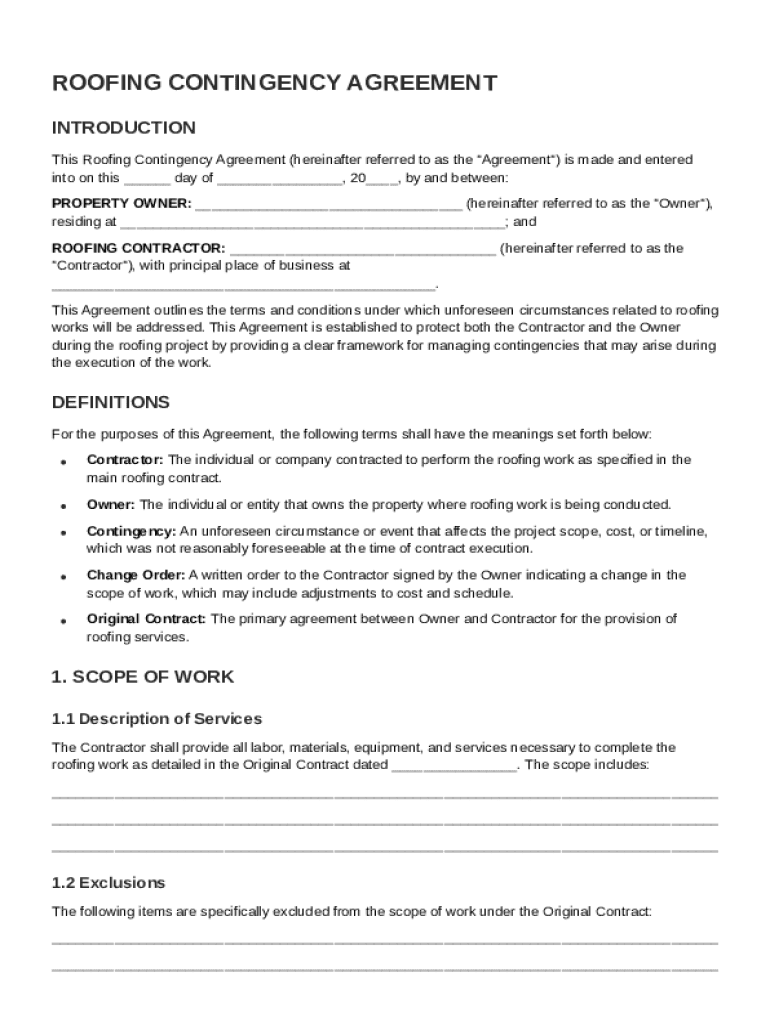







Overview of the Roofing Contingency Agreement Template
The Roofing Contingency Agreement Template is a vital document used to establish a contract between a property owner and a roofing contractor. It primarily sets the terms and conditions for managing unforeseen circumstances that may arise during a roofing project. These agreements are crucial for delineating responsibilities, scope of work, cost adjustments, and terms for addressing contingencies. By clearly defining these aspects, the template helps both parties navigate unexpected events, ensuring that the project progresses smoothly despite potential obstacles.
Essential Components of the Agreement
Scope of Work
The scope of work section outlines what the roofing project will entail. It specifies the type of roof, materials to be used, and timeframes for completion. Clearly detailing the scope helps prevent misunderstandings by providing a mutual understanding of the project's objectives. This section becomes particularly important if deviations are necessary due to unforeseen circumstances.
Contingency Management
This component of the template is at the heart of the agreement. It describes how contingencies will be handled, including notification procedures and cost adjustments. Here, the agreement might specify how quickly the homeowner must be informed and the process for approving additional expenditures caused by unforeseen issues like adverse weather or hidden damage found during the project.
Legal and Compliance Considerations
Compliance with State Laws
Roofing contingency agreements must comply with relevant state laws. While the general structure of these agreements is standard, specific legal stipulations can vary by jurisdiction. It is imperative to understand state-specific requirements and modifications that might be needed to ensure legal compliance.
Dispute Resolution Provisions
The agreement typically includes provisions for resolving disputes that may arise from the project. This might involve mediation or arbitration as preferable alternatives to litigation. Outlining these procedures in advance is critical for a smooth resolution process and maintaining a cooperative relationship between the involved parties.
Users and Applicability
Who Utilizes This Template?
The template is primarily used by roofing contractors and property owners embarking on roofing projects. It is particularly beneficial when the potential for unforeseen challenges is high, such as in projects involving older properties or those located in areas with volatile weather conditions.
Business Types Benefitting from the Agreement
Various business types, including residential and commercial roofing contractors and real estate management firms, find this template useful. It enables them to protect their financial and legal interests while delivering quality services to their clients.
Steps for Completion
How to Complete the Template
- Input Project Details: Start by entering the project's basic information, including parties involved, property address, and a general description of the work.
- Define Scope of Work: Clearly articulate the work to be performed, timelines, and materials to be used.
- Specify Contingency Procedures: Outline how contingencies will be identified, communicated, and resolved.
- Finalize Legal Terms: Add any specific legal terms required by state laws and include dispute resolution methods.
- Signatures: Both parties should carefully review the agreement and provide signatures to validate the contract.
Digital Version and Software Compatibility
Advantages of the Digital Format
Using a digital version of the Roofing Contingency Agreement Template offers numerous benefits, such as ease of access, the ability to make instant updates, and improved storage and retrieval. This format enhances efficiency as it can be quickly sent for review and signatures using digital platforms like DocHub, which integrates seamlessly with cloud services and email systems.
Real-World Scenarios and Examples
Consider a situation where a contractor uncovers water damage not visible in an initial inspection. Using the contingency agreement, they notify the homeowner, agree on a course of action, and make necessary adjustments within the agreed terms. This template helps ensure both parties were prepared for such contingencies, preventing project delays and budget overruns.
Key Takeaways
The Roofing Contingency Agreement Template is essential for establishing clear terms in a roofing project, detailing how unforeseen issues will be handled and outlining legal responsibilities. This document is crucial for contractors and property owners alike, providing a structured framework for dealing with unexpected challenges, fostering better communication, and enhancing project success.




