






Definition and Purpose of the Parent-Child Agreement Template
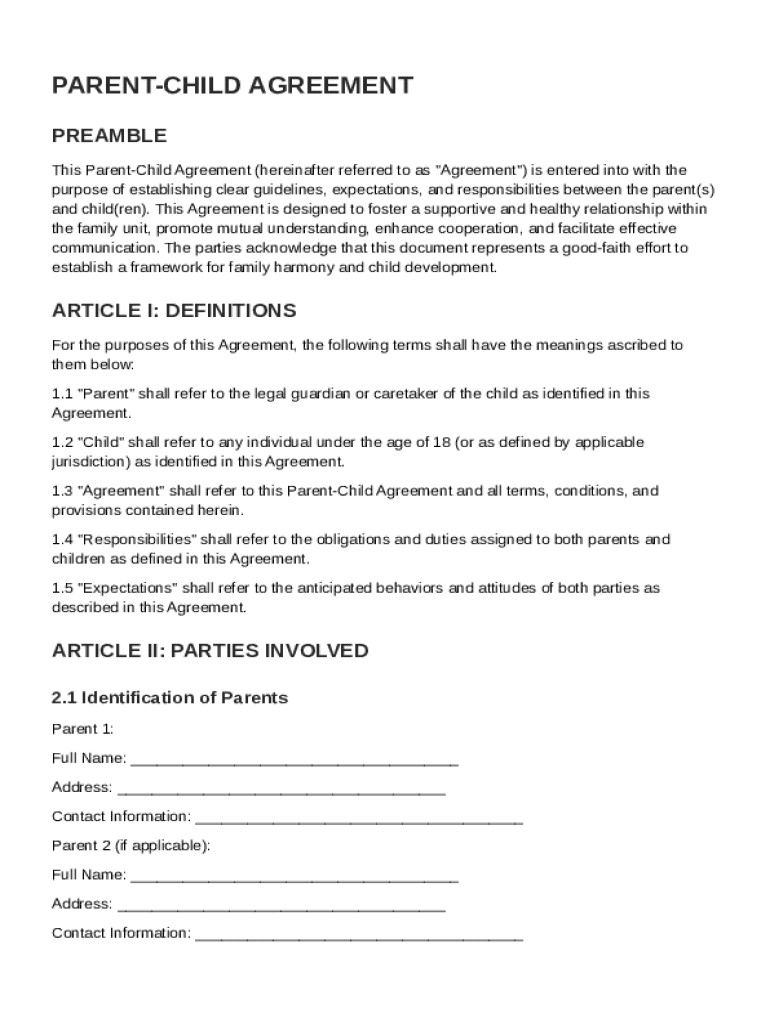
The Parent-Child Agreement Template serves as a formalized document outlining responsibilities, expectations, and guidelines between parents and children. It fosters a supportive family dynamic by enhancing communication and setting clear rules. This tool is particularly valuable for addressing behavior expectations, defining consequences for misbehavior, and creating a framework for periodic review and modification of the agreement. While it is designed to be a flexible guide that can be tailored to meet the specific needs of each family, its core aim is to support conflict resolution and promote child development in a structured manner.
Key Features of the Agreement
- Behavior Expectations: Clearly states acceptable and unacceptable behaviors for children.
- Consequences: Outlines specific consequences for breaches of the agreement.
- Communication Protocols: Sets guidelines for open and honest communication between parents and children.
- Review and Modification: Includes provisions for the regular review and potential modification of the agreement to adapt to changing circumstances.
How to Use the Parent-Child Agreement Template
Utilizing the Parent-Child Agreement Template involves several steps to ensure it meets the unique needs of each family. The document should be customized to reflect the family’s specific values and expectations.
Steps to Customize the Template
- Identify Core Values and Goals: Begin by discussing family values and goals with all involved parties. This sets the foundation for the agreement.
- Draft Agreement Sections: Use the template to draft sections covering responsibilities, expectations, and consequences.
- Review Together: Conduct a family meeting to review the draft agreement openly, allowing children to voice their opinions and concerns.
- Modify as Needed: Make necessary modifications based on input during the family discussion.
- Formalize the Agreement: Once everyone agrees, finalize the document and ensure all parties sign it to show commitment.
Practical Scenarios
- Bedtime Routines: Set specific times and routines for going to bed to ensure consistency and adequate rest for children.
- Homework Policies: Establish a quiet time or area where homework should be completed, emphasizing responsibility and time management.
Key Elements of the Parent-Child Agreement Template
Responsibilities and Duties
Each family member's responsibilities should be explicitly outlined in the agreement. This includes both household chores and personal responsibilities, such as completing homework or adhering to house rules.
- Chores: Assign age-appropriate household chores to children, promoting independence and responsibility.
- Personal Accountability: Encourage personal accountability by setting expectations for manners, respect, and self-care.
Conflict Resolution Mechanisms
The agreement should incorporate methods for addressing disputes or misunderstandings. This might involve family meetings or designated conflict resolution strategies to ensure issues are addressed constructively.
- Family Meetings: Schedule regular family meetings to address ongoing concerns and review progress.
- Mediation: Designate a neutral family member or trusted third party to mediate disputes if necessary.
Legal Considerations for the Parent-Child Agreement Template
While the Parent-Child Agreement Template is primarily a tool for enhancing family dynamics, it also has legal implications, particularly when addressing behavior that might have legal consequences, such as truancy or underage drinking. Although not legally binding, the agreement can be referenced in family counseling or legal settings to demonstrate agreed-upon responsibilities and expectations.
State-Specific Guidelines and Differences
The application and focus of the Parent-Child Agreement Template can vary based on state laws and cultural norms. Each state may have specific regulations or considerations that can influence the elements included in the agreement. For instance, some states may have distinct guidelines regarding children's rights or responsibilities at certain ages.
Examples of State Variations
- Age of Responsibility: The age at which children are expected to take on specific legal responsibilities can vary by state.
- Parental Consent Laws: Some states may have specific requirements regarding parental consent for minors in certain situations.
Examples of Using the Parent-Child Agreement Template
Utilizing real-life scenarios can help illustrate the versatility and utility of the Parent-Child Agreement Template. For example, in situations where a family is navigating the transition to a blended family, the agreement can serve as a tool to align expectations and responsibilities for all involved parties.
Situational Use Cases
- Blended Families: Helps align expectations as new family members integrate into the household.
- Teen Independence: Assists in transitioning towards greater autonomy while maintaining a safety net of expectations and consequences.
Software Compatibility and Digital Use
While the Parent-Child Agreement Template can be used in both digital and paper formats, platforms like DocHub enhance its functionality by allowing collaborative editing and electronic signatures. This facilitates easy adjustments and ensures all parties have access to the latest version of the agreement.
Benefits of Digital Forms
- Real-Time Collaboration: Allows for collaborative input and immediate updates during family meetings.
- Secure Storage and Access: Ensures the document is securely stored and easily accessible to all involved parties.
Important Terms and Definitions
Understanding terms commonly associated with the Parent-Child Agreement Template is critical to ensuring clarity and mutual understanding.
- Responsibilities: Tasks or duties that a party is expected to perform or uphold.
- Consequences: Repercussions that result from not meeting outlined responsibilities or breaking agreed-upon rules.
- Review Process: A regular interval at which the agreement is revisited to assess its effectiveness and propose necessary changes.